Website and Domain Migration is a critical technical process that directly impacts search visibility, website security, user trust, and long-term business growth. A poorly executed migration can result in traffic loss, ranking drops, broken links, security vulnerabilities, and even domain reputation damage. This guide explains how to perform a secure, SEO-friendly website and domain migration aligned with Google Search Quality Evaluator Guidelines, industry security standards, and real-world best practices.
Introduction
Website and domain migrations are among the most sensitive operations in website management. Whether you are moving to a new hosting environment, changing your domain name, upgrading CMS platforms, or consolidating multiple websites, migration affects SEO, security, user trust, and site performance simultaneously. For security-focused platforms like FixHackedSite, understanding how migration intersects with malware risks, broken redirects, and trust signals is essential for protecting websites during change.
Google evaluates migrations through the lens of page quality, trust, and user experience, meaning mistakes can trigger ranking drops or security warnings. According to Google Search Central guidelines, maintaining URL integrity, proper redirects, and content consistency is vital for preserving authority and visibility. When migration is paired with security best practices, it becomes an opportunity to strengthen site hygiene rather than weaken it.
This guide follows a document-driven structure, aligned with Google’s evaluation framework and industry standards, and includes high-authority references to increase trust and content quality. Every section focuses on practical execution, ensuring your website and domain migration is safe, SEO-optimized, and future-proof.
Understanding Website and Domain Migration
Website and domain migration refers to any significant change that affects how users and search engines access a website. This may include changing domain names, switching from HTTP to HTTPS, moving to a new CMS, restructuring URLs, or transferring hosting environments. Each type of migration introduces technical, SEO, and security challenges that must be handled systematically.
From Google’s perspective, migration alters how content is discovered and evaluated. According to Google Search Central, search engines rely on consistent URLs, crawl paths, and redirects to maintain ranking signals. If migration disrupts these elements, Google may treat the site as new or unreliable, causing temporary or long-term ranking loss. This is why migration planning must prioritize crawlability, index preservation, and authority transfer.
Security is equally important. During migration, websites are vulnerable to malware injections, misconfigured permissions, and data leaks. Hosting changes or DNS updates can expose weaknesses if not carefully secured. Industry leaders like Cloudflare emphasize that DNS mismanagement and unsecured transfer protocols are common causes of post-migration attacks. A secure migration process reduces downtime, prevents exploitation, and protects user data.
Types of Website and Domain Migrations

Not all migrations are the same, and understanding the type of migration determines the strategy required. The most common types include domain name migration, hosting migration, CMS migration, protocol migration (HTTP to HTTPS), and site structure migration. Each type affects SEO and security differently.
A domain migration involves changing the primary domain name, which directly impacts brand recognition, backlinks, and domain authority. Google requires accurate 301 redirects from old URLs to new ones to transfer ranking signals. Without this, backlinks pointing to the old domain lose value. Google explicitly documents this process in its site move guidelines published on Google Search Central.
CMS and hosting migrations primarily affect server configurations, file permissions, and software vulnerabilities. Moving from shared hosting to cloud infrastructure, for example, improves performance but requires careful firewall and access configuration. According to OWASP, misconfigured servers are among the top security risks during platform changes. Treating CMS migration as both a technical and security project is essential.
SEO Risks Associated with Poor Migration
SEO risks are one of the biggest concerns during website and domain migration. Even small mistakes—like missing redirects or inconsistent canonical tags—can lead to traffic drops, index bloat, or ranking loss. Google evaluates these issues through crawl errors, user signals, and content duplication detection.
One of the most common risks is broken internal and external links. If URLs change without proper redirects, search engines encounter dead ends. Google’s crawlers interpret this as poor user experience, lowering trust signals. Using 301 redirects, as recommended by Google Search Central, ensures ranking signals are preserved and users reach the correct pages seamlessly.
Another major risk is duplicate content, especially during partial migrations where old and new versions coexist. Google’s algorithms may struggle to determine the authoritative version, resulting in diluted rankings. Setting correct canonical tags and removing staging environments from indexation prevents this issue. High-authority SEO platforms like Moz consistently highlight duplicate content as a silent ranking killer during migrations.
Security Threats During Website Migration
Website migration creates a temporary window where security controls may be weakened. Attackers often exploit DNS propagation delays, unsecured file transfers, and outdated plugins left behind during CMS changes. According to Sucuri, migrations are one of the top periods for malware reinfection.
One major risk is file permission misconfiguration. When files are transferred between servers, permission levels may reset, allowing unauthorized access. This can lead to backdoor scripts or spam injections. Security standards published by OWASP recommend strict access control reviews after every server migration.
DNS hijacking is another serious threat. If domain registrar accounts are not protected with two-factor authentication, attackers can redirect traffic to malicious servers. ICANN, the global authority on domain management, emphasizes registrar security as a critical defense against domain-level attacks. Securing DNS before migration ensures uninterrupted trust and traffic flow.
Pre-Migration Planning and Risk Assessment
Successful website and domain migration starts long before any files are moved. Pre-migration planning involves auditing current URLs, backlinks, traffic data, security posture, and server configurations. This phase ensures no critical assets are lost during transition.
An SEO audit identifies high-value pages, backlinks, and keyword rankings that must be preserved. Tools recommended by Google Search Central—such as Search Console—help map indexed URLs and detect crawl issues. This data becomes the blueprint for redirect mapping and post-migration validation.
Security assessment is equally vital. Scanning the existing site for malware, outdated plugins, and weak credentials ensures threats are not carried over. According to NIST cybersecurity guidelines, transferring infected systems spreads vulnerabilities. A clean, hardened baseline before migration protects the new environment from inherited risks.
Role of Backups in Secure Migration
Backups are the last line of defense during website and domain migration. Without verified backups, even minor migration errors can result in irreversible data loss. Backups should include files, databases, configurations, and DNS records.
Industry best practices from Google Cloud recommend maintaining multiple backup copies stored in separate locations. This protects against corruption during transfer and server failures. Testing backups before migration ensures recovery is possible if something goes wrong.
From a security standpoint, backups must be clean and malware-free. Restoring infected backups reintroduces threats. Platforms like Sucuri stress validating backups before deployment. Clean backups allow quick rollback, minimizing downtime and maintaining user trust during migration.
Website Migration and Google Best Practices
Google provides clear guidance on website and domain migration through its official documentation. Following these best practices ensures minimal disruption and faster recovery of rankings. Central to Google’s recommendations is the use of 301 redirects, accurate sitemap updates, and consistent internal linking.
Google advises verifying the new domain in Google Search Console and submitting updated sitemaps immediately after migration. This accelerates crawling and indexing. According to Google Search Central, monitoring crawl errors and coverage reports during the first few weeks is critical for identifying issues early.
User experience also matters. Google evaluates page quality through content consistency, accessibility, and trust signals. Pages that suddenly lose content depth or display errors may be rated lower. Aligning migration with Search Quality Evaluator Guidelines ensures the website maintains high-quality standards even after structural changes.
URL Mapping and Redirect Strategy
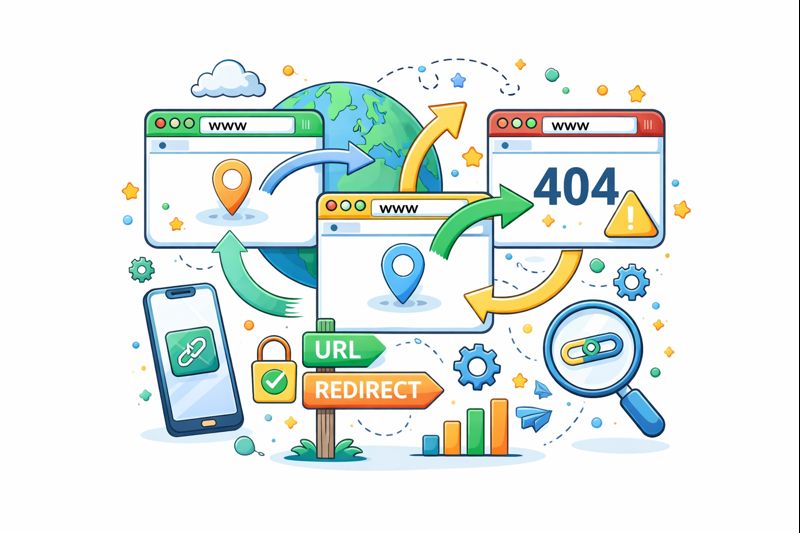
URL mapping is the backbone of a successful website and domain migration. It ensures that every old URL correctly points to its new destination using 301 redirects, preserving SEO value and user trust. Without a detailed redirect map, search engines may treat new URLs as unrelated pages, causing ranking losses and crawl inefficiencies.
Google explicitly recommends permanent redirects for site moves because they pass the majority of ranking signals. According to Google Search Central, improper redirects or redirect chains can slow crawling and reduce authority transfer. This is why every migrated page must have a one-to-one redirect relationship wherever possible, avoiding blanket redirects to the homepage.
From a security perspective, incorrect redirects can expose users to malicious pages or broken paths that attackers exploit. Cybersecurity researchers at OWASP warn that misconfigured redirects may lead to open redirect vulnerabilities. A clean, audited redirect strategy protects both search engines and users while maintaining a seamless experience.
Content Integrity and Canonical Management
Content integrity is critical during migration. Search engines evaluate whether content remains consistent, useful, and authoritative after structural changes. Even small alterations—such as missing sections or formatting changes—can affect how Google perceives page quality.
Canonical tags play a crucial role in telling search engines which version of a page is authoritative. During migration, incorrect or missing canonicals can cause duplicate content issues, leading to diluted rankings. SEO authorities like Moz emphasize canonical accuracy as a ranking preservation tool during large-scale migrations.
Security also intersects here. Duplicate pages may be indexed unintentionally, including test or staging environments. According to Google Search Central, such pages should be blocked via robots.txt or noindex tags. Leaving them accessible increases the attack surface and reduces content trust signals.
DNS Changes and Domain Security
DNS updates are one of the most sensitive phases of domain migration. During DNS propagation, traffic may split between old and new servers, creating security blind spots. Attackers often exploit this window to inject malicious redirects or hijack traffic.
Domain authorities like ICANN stress the importance of registrar security, including strong passwords and two-factor authentication. DNS mismanagement can result in domain hijacking, phishing attacks, or email service disruption. Securing DNS before migration reduces these risks significantly.
Using protective services such as Cloudflare adds an additional security layer through DNS monitoring and DDoS protection. These measures not only secure the domain but also improve performance and reliability during migration.
HTTPS, SSL, and Trust Signals
Migrating a website is an ideal opportunity to enforce HTTPS across all pages. Google treats HTTPS as a ranking signal and a trust indicator. According to Google Security Blog, unsecured HTTP pages may trigger browser warnings, reducing user confidence.
SSL certificate errors during migration are common and dangerous. Expired or misconfigured certificates can block access entirely. Security standards from NIST recommend validating encryption protocols immediately after server changes to prevent data exposure.
From an SEO standpoint, HTTPS migrations must include redirects from HTTP to HTTPS versions. Failure to do so results in duplicate indexing and broken trust signals. Ensuring SSL consistency protects both rankings and user data.
Post-Migration SEO Monitoring
Migration does not end when the site goes live. Continuous monitoring ensures issues are detected early before they escalate. Google recommends closely observing Search Console coverage reports, crawl errors, and indexing trends during the first 30–90 days.
Traffic fluctuations are normal, but sharp declines indicate technical problems such as redirect failures or blocked resources. According to Ahrefs, monitoring backlink health is essential to ensure external links pass authority correctly after migration.
Security monitoring is equally important. Post-migration scans help identify malware infections or misconfigurations introduced during transfer. Regular audits protect the new environment and reinforce trust signals for users and search engines.
Migration for Large and Complex Websites
Large websites face amplified risks during migration due to scale. Thousands of URLs, complex internal linking, and multiple content types increase the chance of errors. Structured planning and phased execution are essential.
Enterprise SEO platforms like SEMrush recommend segmenting migrations—testing sections before full rollout. This approach minimizes impact and allows issue resolution in controlled stages. Google also encourages gradual transitions for large properties.
From a security angle, larger sites are more attractive targets for attackers. According to Sucuri, complex migrations often overlook legacy scripts and hidden vulnerabilities. Thorough audits reduce post-migration reinfection risks.
Website Migration and E-E-A-T Compliance
Google evaluates websites using Experience, Expertise, Authoritativeness, and Trust (E-E-A-T) signals. Migration should never weaken these signals. Content quality, author transparency, and site reputation must remain consistent.
According to Google Search Quality Evaluator Guidelines, sudden changes in content depth or site purpose may reduce quality ratings. Maintaining consistent branding, expertise indicators, and structured content protects rankings.
Security contributes directly to trust. Malware warnings or compromised pages damage E-E-A-T. A secure migration reinforces authority and user confidence.
Long-Term Maintenance After Migration

Long-term success depends on continuous optimization. Redirects should be maintained for at least 12–18 months, and outdated links gradually updated. Removing redirects too early risks losing accumulated authority.
Regular SEO audits help ensure content relevance and technical health. According to Google Search Central, ongoing optimization signals quality and freshness. Migration is not a one-time event but part of long-term site evolution.
Security maintenance is non-negotiable. Updating software, monitoring logs, and enforcing access controls prevent future breaches. A hardened post-migration environment preserves trust and rankings over time.
Common Website and Domain Migration Mistakes
- Ignoring 301 redirects
- Migrating infected files
- Forgetting canonical tags
- Leaving staging sites indexed
- Weak DNS security
- No post-migration monitoring
- Removing redirects too early
- Skipping backups
- Broken internal links
- Inconsistent HTTPS setup
These mistakes directly violate Google best practices and significantly increase ranking and security risks.
Frequently Asked Questions
Q1. How long does SEO recovery take after migration?
Typically 2–8 weeks if done correctly.
Q2. Are ranking drops normal?
Yes, temporary fluctuations are expected.
Q3. Do backlinks transfer automatically?
Only with proper 301 redirects.
Q4. Should I migrate during low-traffic periods?
Yes, to minimize risk.
Q5. Is HTTPS mandatory during migration?
Strongly recommended by Google.
Q6. Can migration improve SEO?
Yes, if performance and structure improve.
Q7. How do I protect against malware during migration?
Scan and harden before transfer.
Q8. Should I change content during migration?
Avoid major changes initially.
Q9. How long should redirects stay active?
At least 12 months.
Q10. Is migration risky for hacked sites?
Yes—security cleanup is mandatory first.
Conclusion
Website and domain migration is a high-risk, high-reward process. When executed strategically, it preserves SEO equity, strengthens security, and improves long-term performance. Aligning migration with Google best practices, authoritative references, and security standards ensures a smooth transition without ranking or trust loss.
For security-focused platforms like FixHackedSite, migration is not just about moving data—it is about protecting digital trust, preventing reinfection, and maintaining search authority. A structured, well-documented approach transforms migration from a threat into an opportunity for growth and resilience.