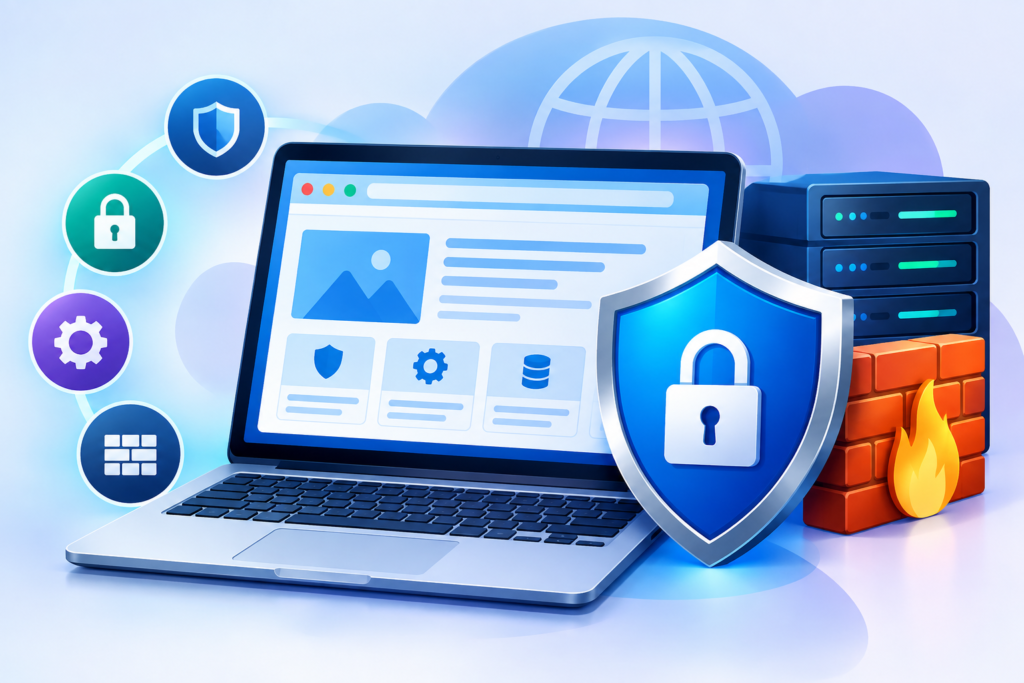
Website Hardening is the process of securing your website against malware, hackers, vulnerabilities, brute-force attacks, and data breaches. Learn advanced website hardening strategies, security best practices, server protection methods, and performance optimization techniques to protect your online business.
Introduction
Modern websites face constant threats from cybercriminals, automated bots, malware injections, ransomware campaigns, phishing attempts, and brute-force login attacks. Whether you run a business website, an eCommerce store, a blog, or a corporate platform, weak security can lead to devastating financial and reputational damage. Website owners who ignore proactive protection strategies often experience data loss, SEO ranking drops, blacklisting, stolen customer information, and extended downtime.
Website hardening is the proactive process of securing every layer of your website infrastructure to reduce vulnerabilities and strengthen protection against cyber threats. This includes securing servers, applications, plugins, databases, login systems, APIs, user permissions, backups, and network configurations. Hardening goes beyond installing a simple security plugin because it creates a complete defensive framework designed to minimize attack surfaces.
At Fix Hacked Site, website hardening is considered a critical long-term investment for businesses that want sustainable security, improved search engine trust, better performance, and stronger customer confidence. Proper hardening helps prevent attacks before they happen while also improving compliance, operational stability, and website reliability.
Understanding Website Hardening and Why It Matters
Website hardening refers to the strategic process of securing websites, servers, applications, and digital infrastructure against potential cyber threats. The goal is to reduce security weaknesses that attackers can exploit. Many businesses mistakenly believe their websites are safe simply because they use strong passwords or security plugins. In reality, attackers often target outdated software, insecure configurations, vulnerable APIs, weak file permissions, and poorly protected admin panels.
Cyberattacks continue to increase globally because automated tools make it easier for hackers to scan millions of websites for weaknesses. Attackers commonly exploit outdated content management systems, insecure plugins, exposed databases, and poorly configured servers. Once attackers gain access, they may inject malware, steal customer data, redirect visitors, distribute spam, or damage search engine visibility. A single compromise can impact revenue, reputation, customer trust, and legal compliance.
Website hardening creates multiple layers of defense that work together to reduce risk. It involves updating software, restricting permissions, securing communication channels, enabling monitoring systems, protecting login portals, enforcing encryption, and continuously testing vulnerabilities. According to Google security issues guidelines, hacked websites can experience search ranking penalties and browser security warnings, making proactive protection essential for long-term online success.
The Most Common Website Security Threats Businesses Face
Businesses face a wide range of website security threats that continue evolving every year. One of the most dangerous threats is malware injection, where attackers place malicious scripts inside website files to steal data, redirect visitors, or distribute harmful content. Malware infections often remain hidden for weeks or months before website owners detect unusual activity. During that time, attackers may compromise SEO rankings, customer trust, and search engine reputation.
Another major threat involves brute-force login attacks. Automated bots repeatedly attempt username and password combinations until they gain unauthorized access. Weak credentials, reused passwords, and missing login protections significantly increase risk. SQL injection attacks also remain common because vulnerable database queries allow attackers to manipulate or extract sensitive information. Cross-site scripting attacks can inject harmful scripts into webpages, affecting visitors directly.
Distributed denial-of-service attacks are another growing concern because they overwhelm servers with excessive traffic, causing websites to crash or become unavailable. Insecure plugins, outdated themes, weak hosting environments, unsecured APIs, and improper file permissions also create vulnerabilities attackers frequently exploit. Businesses that fail to implement proper hardening strategies often discover security weaknesses only after experiencing downtime, customer complaints, or Google blacklist warnings.
How Website Hardening Improves SEO and Search Visibility
Website security and search engine optimization are deeply connected. Search engines prioritize secure, trustworthy, and reliable websites because user safety directly impacts search quality. A compromised website can quickly lose rankings, organic traffic, and indexing visibility. Google may display browser warnings, flag unsafe pages, or remove infected URLs from search results entirely.
Website hardening supports SEO by reducing the likelihood of malware infections, spam injections, phishing pages, and unauthorized redirects. These attacks frequently damage website authority because search engines detect malicious behavior quickly. When users encounter security warnings or suspicious redirects, bounce rates increase dramatically, negatively impacting engagement signals and user trust.
Proper hardening also improves website performance and stability, which contributes to better search rankings. Secure servers, optimized configurations, updated applications, and clean databases create faster page load times and improved reliability. According to Google helpful content guidelines, websites should provide safe, reliable, and trustworthy experiences for users. Strong security practices help maintain long-term visibility while protecting valuable organic traffic from disruption.
Securing Your Hosting Environment for Maximum Protection
Your hosting environment forms the foundation of website security. Even if your website software is secure, a poorly configured hosting environment can expose your entire infrastructure to attackers. Shared hosting environments with weak isolation mechanisms often create additional risks because vulnerabilities on neighboring websites may impact other accounts on the same server.
A hardened hosting environment should include server-level firewalls, malware scanning, account isolation, intrusion detection systems, secure access controls, and regular security patching. Businesses should choose hosting providers that prioritize security, maintain updated server software, support secure protocols, and monitor suspicious activities continuously. Managed hosting environments often provide stronger protection because experienced administrators maintain server security proactively.
Secure server configurations also involve disabling unnecessary services, limiting open ports, restricting root access, and implementing strong authentication methods. Web application firewalls add another layer of protection by filtering malicious traffic before it reaches the website. Businesses that invest in secure hosting environments significantly reduce the risk of large-scale attacks, unauthorized access attempts, and server-level compromises.
The Importance of Keeping Software, Plugins, and Themes Updated
Outdated software remains one of the leading causes of website compromises worldwide. Attackers continuously scan websites searching for outdated plugins, themes, frameworks, and content management systems with known vulnerabilities. Once a vulnerability becomes public, automated attack tools quickly begin targeting unpatched websites.
Website owners often delay updates because they fear compatibility issues or downtime. However, postponing critical security updates creates far greater risks. Vulnerable software can allow attackers to bypass authentication, upload malicious files, execute unauthorized code, or access sensitive databases. Even a single outdated plugin may provide attackers with a direct entry point into the website.
A proper website hardening strategy includes scheduled updates, compatibility testing, backup verification, and vulnerability monitoring. Businesses should remove unused plugins, deactivate unnecessary themes, and regularly audit installed software components. Following OWASP security best practices helps organizations identify common vulnerabilities and improve overall application security posture.
Strengthening Login Security and User Authentication

Weak authentication systems remain one of the easiest targets for attackers. Many website breaches occur because administrators use predictable passwords, fail to enable multi-factor authentication, or reuse credentials across multiple platforms. Once attackers obtain login access, they can manipulate files, inject malware, steal data, or create hidden administrator accounts.
Strong password policies are essential for reducing unauthorized access risks. Passwords should contain unique combinations of uppercase letters, lowercase letters, numbers, and special characters. Businesses should also implement password rotation policies and prevent users from reusing previously compromised credentials. Multi-factor authentication adds another critical protection layer by requiring secondary verification beyond passwords.
Login hardening also includes limiting login attempts, enabling CAPTCHA verification, changing default login URLs, monitoring suspicious access patterns, and restricting administrator access by IP address when possible. Role-based permissions further reduce risk by limiting access only to necessary resources. A properly secured authentication system significantly reduces the chances of successful brute-force attacks and unauthorized account compromises.
Why SSL Certificates and HTTPS Encryption Are Essential
Data encryption is one of the most important components of website hardening. SSL certificates enable HTTPS encryption, which protects sensitive information transferred between users and servers. Without HTTPS protection, attackers may intercept login credentials, payment details, customer information, and communication data.
Modern browsers actively warn users when websites do not use HTTPS encryption. These warnings can severely damage trust and reduce conversions because users become hesitant to interact with insecure platforms. Search engines also prioritize HTTPS-enabled websites because secure browsing experiences align with modern web standards.
Website hardening strategies should include properly configured SSL certificates, secure redirect policies, updated encryption protocols, and regular certificate renewals. Administrators should disable outdated protocols and weak ciphers to maintain stronger encryption standards. According to MDN Web Security documentation, secure encryption practices play a vital role in protecting user data and maintaining web application integrity.
Protecting Websites with Firewalls and Intrusion Prevention Systems
Firewalls serve as one of the first lines of defense against cyberattacks. A web application firewall filters incoming traffic and blocks malicious requests before they reach the website. This helps prevent SQL injections, cross-site scripting attacks, brute-force login attempts, and automated bot abuse.
Advanced firewall systems analyze traffic behavior patterns and automatically identify suspicious activities. Some solutions use threat intelligence databases to block known malicious IP addresses and emerging attack signatures. Businesses handling sensitive customer data benefit significantly from real-time intrusion prevention systems because they provide continuous monitoring and automated threat mitigation.
Website hardening should combine firewall protection with intrusion detection systems, rate limiting, traffic filtering, geographic restrictions, and anomaly detection. Businesses that implement layered security defenses are better positioned to withstand evolving attack methods. Effective firewall configurations not only improve security but also reduce unnecessary server load and improve website performance.
File Permissions and Access Control Best Practices
Improper file permissions create major security vulnerabilities because they allow attackers or unauthorized users to modify sensitive files. Many compromised websites suffer from overly permissive settings that provide unnecessary write access to critical directories and configuration files.
Website administrators should apply the principle of least privilege when configuring access permissions. Files and directories should only grant the minimum permissions necessary for functionality. Sensitive configuration files, backup directories, and system files should remain inaccessible to public users. Administrators should also restrict executable permissions whenever possible.
Access control strategies include secure FTP configurations, SSH key authentication, restricted administrator privileges, account auditing, and user activity logging. Organizations should regularly review user accounts and remove inactive or unnecessary access privileges. Strong access management reduces insider threats while limiting the damage attackers can cause if accounts become compromised.
The Role of Backups in Website Hardening Strategies
Backups play a critical role in disaster recovery and website hardening. Even the most secure websites can experience unexpected failures, human errors, server crashes, ransomware attacks, or malicious compromises. Without reliable backups, recovering a hacked or damaged website may become extremely difficult and expensive.
A proper backup strategy includes automated scheduling, secure storage, redundancy, and regular restoration testing. Businesses should store backups in multiple secure locations rather than relying on a single backup server. Offline backups provide additional protection against ransomware attacks because attackers cannot easily encrypt disconnected storage environments.
Website hardening should include both full and incremental backups, database snapshots, version control systems, and documented recovery procedures. Administrators should routinely verify backup integrity and restoration functionality to ensure data can be recovered quickly during emergencies. Reliable backups reduce downtime, protect business continuity, and minimize financial losses after security incidents.
Monitoring and Detecting Suspicious Website Activity
Continuous monitoring is essential because cyber threats evolve constantly. Many website owners discover attacks only after customers report suspicious behavior or search engines issue security warnings. By that point, attackers may already have caused significant damage.
Effective website monitoring involves tracking login attempts, file changes, unusual traffic spikes, failed authentication attempts, malware signatures, and unauthorized administrative actions. Security monitoring systems can alert administrators immediately when suspicious activities occur, allowing faster investigation and response.
Businesses should combine automated monitoring tools with regular manual security reviews. File integrity monitoring systems help identify unauthorized changes to website files, while server log analysis reveals suspicious access patterns. Proactive detection reduces response times and limits the impact of attacks. Strong monitoring systems also provide valuable forensic data for investigating security incidents and improving future defenses.
Advanced Malware Prevention Techniques for Hardened Websites
Malware prevention is one of the most important components of a successful website hardening strategy. Malware attacks continue evolving because cybercriminals constantly develop new ways to bypass traditional security systems. Many infections occur silently in the background while attackers steal customer information, inject spam content, redirect visitors, or use compromised servers for illegal activities. Without proactive malware prevention, businesses may experience search engine penalties, lost traffic, damaged reputation, and significant financial losses.
A hardened website should implement multiple malware prevention layers rather than relying on a single security tool. Real-time malware scanners help detect suspicious scripts, modified files, hidden backdoors, and unauthorized code injections before major damage occurs. Businesses should also implement behavioral analysis systems that identify abnormal activity patterns such as unexpected file modifications, suspicious outbound connections, or unusual server processes. Regular vulnerability scanning helps identify weak points before attackers exploit them.
Website administrators should continuously monitor server logs, audit installed plugins, and remove inactive themes or applications that increase attack surfaces. Secure coding practices also play a major role in malware prevention because poorly written applications often contain exploitable vulnerabilities. According to CISA malware protection guidance, proactive detection and layered security controls are essential for reducing malware-related risks and improving long-term cyber resilience.
Using Content Delivery Networks for Security and Performance
Content Delivery Networks, commonly known as CDNs, provide both performance optimization and additional website protection. A CDN distributes website content across multiple global servers, reducing latency and improving page load speeds for users in different geographic regions. Faster websites improve user experience, reduce bounce rates, and contribute positively to SEO performance.
From a security perspective, CDNs help absorb malicious traffic and mitigate distributed denial-of-service attacks. Instead of attackers directly overwhelming the origin server, the CDN network distributes incoming traffic across multiple nodes, reducing the likelihood of downtime. Many modern CDN providers also include integrated web application firewalls, bot filtering, traffic analysis, and rate limiting features that strengthen overall website hardening efforts.
Businesses handling high traffic volumes or sensitive customer data benefit significantly from secure CDN configurations. Administrators should enable secure caching rules, HTTPS enforcement, DDoS mitigation tools, and edge security policies. Proper CDN implementation also helps reduce server resource consumption while improving scalability and reliability. Combining CDN protection with strong firewall rules creates a more resilient infrastructure capable of handling evolving cyber threats.
API Security and Modern Website Hardening
Modern websites frequently rely on APIs for integrations, mobile applications, payment systems, analytics platforms, customer portals, and third-party services. While APIs improve functionality and automation, they also create additional security risks if improperly configured. Attackers often target insecure APIs because they may expose sensitive data, bypass authentication controls, or allow unauthorized access to backend systems.
API hardening begins with strong authentication and authorization controls. Businesses should implement token-based authentication systems, enforce access restrictions, validate user permissions, and encrypt API communication channels. Administrators should also disable unused endpoints and monitor API activity for suspicious behavior. Excessive data exposure through APIs remains a major security concern because poorly designed endpoints may reveal confidential information unintentionally.
Rate limiting and request validation help prevent abuse by restricting excessive traffic and blocking malformed requests. Organizations should regularly test APIs for vulnerabilities such as broken authentication, injection flaws, insecure direct object references, and improper access control mechanisms. Following OWASP API Security standards helps businesses reduce exposure to modern API-related cyber threats while maintaining secure integrations across digital platforms.
Database Security Best Practices for Website Protection
Databases contain some of the most sensitive information within a website infrastructure, including customer records, login credentials, financial data, business information, and operational content. Weak database security can result in severe consequences such as data breaches, compliance violations, financial penalties, and identity theft incidents.
Website hardening strategies should include strong database access restrictions, encryption practices, and continuous monitoring systems. Database administrators should never use default credentials or publicly accessible configurations. Access should remain restricted only to authorized systems and personnel. Firewalls and network segmentation further reduce exposure by limiting external access opportunities.
Regular database backups, patch management, and vulnerability testing are also essential for maintaining secure environments. Administrators should sanitize user inputs to prevent SQL injection attacks and implement prepared statements for secure database queries. Monitoring tools should track unusual database behavior, privilege escalations, and suspicious query activity. A properly secured database environment significantly reduces the risk of unauthorized data exposure and long-term operational damage.
Why Security Audits Are Critical for Website Hardening
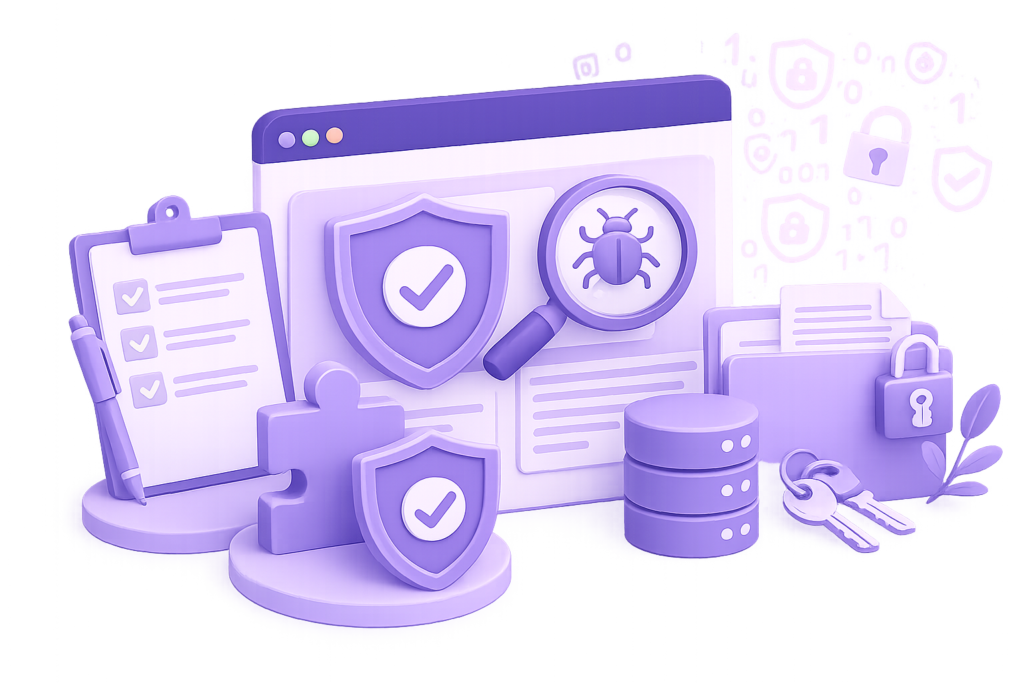
Security audits help organizations identify weaknesses before attackers exploit them. Many businesses mistakenly assume their websites are secure simply because they have not experienced visible attacks. In reality, vulnerabilities may remain hidden for months while attackers quietly gather information or prepare future compromises.
A comprehensive website security audit evaluates server configurations, software versions, plugins, authentication systems, databases, APIs, SSL implementations, and file permissions. Penetration testing simulates real-world attack scenarios to uncover exploitable vulnerabilities. Businesses should conduct regular audits after major updates, infrastructure changes, or application deployments to maintain consistent security standards.
Security audits also improve compliance readiness and operational awareness. Detailed audit reports provide actionable insights that help organizations strengthen defenses and prioritize remediation efforts. According to NIST Cybersecurity Framework, continuous assessment and risk management are essential components of modern cybersecurity strategies. Regular audits help businesses stay ahead of evolving threats while maintaining stronger protection across digital assets.
Common Website Hardening Mistakes Businesses Make
One of the most common website hardening mistakes involves relying solely on security plugins while ignoring broader infrastructure security. Security plugins provide valuable protection, but they cannot replace proper server configurations, monitoring systems, secure hosting environments, and regular vulnerability management. Businesses that depend entirely on automated tools often overlook deeper security weaknesses.
Another major mistake involves failing to maintain regular updates. Many organizations continue using outdated plugins, themes, and applications because they fear compatibility problems. Unfortunately, outdated software creates easy entry points for attackers. Weak passwords, shared administrator accounts, missing backups, and excessive user permissions also increase security risks significantly.
Some businesses also ignore security monitoring until after an incident occurs. Without proactive monitoring, attacks may remain undetected for extended periods. Insecure API integrations, publicly exposed backup files, missing SSL configurations, and poor access controls further increase vulnerability exposure. Effective website hardening requires continuous improvement, consistent monitoring, and proactive risk management rather than one-time security actions.
How Website Hardening Supports Business Continuity
Business continuity depends heavily on website reliability, data integrity, and operational availability. Cyberattacks can interrupt customer access, damage online reputation, disrupt revenue streams, and create legal complications. A properly hardened website helps businesses maintain stability during unexpected incidents while minimizing downtime and recovery costs.
Website hardening improves resilience by reducing attack surfaces and strengthening recovery capabilities. Secure backups, redundant systems, proactive monitoring, and layered defenses help organizations recover faster after security incidents. Businesses with strong hardening frameworks often experience reduced downtime, lower recovery expenses, and improved customer trust during crisis situations.
Operational continuity also depends on maintaining search engine visibility and customer confidence. Hacked websites frequently lose SEO rankings and experience sharp traffic declines after security warnings appear in search results. Proactive hardening strategies protect both technical infrastructure and brand reputation. Strong security practices demonstrate professionalism, reliability, and long-term commitment to customer safety.
Website Hardening for WordPress Websites
WordPress powers a significant percentage of websites globally, making it a common target for attackers. While WordPress itself can be highly secure, vulnerabilities often emerge through outdated plugins, poorly coded themes, weak authentication systems, and insecure hosting environments. Proper hardening significantly reduces the risk of WordPress compromises.
WordPress hardening should begin with secure hosting, automatic updates, strong administrator credentials, and multi-factor authentication. Businesses should remove unused plugins and themes while installing security-focused monitoring tools. Limiting login attempts, changing default login URLs, and disabling file editing within the dashboard further improve security posture.
Administrators should also implement regular malware scanning, backup automation, database optimization, and firewall protection. File permissions should remain properly configured to prevent unauthorized modifications. Following WordPress hardening recommendations helps website owners strengthen protection against common WordPress-specific attacks while improving overall website reliability and performance.
The Relationship Between Website Performance and Security
Many businesses fail to realize that website performance and security are closely connected. Poorly optimized websites often experience higher server loads, slower response times, and resource inefficiencies that attackers can exploit during malicious traffic campaigns. Performance optimization strengthens website resilience while improving user experience and search engine rankings.
Secure websites typically perform better because optimized configurations reduce unnecessary processes and minimize vulnerabilities. Firewalls, caching systems, optimized databases, CDN integration, and traffic filtering improve both security and speed simultaneously. Businesses that invest in performance optimization often reduce infrastructure strain while strengthening defense mechanisms.
Attackers frequently exploit overloaded servers and inefficient applications because weak performance creates instability. Proper website hardening includes database optimization, secure caching configurations, image optimization, code minimization, and server resource management. Combining security and performance strategies creates more stable, scalable, and reliable digital environments for businesses and users alike.
Building a Long-Term Website Hardening Strategy
Website hardening should never be treated as a one-time project. Cybersecurity threats evolve constantly, meaning businesses must continuously adapt their security strategies to address emerging risks. Long-term hardening requires consistent monitoring, ongoing maintenance, employee awareness, and proactive vulnerability management.
Organizations should establish documented security policies, update schedules, backup procedures, access control standards, and incident response plans. Security awareness training also plays an important role because human error remains one of the leading causes of cyber incidents. Employees should understand phishing risks, password security, access management, and safe browsing practices.
A sustainable hardening strategy combines technical protection with operational discipline. Businesses should perform regular security reviews, monitor emerging threats, and evaluate infrastructure improvements continuously. Long-term investment in website security helps reduce operational risks while strengthening customer trust, search visibility, and business resilience.
Frequently Asked Questions
What is website hardening?
Website hardening is the process of securing a website, server, applications, and infrastructure against cyber threats by reducing vulnerabilities and implementing stronger security controls.
Why is website hardening important?
Website hardening helps prevent malware infections, data breaches, brute-force attacks, downtime, SEO penalties, and unauthorized access attempts.
How often should website security audits be performed?
Most businesses should perform security audits regularly, especially after updates, migrations, infrastructure changes, or suspicious security activity.
Can website hardening improve SEO rankings?
Yes. Secure websites provide better user experiences, reduce malware risks, prevent blacklist warnings, and support search engine trust signals.
What are the biggest website security risks?
Common risks include outdated software, weak passwords, insecure plugins, malware infections, SQL injections, brute-force attacks, and insecure APIs.
Do small businesses need website hardening?
Yes. Small businesses are frequently targeted because attackers often assume they have weaker security protections and monitoring systems.
Is HTTPS necessary for every website?
Yes. HTTPS encryption protects user data, improves trust, and aligns with modern browser and search engine security requirements.
How do backups help website security?
Backups allow businesses to recover websites quickly after cyberattacks, malware infections, server failures, or accidental data loss incidents.
Best Practices Summary for Website Hardening
Effective website hardening requires a proactive and layered approach to cybersecurity. Businesses should maintain updated software, secure hosting environments, strong authentication systems, reliable backups, continuous monitoring, and firewall protection. Reducing attack surfaces and enforcing least-privilege access controls significantly improves overall protection.
Organizations should also prioritize malware prevention, database security, API protection, SSL encryption, CDN integration, and regular vulnerability assessments. Security awareness training and documented incident response procedures further strengthen operational readiness. Continuous improvement remains essential because cyber threats evolve rapidly.
The most successful website hardening strategies combine technical expertise, proactive maintenance, ongoing monitoring, and business continuity planning. Strong security frameworks not only reduce cyber risks but also improve SEO performance, customer trust, operational stability, and long-term digital growth.
Conclusion
Website hardening is one of the most valuable investments businesses can make for long-term digital security and operational stability. Cyber threats continue evolving, and attackers constantly search for vulnerable websites to exploit. Organizations that fail to implement proactive hardening strategies face increased risks of malware infections, data breaches, search engine penalties, downtime, and customer trust issues.
A comprehensive website hardening strategy strengthens every layer of digital infrastructure, including servers, databases, APIs, authentication systems, monitoring tools, and backup environments. Businesses that adopt layered security frameworks are better prepared to handle emerging cyber threats while maintaining strong search visibility and customer confidence.
At Fix Hacked Site, website hardening is approached as a complete long-term protection strategy designed to secure websites, improve performance, strengthen SEO reliability, and protect business continuity in an increasingly dangerous online environment.
Want to Implement This Easily?
Prompt Text:
You are an expert consultant. Based on the blog post titled “Website Hardening”, provide a step-by-step, practical implementation guide. Include tools, best practices, common mistakes to avoid, and advanced tips. Assume the reader wants to implement everything discussed in this article effectively.
Call to Action:
Want our help implementing this? Just reach out to us via our website contact form: Fix Hacked Site Contact Page