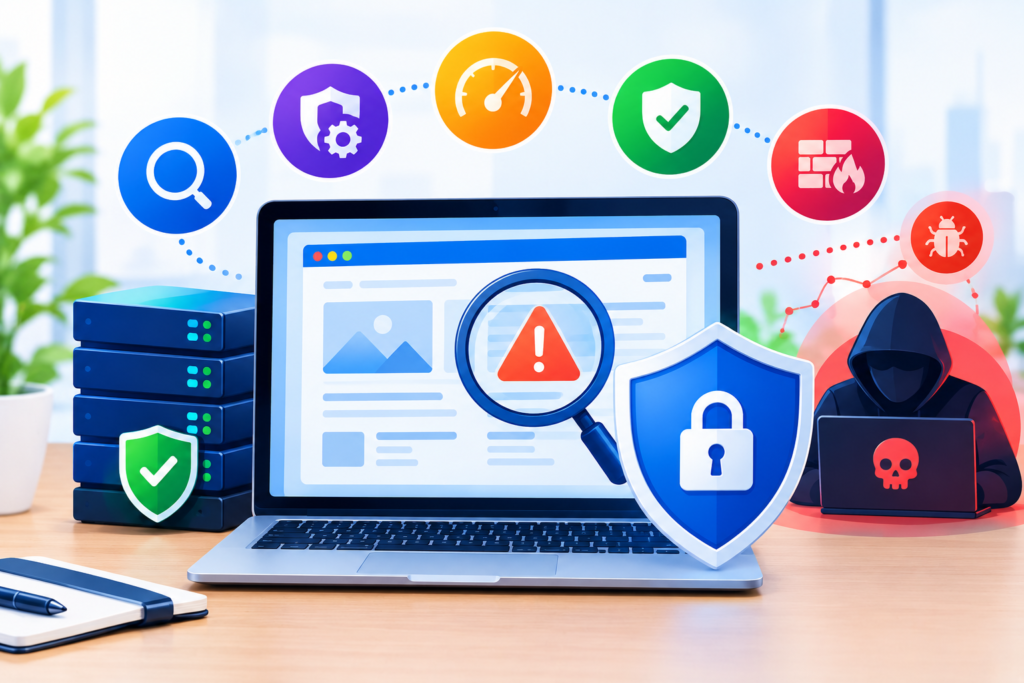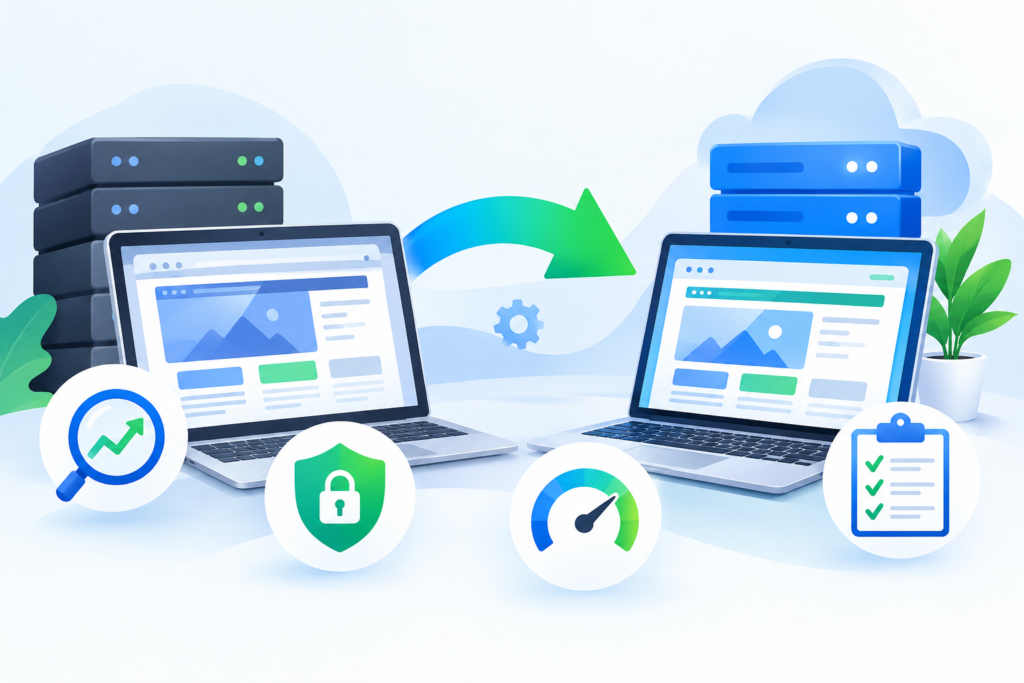
Website Hardening is the process of securing your website against cyber threats by reducing vulnerabilities, strengthening configurations, and implementing industry best practices. Learn how website hardening protects your business, improves security, enhances trust, and supports long-term website performance.
Introduction
Modern websites face an unprecedented number of cyber threats every single day. From malware infections and brute-force attacks to SQL injections, ransomware, and data breaches, attackers constantly search for vulnerabilities they can exploit. Whether you operate a personal blog, an eCommerce store, a corporate website, or a government portal, website security has become one of the most important aspects of maintaining an online presence. A single successful attack can result in financial losses, damaged customer trust, legal consequences, reduced search engine visibility, and lengthy recovery processes. This is why Website Hardening has become an essential cybersecurity strategy rather than an optional security enhancement.
Website hardening refers to the process of systematically reducing security risks by removing unnecessary components, configuring systems securely, applying security best practices, and continuously monitoring for vulnerabilities. Instead of waiting for hackers to exploit weaknesses, website hardening focuses on preventing attacks before they occur. Organizations that follow recommendations from OWASP Top 10, NIST Cybersecurity Framework, and Google Search’s Helpful Content Guidance are significantly better prepared to defend against evolving cyber threats while providing trustworthy experiences for their visitors.
At FixHackedSite, we understand that protecting a website requires far more than installing a security plugin or enabling a firewall. Effective website hardening combines server security, application security, access management, continuous monitoring, secure coding practices, and ongoing maintenance into one comprehensive defense strategy. Throughout this guide, you’ll learn how website hardening works, why it matters, the most effective security measures available today, common mistakes to avoid, and proven best practices that help protect websites against both current and emerging threats.
Understanding Website Hardening
Website hardening is the process of strengthening every layer of a website’s infrastructure to reduce the number of potential attack vectors available to cybercriminals. Instead of focusing solely on detecting threats after they occur, hardening proactively minimizes vulnerabilities before attackers have an opportunity to exploit them. This defensive strategy covers web servers, operating systems, databases, CMS platforms, themes, plugins, APIs, user permissions, network configurations, and application code. The ultimate objective is to create multiple layers of protection that work together to stop unauthorized access and limit damage if an attack occurs.
Many website owners mistakenly believe that cybersecurity only concerns large enterprises or government organizations. In reality, automated bots continuously scan millions of websites regardless of their size. Small business websites, local organizations, and personal blogs are frequently targeted because they often have outdated software, weak passwords, or poorly configured hosting environments. According to guidance from the Cybersecurity and Infrastructure Security Agency (CISA), attackers increasingly rely on automation to identify vulnerable systems within minutes of new exploits becoming publicly available. This makes proactive hardening essential for organizations of every size.
Website hardening is an ongoing security process rather than a one-time project. As software evolves and new vulnerabilities emerge, security controls must continually adapt. Regular updates, vulnerability assessments, penetration testing, configuration reviews, and monitoring all contribute to maintaining a hardened environment. Organizations that integrate security into their everyday operations significantly reduce their exposure to ransomware, malware infections, credential theft, website defacement, and data breaches while maintaining higher levels of customer trust and operational resilience.
Why Website Hardening Is More Important Than Ever
Cybercrime continues to grow in both sophistication and frequency. Attackers no longer rely exclusively on manually hacking websites; instead, they use automated tools capable of scanning thousands of websites every hour. These bots search for outdated CMS versions, vulnerable plugins, exposed configuration files, insecure login pages, weak administrator credentials, and known software vulnerabilities. Once weaknesses are identified, exploitation can occur almost instantly, often without any warning to the website owner.
The consequences of inadequate security extend well beyond technical disruptions. A compromised website can distribute malware to visitors, steal sensitive customer information, redirect users to malicious domains, or become part of a botnet used in larger cyberattacks. Search engines may flag infected websites with security warnings, resulting in lost organic traffic and damaged credibility. Businesses may also face regulatory penalties if customer data is exposed due to insufficient security controls. These financial and reputational costs often exceed the investment required to implement comprehensive website hardening from the beginning.
Website hardening also supports long-term business continuity. Strong security practices improve system reliability, reduce unexpected downtime, simplify incident response, and strengthen customer confidence. Organizations following internationally recognized frameworks such as the OWASP Foundation recommendations and NIST Cybersecurity Framework guidance establish structured security processes that remain effective even as technology evolves. Rather than reacting to every new threat individually, hardened environments are designed to withstand a broad range of attack techniques through layered security controls and continuous improvement.
The Core Objectives of Website Hardening
The primary objective of website hardening is reducing the overall attack surface available to malicious actors. Every unnecessary plugin, unused administrator account, outdated software component, open network port, default configuration, or weak authentication method creates another opportunity for attackers. By systematically identifying and eliminating these weaknesses, organizations significantly decrease the likelihood of successful compromise while improving operational security.
A second objective involves implementing the principle of least privilege. Every user, application, service, and administrator should possess only the minimum permissions necessary to perform their required tasks. Excessive privileges increase the potential damage if an account becomes compromised. Strong identity management, multi-factor authentication, secure password policies, and role-based access controls all contribute to minimizing risk. These controls also improve accountability by ensuring administrative activities can be monitored and audited effectively.
Finally, website hardening aims to build resilience against both known and unknown threats. No security solution can guarantee complete protection, but layered defenses substantially reduce overall risk. Firewalls, intrusion detection systems, secure backups, continuous monitoring, encryption, vulnerability management, logging, and secure coding practices work together to create defense in depth. Even if one security layer fails, additional protections help contain attacks before they cause widespread damage. This comprehensive approach enables organizations to maintain availability, protect sensitive information, and recover more quickly from security incidents.
Common Security Threats That Website Hardening Prevents
Cybercriminals use a wide variety of attack methods to compromise websites, making it essential for organizations to understand the threats they face. Malware remains one of the most widespread risks, allowing attackers to inject malicious code that steals data, redirects visitors, distributes ransomware, mines cryptocurrency, or provides persistent backdoor access. Many malware infections begin with outdated plugins, vulnerable themes, or weak administrator credentials. Website hardening reduces these risks by enforcing secure configurations, timely updates, and continuous monitoring that detect suspicious activity before infections spread.
Injection attacks are another major concern. SQL injection, cross-site scripting (XSS), command injection, and remote code execution vulnerabilities allow attackers to manipulate databases, execute unauthorized commands, or compromise user sessions. Secure input validation, parameterized database queries, content security policies, and regular security testing dramatically reduce exposure to these threats. Security guidance published by OWASP Top 10 highlights these vulnerabilities among the most critical web application security risks because they continue to affect organizations worldwide.
Credential-based attacks have also become increasingly common. Automated bots perform brute-force attacks, password spraying, credential stuffing, and account takeover attempts using billions of leaked usernames and passwords collected from previous data breaches. Weak authentication mechanisms remain one of the easiest entry points for attackers. Website hardening addresses these challenges by implementing multi-factor authentication, strong password requirements, account lockout policies, CAPTCHA protections, login monitoring, and privileged access management. Combined with continuous logging and proactive threat detection, these measures greatly reduce the likelihood of unauthorized access while improving the overall security posture of a website.
Building a Secure Hosting and Server Environment
A secure website begins with a secure hosting environment. Even the most carefully developed website can become vulnerable if it is hosted on an insecure server with outdated software, poor configurations, or inadequate monitoring. Website hardening starts at the infrastructure level by ensuring that web servers, operating systems, databases, and hosting platforms are configured according to recognized cybersecurity best practices. Selecting a reputable hosting provider that prioritizes security, uptime, redundancy, and proactive monitoring establishes the foundation for every other security measure.
Server hardening involves reducing unnecessary services, disabling unused ports, removing default accounts, limiting administrative access, and keeping operating systems updated with the latest security patches. Many successful cyberattacks occur because attackers exploit known vulnerabilities that remain unpatched for weeks or even months. Following recommendations from the Secure by Design initiative and the OWASP Cheat Sheet Series helps administrators establish secure baseline configurations that minimize unnecessary exposure.
Secure server environments also include network-level protections such as firewalls, intrusion detection systems (IDS), intrusion prevention systems (IPS), distributed denial-of-service (DDoS) mitigation, and continuous log monitoring. Administrators should restrict remote management interfaces, enforce encrypted administrative connections using SSH keys instead of passwords, and regularly review server logs for suspicious behavior. Together, these infrastructure-level controls create a resilient environment that significantly reduces opportunities for attackers to gain unauthorized access.
Keeping Software, CMS, Themes, and Plugins Updated

Outdated software remains one of the most common causes of website compromises. Content Management Systems (CMS), plugins, extensions, themes, frameworks, programming libraries, and third-party integrations frequently receive updates that address newly discovered vulnerabilities. Delaying these updates provides attackers with opportunities to exploit publicly documented security flaws using automated scanning tools that search the internet for outdated installations.
A comprehensive website hardening strategy includes a structured patch management process. Updates should be tested in staging environments before deployment to production systems, particularly for business-critical websites. This approach minimizes compatibility issues while ensuring important security patches are installed promptly. Organizations should maintain an inventory of every software component installed on their servers so outdated or unsupported software can be identified quickly. Software that no longer receives vendor support should be replaced immediately because newly discovered vulnerabilities will never be patched.
Website owners should also reduce unnecessary complexity by removing inactive plugins, unused themes, outdated extensions, and obsolete applications. Every installed component increases the potential attack surface, even if it is not actively used. Many compromised websites contain vulnerable plugins that administrators forgot were still installed. Regular software audits, combined with automated vulnerability scanning and continuous maintenance, help ensure that every component contributing to the website remains secure, supported, and properly maintained.
Strengthening Authentication and Access Controls
Authentication represents one of the most critical layers of website security because compromised credentials often provide attackers with direct access to administrative systems. Weak passwords, shared accounts, default login credentials, and inadequate identity management remain among the leading causes of website breaches. Website hardening significantly improves security by implementing strong authentication controls that reduce the risk of unauthorized access.
Every administrative account should use unique, complex passwords generated through reputable password managers rather than relying on memorable phrases or reused credentials. Password reuse creates significant risk because attackers routinely use stolen credentials from unrelated data breaches in credential stuffing attacks against other websites. Implementing Digital Identity Guidelines published by NIST supports stronger identity verification practices and improves account security.
Multi-factor authentication (MFA) should be mandatory for every privileged account. Even if an attacker successfully obtains a password, MFA provides an additional verification layer that prevents unauthorized access in most situations. Role-based access control (RBAC) further strengthens security by ensuring users receive only the permissions necessary for their responsibilities. Administrative privileges should be limited to trusted personnel, while access reviews should be performed regularly to remove inactive users, outdated permissions, and unnecessary accounts that could otherwise become security liabilities.
Securing Data Through Encryption and HTTPS
Protecting sensitive information requires more than preventing unauthorized access—it also involves ensuring data remains confidential while being transmitted and stored. Encryption serves as one of the most effective methods for safeguarding customer information, login credentials, payment details, and confidential business data from interception or unauthorized disclosure. Website hardening therefore includes implementing strong encryption practices across every stage of data handling.
Transport Layer Security (TLS) protects information exchanged between browsers and web servers through HTTPS. Websites operating without HTTPS expose users to interception attacks, session hijacking, and credential theft. Modern search engines also consider HTTPS an important trust signal, making encrypted connections beneficial for both security and search visibility. Guidance from Mozilla Web Security explains how secure communication protocols help defend against numerous network-based attacks.
Encryption should also extend to sensitive information stored within databases, backups, and application storage systems. Database encryption, encrypted backups, secure key management, and properly configured SSL/TLS certificates contribute to a comprehensive data protection strategy. Organizations handling financial transactions or personal information should ensure encryption practices align with recognized regulatory and industry standards. Combined with secure authentication, encryption dramatically limits the usefulness of stolen data if attackers successfully compromise a system.
Implementing Firewalls and Advanced Threat Protection
Firewalls act as the first line of defense against many online attacks by filtering malicious traffic before it reaches the website. Website Application Firewalls (WAFs) analyze incoming requests and block suspicious activity such as SQL injection attempts, cross-site scripting attacks, malicious bots, and known exploit patterns. Unlike traditional network firewalls that primarily manage network traffic, WAFs specifically understand HTTP and HTTPS requests, making them particularly effective at protecting web applications.
Modern website hardening strategies often combine cloud-based WAF solutions with server-level firewall configurations to establish multiple security layers. This layered approach allows organizations to defend against both network-based attacks and application-level threats simultaneously. Continuous threat intelligence updates ensure firewall rules evolve as new attack techniques emerge, allowing organizations to remain protected without constantly modifying configurations manually.
Advanced threat protection also includes behavioral analytics, anomaly detection, bot management, rate limiting, geo-blocking where appropriate, and automated incident response capabilities. Security systems that continuously monitor user behavior can identify unusual login attempts, privilege escalation, excessive requests, or suspicious administrative actions before significant damage occurs. Rather than relying solely on static security rules, modern threat detection systems combine automation with real-time monitoring to identify sophisticated attacks that traditional defenses might overlook.
Website Monitoring, Logging, and Incident Detection
Even the most secure websites require continuous monitoring because cybersecurity threats evolve constantly. Website hardening is incomplete without comprehensive visibility into system activity, authentication events, configuration changes, application behavior, and network traffic. Continuous monitoring allows administrators to identify abnormal behavior early, reducing both response times and potential damage following a security incident.
Comprehensive logging should capture authentication attempts, administrative activities, software updates, file modifications, database changes, failed login attempts, firewall events, and server errors. These logs provide valuable forensic evidence during investigations while also supporting proactive threat detection. Centralized logging platforms simplify analysis by collecting information from multiple systems into a single location where automated alerts can identify suspicious patterns. Recommendations from the NIST Computer Security Resource Center emphasize the importance of continuous monitoring as part of an effective cybersecurity program.
Monitoring solutions should generate immediate alerts whenever critical security events occur, including unauthorized file changes, malware detection, privilege escalation attempts, unexpected administrator logins, or repeated failed authentication attempts. Rapid notification enables security teams to investigate incidents before attackers establish persistence or cause significant disruption. Continuous monitoring, combined with regular security reviews and vulnerability assessments, transforms website hardening into an ongoing process that adapts to emerging threats rather than relying solely on static security configurations.
Backup, Disaster Recovery, and Business Continuity Planning
No website is completely immune to cyber threats, hardware failures, software bugs, or human error. Even with comprehensive website hardening measures in place, organizations must prepare for worst-case scenarios. A well-designed backup and disaster recovery strategy ensures that websites can be restored quickly after security incidents, minimizing downtime and protecting valuable business data. Backups are not simply copies of files—they are a critical component of an organization’s overall cybersecurity and business continuity strategy.
Effective backups should follow the widely accepted 3-2-1 backup principle, meaning three copies of data are maintained on two different storage media, with one copy stored off-site or in a secure cloud environment. Backup files should be encrypted, regularly tested, and protected from unauthorized modification. Many ransomware attacks specifically target backup systems, making immutable or read-only backups particularly valuable. Organizations should routinely verify that backup files can be restored successfully because an untested backup cannot be trusted during an emergency.
Business continuity planning extends beyond restoring files. Organizations should define clear recovery objectives, identify mission-critical systems, establish communication procedures, assign incident response responsibilities, and document recovery workflows. Regular disaster recovery exercises help teams become familiar with restoration procedures before an actual incident occurs. When backups, monitoring, and recovery planning work together, businesses can recover from security incidents significantly faster while minimizing operational disruption and financial losses.
Common Website Hardening Mistakes to Avoid
Many website owners invest in cybersecurity tools yet still experience successful attacks because of avoidable mistakes. One of the most common errors is assuming that installing a security plugin alone provides complete protection. Website security requires multiple layers of defense working together rather than relying on a single solution. Firewalls, malware scanners, secure configurations, access controls, software updates, and monitoring each play an essential role in reducing cyber risk.
Another frequent mistake involves neglecting software updates. Administrators sometimes postpone updates because they fear compatibility issues or temporary downtime. Unfortunately, attackers actively monitor newly disclosed vulnerabilities and often begin exploiting them within hours of public disclosure. Delaying updates significantly increases the likelihood of compromise. Organizations should instead implement structured testing procedures that allow security patches to be deployed quickly while minimizing operational risks.
Poor credential management also remains a leading cause of website breaches. Reusing passwords, sharing administrator accounts, failing to enable multi-factor authentication, leaving inactive accounts enabled, and assigning excessive permissions all increase attack opportunities. Other common mistakes include ignoring server logs, failing to test backups, exposing unnecessary services to the internet, using unsupported software, and neglecting routine security assessments. Avoiding these mistakes dramatically strengthens an organization’s overall security posture and reduces the likelihood of successful attacks.
Best Practices Summary

A successful website hardening strategy requires continuous improvement rather than a one-time implementation. Cyber threats constantly evolve, making ongoing maintenance, monitoring, and security reviews essential. Organizations that consistently follow industry best practices significantly reduce their exposure to malware, ransomware, phishing campaigns, brute-force attacks, and application-level vulnerabilities while improving customer trust and business resilience.
Some of the most effective website hardening best practices include:
- Keep operating systems, CMS platforms, plugins, themes, and software fully updated.
- Enable Multi-Factor Authentication (MFA) for all privileged accounts.
- Use strong, unique passwords stored in a secure password manager.
- Remove unnecessary software, plugins, services, and user accounts.
- Implement role-based access control following the principle of least privilege.
- Deploy a Web Application Firewall (WAF) and configure server firewalls correctly.
- Use HTTPS with modern TLS encryption across the entire website.
- Perform regular vulnerability scans and penetration testing.
- Monitor website logs continuously for suspicious activity.
- Create encrypted, tested, and immutable backups.
- Implement file integrity monitoring to detect unauthorized changes.
- Conduct periodic security audits and configuration reviews.
- Educate employees about phishing, credential security, and cybersecurity awareness.
- Document an incident response and disaster recovery plan.
- Continuously review security policies as new threats emerge.
Organizations that integrate these best practices into daily operations build stronger defenses against evolving cyber threats while maintaining high levels of availability, reliability, and customer confidence.
Frequently Asked Questions
1. What is website hardening?
Website hardening is the process of improving website security by reducing vulnerabilities, removing unnecessary components, implementing secure configurations, strengthening authentication, applying software updates, and continuously monitoring systems to prevent cyberattacks.
2. Why is website hardening important?
Website hardening reduces the risk of malware infections, ransomware attacks, unauthorized access, data breaches, website defacement, and service interruptions. It protects sensitive information while improving customer trust and long-term business continuity.
3. How often should website hardening activities be performed?
Website hardening is an ongoing process. Security updates should be installed promptly, vulnerability scans should be conducted regularly, backups should be tested frequently, and comprehensive security audits should be performed several times each year.
4. Does website hardening improve SEO?
Yes. Secure websites provide a better user experience, reduce downtime, prevent malware warnings, protect website reputation, and support Google’s emphasis on trustworthy websites. HTTPS, strong security, and reliable website availability all contribute to maintaining search visibility.
5. Can a firewall completely protect my website?
No. A firewall is only one layer of security. Effective website hardening combines secure configurations, software updates, access controls, encryption, monitoring, backups, secure development practices, and continuous vulnerability management.
6. What are the biggest website security risks today?
Some of the most significant threats include malware, ransomware, phishing, SQL injection, Cross-Site Scripting (XSS), brute-force attacks, credential stuffing, insecure APIs, supply-chain attacks, and vulnerabilities in outdated software.
7. Is website hardening necessary for small businesses?
Absolutely. Automated attacks target websites of every size. Small businesses are often attractive targets because they may have fewer security resources and outdated software. Website hardening significantly reduces these risks.
8. What is the difference between website hardening and malware removal?
Malware removal focuses on cleaning an already compromised website. Website hardening focuses on preventing future compromises by eliminating vulnerabilities, improving configurations, strengthening security controls, and continuously monitoring for threats.
Conclusion
Website hardening is one of the most valuable investments any organization can make to protect its online presence. Cyber threats continue to evolve, but attackers typically succeed by exploiting preventable weaknesses such as outdated software, poor configurations, weak passwords, excessive permissions, or insufficient monitoring. By implementing a layered security strategy that combines secure infrastructure, regular updates, strong authentication, encryption, firewalls, monitoring, vulnerability management, and disaster recovery planning, organizations dramatically reduce the likelihood of successful cyberattacks while improving operational resilience.
At FixHackedSite, we believe that proactive security always delivers greater value than reactive recovery. Investing in website hardening today helps protect customer trust, maintain business continuity, preserve search engine visibility, and reduce the financial and reputational costs associated with website compromises. A secure website is not built overnight—it is maintained through continuous improvement, regular assessments, and adherence to recognized cybersecurity best practices.
Want to Implement This Easily?
Prompt
You are an expert consultant. Based on the blog post titled “Website Hardening”, provide a step-by-step, practical implementation guide. Include tools, best practices, common mistakes to avoid, and advanced tips. Assume the reader wants to implement everything discussed in this article effectively.
Call to Action
Want our help implementing this? Just reach out to us via our website contact form: