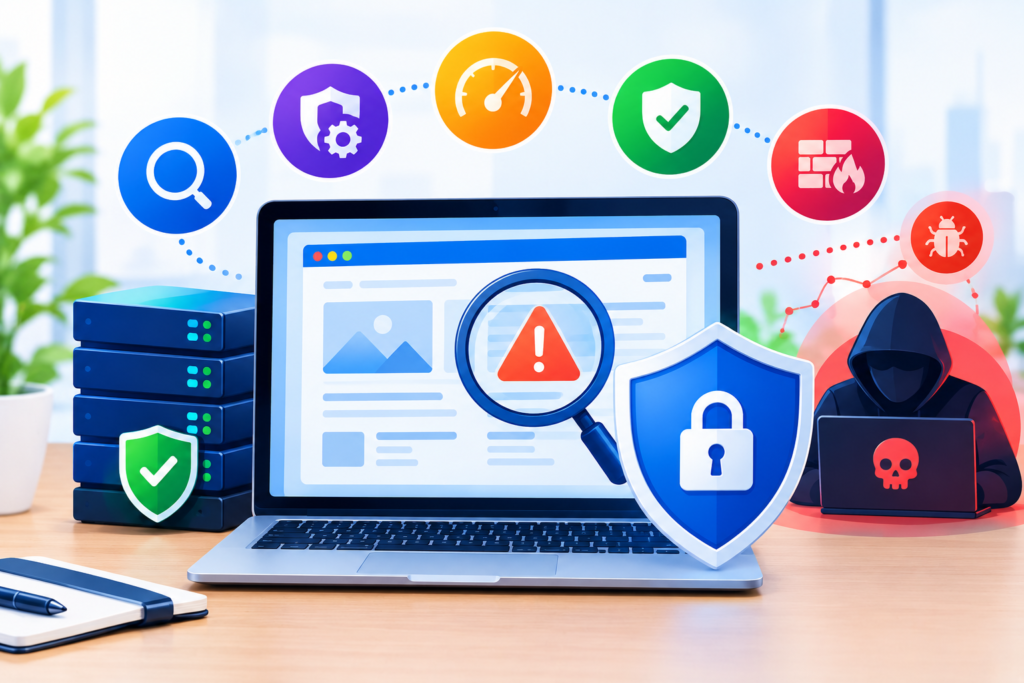
Learn everything about website domain strategy, domain security, domain authority, SEO optimization, branding, and domain management. Discover how the right website domain improves trust, rankings, visibility, and online growth.
Introduction
A website domain is far more than a digital address. It is the foundation of an online identity, a trust signal for visitors, and a major factor influencing branding, search visibility, and cybersecurity. Businesses, entrepreneurs, bloggers, and organizations all depend on a strong domain strategy to establish credibility and create a reliable online presence. Whether launching a new website or improving an existing one, choosing and managing the right domain directly affects long-term success.
For modern businesses, domain management is connected to SEO, user trust, technical performance, email reliability, and online security. Search engines evaluate website quality using many signals, and a professional domain contributes to credibility and authority. Users are also more likely to trust websites with secure, memorable, and properly configured domains.
At Fix Hacked Site, website security and recovery professionals understand how vulnerable poorly managed domains can become. A domain that lacks proper protection can expose websites to phishing attacks, DNS hijacking, spam abuse, malware infections, and reputation damage. This comprehensive guide explains everything website owners need to know about website domains, from selection and branding to SEO optimization, security, migration, and long-term management.
Understanding What a Website Domain Really Means
A website domain is the address users type into a browser to access a website. Instead of remembering complex numerical IP addresses, domains provide a human-friendly system that allows users to reach websites quickly and easily. Every successful online business depends on a professionally managed domain because it represents the core identity of the brand across the internet.
Domains are made up of several important parts, including the top-level domain (TLD), second-level domain, and optional subdomains. For example, in “example.com,” the word “example” represents the brand identity while “.com” is the extension. Businesses can also choose extensions such as “.org,” “.net,” “.store,” or country-specific extensions depending on their target audience and goals.
Modern domain management goes far beyond simple registration. Businesses must manage DNS settings, SSL certificates, email authentication, domain renewals, and security protections. Without proper management, domains can become vulnerable to downtime, cyberattacks, SEO penalties, or customer trust issues. Understanding the strategic role of a website domain helps organizations create stronger and more sustainable online foundations.
Why Website Domains Matter for Branding and Recognition
A strong website domain creates immediate brand recognition and improves memorability. Short, professional, and easy-to-spell domains help users remember a business more effectively. In highly competitive industries, a memorable domain can become one of the most valuable digital assets a company owns.
Consistent branding across websites, email addresses, social media profiles, and advertising campaigns increases user trust and familiarity. When people repeatedly see the same recognizable domain associated with quality content and reliable services, confidence in the brand naturally grows. This consistency also supports stronger marketing performance and better customer retention.
Businesses should avoid confusing spellings, unnecessary hyphens, excessive numbers, or overly long domain names. Domains should remain clear, concise, and professional. A clean domain structure improves trust, reduces typing mistakes, and enhances user perception. Professional branding begins with a domain that reflects credibility and long-term stability.
The Relationship Between Website Domains and SEO
Website domains play an important role in search engine optimization. Although Google has clarified that keywords inside domains alone are not guaranteed ranking factors, domains still influence trust, branding, user behavior, and click-through rates. A strong domain supports overall SEO performance indirectly through credibility and recognition.
Search engines evaluate many signals when determining website quality. Users are more likely to click trusted domains, spend more time on reputable websites, and return to recognized brands. These positive engagement signals help improve long-term SEO outcomes. A professional domain contributes to stronger authority and user confidence.
Website owners should follow official SEO recommendations from Google Search Central: Google Search Central
Businesses should avoid keyword stuffing inside domains because it can appear manipulative or spammy. Instead, companies should focus on creating brandable, trustworthy domains supported by high-quality content, strong technical optimization, and valuable user experiences.
Choosing the Right Domain Extension for Your Website
Selecting the right domain extension is an important strategic decision for businesses and organizations. The “.com” extension remains the most trusted and widely recognized option globally. Many users automatically assume websites end in “.com,” making it a preferred choice for international branding and trust.
However, alternative domain extensions can also provide value depending on business goals. Country-code domains such as “.uk,” “.ca,” or “.pk” help strengthen local targeting and geographic relevance. Industry-specific extensions like “.agency,” “.store,” or “.tech” may also enhance niche branding when used professionally.
Trust should always remain the top priority when choosing a TLD. Users are naturally more comfortable interacting with familiar and credible extensions. Businesses operating internationally may also benefit from purchasing multiple extensions to protect their brand identity and prevent competitors or malicious actors from misusing similar domain variations.
Website Domain Security and Cybersecurity Risks
Domain security is one of the most overlooked aspects of cybersecurity. Cybercriminals frequently target weak domain accounts because gaining access to DNS settings can allow attackers to redirect traffic, steal data, distribute malware, or impersonate businesses.
DNS hijacking is a serious threat where attackers manipulate DNS records to send visitors to malicious websites. Expired domains can also be purchased by cybercriminals and used for phishing campaigns or spam operations. Weak passwords and missing multi-factor authentication significantly increase these risks.
Website owners should follow cybersecurity recommendations from trusted authorities such as: CISA Cybersecurity Guidance
Important security measures include enabling domain lock protection, activating two-factor authentication, monitoring DNS changes, using strong passwords, and renewing domains early. Domain privacy protection also reduces spam and helps protect sensitive registration information from public databases.
The Importance of SSL Certificates and HTTPS
Every modern website should use HTTPS encryption to protect users and strengthen trust. SSL certificates encrypt communication between users and servers, preventing attackers from intercepting sensitive information such as passwords, payment details, or contact form submissions.
Search engines prioritize secure websites because HTTPS improves safety and trustworthiness. Browsers now display warnings for websites that do not use encryption, which can damage credibility and reduce conversions. Users are much less likely to interact with websites labeled as “Not Secure.”
Website owners can learn more about HTTPS implementation from Google’s official documentation: Google HTTPS Best Practices
SSL certificates are especially critical for ecommerce stores, login portals, online forms, and membership websites. However, every website benefits from encryption because security directly affects reputation, SEO performance, and user trust.
How Domain Age and History Influence Reputation
Domain age itself is not a direct ranking factor, but domain history and reputation significantly affect online performance. Search engines evaluate factors such as backlink quality, previous spam activity, content history, and trust signals associated with a domain.
An expired or previously abused domain may carry toxic backlinks, spam penalties, or negative reputation issues. Before purchasing aged or expired domains, businesses should carefully review historical records, backlink profiles, and archived content to avoid inheriting SEO problems.
A clean domain history supports stronger long-term authority and reduces the risk of penalties or trust issues. Consistent ownership, reliable content publishing, and strong security practices gradually improve reputation over time. Businesses investing in premium domains should always perform thorough due diligence before finalizing acquisitions.
Strong domain reputation cannot be built overnight. It requires consistency, trust, quality content, and long-term commitment to ethical SEO practices and user-focused optimization.
Best Practices for Domain Registration and Ownership
Proper domain registration practices help businesses avoid ownership disputes, operational disruptions, and security risks. Domains should always be registered under the legal business entity rather than under individual employees, freelancers, or temporary contractors.
Many organizations lose access to important domains because registration details were controlled by former staff members or external agencies. Recovering ownership can become expensive and time-consuming, especially if legal disputes arise. Maintaining centralized ownership protects long-term business continuity.
Businesses should keep registrar credentials secure and maintain organized records for renewals, DNS settings, and authentication details. Reliable registrars with strong security protections and responsive support teams are essential for professional domain management.
Official information about domain registration standards can be found through: ICANN Official Website
Clear ownership structures and proactive management reduce operational risks and help businesses maintain stability and trust.
How Website Domains Affect User Trust and Conversion Rates
Users make trust decisions within seconds of landing on a website. A professional and recognizable domain strongly influences whether visitors stay engaged or leave immediately. Domains that appear suspicious, overly complicated, or unprofessional often reduce credibility and conversions.
Trust signals connected to domains include HTTPS encryption, consistent branding, recognizable extensions, and legitimate business information. Users are more likely to submit forms, complete purchases, or engage with websites that appear trustworthy and secure.
Conversion optimization depends heavily on credibility. Businesses that invest in professional domains often achieve stronger customer confidence and higher engagement rates. Consistency between website domains, branded email addresses, and social profiles reinforces legitimacy and authority.
Professional domains also improve email deliverability and communication trust. Emails sent from branded domains are less likely to be marked as spam compared to generic or suspicious-looking addresses.
Domain Migration and Website Transition Strategies
Changing a website domain requires careful planning to avoid traffic losses, broken links, and ranking declines. Poorly managed migrations can severely damage SEO performance and user experience.
Successful migrations involve implementing proper 301 redirects, updating internal links, refreshing XML sitemaps, and monitoring indexing performance closely. Redirects help transfer SEO value from old URLs to new destinations while minimizing disruption for users and search engines.
Google provides official guidance for website migrations here: Google Site Move Guidelines
Before launching a migration, businesses should back up website data, test redirect configurations, verify analytics tracking, and monitor search console reports carefully. Clear communication with customers and users during transitions also helps reduce confusion and maintain trust.
A well-executed migration protects domain authority and supports long-term SEO stability.
The Role of DNS Management in Website Performance
DNS, or Domain Name System, functions as the internet’s directory system by translating human-readable domains into server IP addresses. Efficient DNS management directly affects website speed, reliability, uptime, and security.
Poor DNS configurations can cause slow loading times, service interruptions, email delivery failures, and accessibility problems. Businesses should use reputable DNS providers with strong infrastructure, redundancy, and security protections.
Advanced DNS strategies may include content delivery network integration, load balancing, failover systems, and email authentication records such as SPF, DKIM, and DMARC. These configurations improve resilience and help protect websites from spoofing or abuse.
Businesses can learn more about DNS technology through: Cloudflare DNS Learning Center
Organizations managing high-traffic or mission-critical websites should regularly audit DNS settings to ensure optimal security and performance.
Website Domains and Local SEO Optimization
Local businesses benefit from domain strategies aligned with regional targeting and geographic visibility. Country-code domains may strengthen local relevance, while optimized local content improves search visibility for location-based searches.
Consistency between domain information, business listings, contact pages, and local citations helps search engines verify legitimacy and relevance. Search engines evaluate these signals when determining local search rankings and geographic targeting accuracy.
Google’s local SEO guidance is available here: Google Business Profile Help
Businesses serving specific locations should create valuable localized landing pages, maintain accurate contact details, and optimize region-specific keywords naturally. However, companies should avoid creating thin location pages designed only for keyword manipulation.
Effective local SEO strategies combine strong branding, trustworthy domains, valuable content, and accurate business information.
Common Website Domain Mistakes Businesses Make
One common mistake businesses make is choosing domains that are too long, confusing, or difficult to spell. Complex domains reduce memorability and increase the chances of typing errors, negatively affecting direct traffic and brand recognition.
Another serious mistake involves neglecting domain security. Many businesses fail to activate two-factor authentication, ignore renewal notices, or use weak passwords. These oversights increase vulnerability to domain hijacking, phishing attacks, and DNS manipulation.
Some organizations also purchase expired domains without researching historical reputation issues. A domain with toxic backlinks or spam history may inherit penalties that damage SEO performance and credibility. Thorough research before acquisition is essential.
Additional mistakes include:
- Using spammy keyword-heavy domains
- Ignoring HTTPS encryption
- Registering domains under personal accounts instead of businesses
- Failing to back up DNS records
- Using unreliable registrars
- Forgetting renewal dates
- Not monitoring domain reputation
Avoiding these mistakes helps businesses maintain stronger security, better SEO performance, and greater operational reliability.
Building Long-Term Domain Authority and Online Reputation
Domain authority develops over time through trust, quality content, user engagement, and consistent optimization. Sustainable authority cannot be achieved through shortcuts or manipulative SEO tactics. Businesses must focus on long-term value creation.
Publishing authoritative content consistently helps establish expertise and relevance within an industry. Earning backlinks from reputable websites further strengthens trust signals and improves organic visibility. Technical optimization, including mobile responsiveness and page speed improvements, also contributes to better performance.
Google emphasizes people-first content and helpful user experiences: Google Helpful Content Guidelines
Businesses should also monitor online reputation signals such as reviews, uptime reliability, security status, and brand mentions. A trustworthy domain becomes a powerful long-term asset that supports marketing success, customer acquisition, and competitive positioning.
Future Trends in Website Domain Management

Website domain management continues to evolve alongside cybersecurity advancements, privacy regulations, artificial intelligence, and changing search engine algorithms. Businesses must stay adaptable to remain competitive and secure.
Emerging technologies such as DNSSEC, AI-driven threat monitoring, and advanced authentication protocols are becoming increasingly important for protecting domains from sophisticated cyber threats. Organizations that invest in proactive security strategies will reduce vulnerabilities and improve resilience.
Search engines are also prioritizing trust, content quality, and user experience more heavily than ever before. Domains connected to authoritative brands with secure infrastructures and helpful content will continue outperforming low-quality websites relying on manipulative tactics.
Privacy laws and data protection regulations are also shaping domain management practices. Businesses must handle customer data responsibly, maintain transparency, and ensure compliance with evolving legal standards. Organizations that prioritize trust and professionalism today will be better positioned for long-term digital success tomorrow.
Frequently Asked Questions
What is the difference between a domain and web hosting?
A domain is the address users type to access a website, while web hosting stores website files on a server. Both are necessary for a website to function properly.
Does changing a domain affect SEO rankings?
Yes, changing domains can affect SEO rankings if migrations are not managed correctly. Proper redirects and technical planning help preserve rankings and traffic.
Why is HTTPS important for website domains?
HTTPS encrypts communication between users and websites, improving security, user trust, and search engine visibility.
How can businesses protect domains from hackers?
Businesses should enable two-factor authentication, registrar lock protection, strong passwords, DNS monitoring, and early renewals.
Are keyword domains still effective for SEO?
Keyword domains alone do not guarantee rankings. Brand-focused domains supported by high-quality content and technical optimization are more effective.
What happens if a domain expires?
Expired domains can cause website downtime, email failures, and SEO disruptions. In some cases, third parties may purchase expired domains.
Should businesses buy multiple domain extensions?
Yes, buying multiple extensions helps protect branding and prevents competitors or malicious actors from misusing similar domain variations.
How long should a domain registration period be?
Many businesses register domains for multiple years to reduce renewal risks and maintain operational stability.
Best Practices Summary for Website Domain Management
Effective domain management requires a combination of branding strategy, technical optimization, cybersecurity protection, and long-term planning. Businesses should focus on building trustworthy, secure, and memorable online identities.
Important best practices include:
- Choose short and memorable domain names
- Use trusted domain extensions
- Enable HTTPS encryption
- Activate two-factor authentication
- Monitor DNS configurations regularly
- Renew domains early
- Research domain history before purchase
- Maintain consistent branding
- Follow ethical SEO practices
- Plan migrations carefully
Businesses that follow these best practices improve security, strengthen SEO performance, and build greater customer trust over time.
Conclusion
Website domains are foundational digital assets that influence branding, cybersecurity, SEO performance, customer trust, and long-term online growth. A professionally managed domain strengthens credibility, improves visibility, and supports sustainable business success.
Successful domain management requires continuous attention, from registration and DNS configuration to SSL implementation, migration planning, and ongoing security monitoring. Businesses that ignore these responsibilities often face preventable risks, traffic losses, and reputation damage.
At Fix Hacked Site, businesses can access professional support for malware removal, hacked website recovery, cybersecurity protection, and technical assistance. Strong digital success begins with secure and strategic domain management.
Want to Implement This Easily?
Prompt Text:
You are an expert consultant. Based on the blog post titled “Website Domain”, provide a step-by-step, practical implementation guide. Include tools, best practices, common mistakes to avoid, and advanced tips. Assume the reader wants to implement everything discussed in this article effectively.
Call to Action:
Want our help implementing this? Just reach out to us via our website contact form: Fix Hacked Site Contact Page