Website Hardening is the process of adding multiple protective layers to secure a website against cyber threats, hacking attempts, and vulnerabilities. In today’s digital era, businesses depend on their websites for growth, sales, and communication, which makes protecting online assets more important than ever. A well-structured website hardening strategy not only reduces risks but also ensures that the site performs smoothly while maintaining the trust of customers and visitors. Whether you run an e-commerce platform, a corporate website, or a personal blog, implementing website hardening techniques is critical for long-term security and digital success.
Introduction to Website Hardening
In the modern digital ecosystem, websites are constantly targeted by malicious actors who attempt to exploit vulnerabilities for financial gain, data theft, or to disrupt operations. Website Hardening is a proactive approach that aims to minimize these risks by strengthening the security framework of your website. By hardening your website, you ensure that cybercriminals encounter multiple layers of protection, making it significantly more difficult for them to succeed in their attacks. This security practice includes strategies ranging from software updates and secure configurations to monitoring systems and access restrictions.
The importance of website hardening lies in the fact that a vulnerable website can compromise not just your business operations but also your brand’s reputation and customer trust. Cyberattacks can lead to loss of sensitive data, financial penalties, and even blacklisting of your website on search engines. By implementing website hardening measures, you establish a resilient defense system that protects your digital assets and assures visitors that your platform is safe. This creates an environment where users can interact confidently without the fear of data breaches or malicious activity.
At FixHackedSite, we understand how critical website hardening is for online businesses and individuals who rely on their digital presence. Our focus is on empowering website owners with proven strategies to defend against malware, hacking attempts, and evolving cyber risks. This blog will guide you through every aspect of website hardening, from understanding the basics to implementing advanced measures, ensuring your website remains secure, reliable, and trustworthy in today’s competitive digital landscape.
Understanding the Concept of Website Hardening
Website hardening refers to a systematic approach that reduces vulnerabilities within a website by implementing security controls and protective measures. It is similar to reinforcing the doors and windows of a house to prevent intruders from gaining entry. Instead of addressing security issues after an attack has occurred, hardening ensures that your digital structure is fortified beforehand, limiting the opportunities for exploitation. This process typically involves securing servers, applications, networks, and the overall website environment against unauthorized access and malicious activities.
The foundation of website hardening is built on identifying potential weaknesses and addressing them proactively. For example, outdated software versions, weak passwords, or misconfigured settings can serve as entry points for attackers. By addressing these gaps through security updates, strong authentication methods, and system monitoring, you create multiple layers of defense. These layers make it harder for attackers to compromise your website and reduce the likelihood of successful intrusion. Website hardening also goes hand in hand with ongoing monitoring, ensuring that new vulnerabilities are detected and resolved promptly.
In today’s threat landscape, where cybercriminals use advanced techniques like phishing, brute force attacks, and malware injections, hardening your website is no longer optional—it is a necessity. Businesses that fail to invest in this process often become easy targets, suffering both financial and reputational damage. By understanding the principles of website hardening and applying them consistently, you create a robust foundation for online security that evolves alongside new threats and technological changes.
Why Website Hardening is Crucial for Online Success
The significance of website hardening extends far beyond basic security. In an age where customers interact with brands primarily through digital platforms, a secure website directly impacts credibility, trust, and customer retention. When visitors notice that a website is secure, loads without errors, and provides a safe environment for transactions, they are more likely to engage and return. On the other hand, even a single breach can damage your reputation and discourage future visitors from interacting with your site.
 Cyber threats are not limited to large corporations—small businesses and personal websites are equally vulnerable. Hackers often target smaller websites because they assume these platforms lack adequate security measures. Without website hardening, your site may become a victim of ransomware attacks, spam infections, or unauthorized redirects, all of which harm user experience and can even result in blacklisting by search engines. Such penalties not only reduce traffic but can also significantly impact revenue.
Furthermore, regulatory compliance plays a role in why website hardening is essential. Many industries, such as finance, healthcare, and e-commerce, require strict adherence to data protection laws and cybersecurity standards. Failure to harden your website could result in legal consequences and heavy fines. By implementing a comprehensive hardening strategy, you not only protect sensitive data but also demonstrate responsibility and professionalism, building a strong foundation for long-term online success.
Common Cyber Threats Targeting Websites
Websites face a wide variety of cyber threats, ranging from automated bots to highly sophisticated hacking attempts. One of the most common threats is malware injection, where attackers exploit vulnerabilities to insert malicious code that disrupts functionality, steals data, or redirects visitors. These attacks can remain undetected for long periods, quietly collecting sensitive information or damaging your SEO rankings. Website hardening reduces the chances of such infections by ensuring that vulnerabilities are patched and protective tools are in place.
Another significant threat is brute force attacks, where hackers attempt to gain access by systematically trying combinations of usernames and passwords. Without strong authentication protocols, these attacks can easily succeed. Similarly, Distributed Denial-of-Service (DDoS) attacks can overwhelm servers with massive traffic, making the website inaccessible to legitimate users. By strengthening server settings, limiting login attempts, and implementing firewalls, website hardening ensures resilience against these common attack patterns.
Phishing attacks and social engineering tactics also remain a concern for businesses of all sizes. Hackers often use fake login pages or deceptive links to trick users into revealing their credentials. While employee training plays a crucial role in mitigating these risks, website hardening ensures that technical safeguards—such as SSL certificates and secure login portals—are in place to protect users from falling victim. Recognizing and addressing these common threats is the first step toward building a secure and reliable online environment.
The Role of Regular Software Updates in Website Hardening
One of the most fundamental yet often overlooked aspects of website hardening is keeping all software components updated. This includes the content management system (CMS), plugins, themes, and server software. Outdated versions often contain vulnerabilities that hackers actively search for and exploit. By ensuring that every component of your website is up to date, you close the doors to many of the most common attacks. Hackers frequently use automated bots to scan the internet for outdated software, making unpatched websites easy prey for mass exploitation.
Regular updates serve as a direct defense mechanism because they include security patches released by developers to address known vulnerabilities. These patches are specifically designed to fix flaws that cybercriminals could otherwise manipulate. Without applying them, your website becomes a target that attackers know they can compromise with minimal effort. In many cases, even popular plugins and themes are exploited if updates are ignored, which is why routine patch management should be part of every website owner’s security strategy. By integrating update checks into your workflow, you establish a proactive culture of defense.
Beyond preventing attacks, software updates also enhance overall performance and compatibility, which contributes to a smoother user experience. Search engines reward secure and well-maintained websites, making updates not only a security priority but also an SEO advantage. For businesses that rely on customer trust, ensuring a secure website through timely updates sends a powerful message: your brand values security and reliability. As part of website hardening, updates should never be treated as optional—they are the foundation of resilience in the ever-changing digital environment.
Importance of Strong Authentication Mechanisms
Authentication is the gateway to your website, and weak authentication mechanisms often provide hackers with easy entry. Implementing strong authentication protocols is a cornerstone of website hardening because it prevents unauthorized individuals from gaining access to sensitive areas of your website. Passwords remain the most common form of authentication, but on their own, they are often insufficient against brute force attacks or credential stuffing. Therefore, enhancing password policies and introducing multi-factor authentication (MFA) are essential strategies.
Multi-factor authentication adds an extra layer of defense by requiring users to verify their identity through additional means, such as a code sent to their phone, biometric verification, or a hardware token. This makes it significantly harder for attackers to succeed, even if they manage to obtain a user’s password. Enforcing strong password requirements—such as length, complexity, and uniqueness—further reduces risks. By combining these practices, websites achieve a robust authentication framework that frustrates attackers and keeps unauthorized users out.
In addition to technical measures, authentication security also involves monitoring and limiting login attempts. By setting up alerts for suspicious login behavior, administrators can quickly respond to potential breaches before damage occurs. Protecting the login process is not just about keeping hackers away; it is about ensuring that legitimate users feel safe and protected when accessing their accounts. In the broader scope of website hardening, authentication security builds a barrier of trust, ensuring that access to sensitive data and administrative functions remains strictly controlled.
Securing Website Configuration Settings
Even the most advanced websites can be vulnerable if configuration settings are left unprotected or improperly managed. Website hardening involves reviewing and tightening these settings to reduce exposure to potential threats. Default configurations often leave unnecessary features enabled, which attackers can exploit. For example, directory listings may reveal sensitive files, or debugging modes may expose system details that hackers can use to plan attacks. By carefully configuring your website and server environment, you minimize these risks and ensure a secure foundation.
One of the first steps in securing configuration settings is disabling features that are not required. This reduces the number of entry points that attackers can target. Restricting file permissions is another critical measure, ensuring that only authorized users can read, write, or execute specific files. By following the principle of least privilege, you limit access to what is absolutely necessary, thereby reducing the damage that could occur in the event of a breach. Properly configured permissions and secure server settings are essential components of a hardened website environment.
Another important element is enforcing the use of secure communication protocols, such as HTTPS. By installing SSL/TLS certificates and ensuring that all data is encrypted, you protect sensitive information like login credentials and payment details from being intercepted. Secure configurations also involve implementing content security policies (CSPs) that prevent unauthorized scripts from executing on your site. When combined, these measures create a fortified system that aligns with the goals of website hardening, ensuring that attackers have limited opportunities to exploit weaknesses.
Role of SSL Certificates in Website Hardening
SSL certificates play a vital role in protecting websites by encrypting the communication between the server and the user’s browser. This ensures that sensitive data such as passwords, credit card details, and personal information cannot be intercepted by malicious actors. Without SSL encryption, attackers can easily perform man-in-the-middle attacks, intercepting and manipulating data transfers. By implementing SSL, you establish a secure channel that reassures users their interactions with your website are safe and protected.
Beyond security, SSL certificates are now a standard expectation across the internet. Browsers like Google Chrome mark websites without SSL as “Not Secure,” which can immediately deter visitors. For businesses, this not only affects customer trust but also has a direct impact on conversion rates. Moreover, search engines consider SSL encryption a ranking factor, meaning that implementing SSL contributes to better SEO performance. This shows how SSL certificates serve dual purposes: they protect users while also enhancing website visibility and traffic.
Modern SSL certificates come in different validation levels, such as Domain Validation (DV), Organization Validation (OV), and Extended Validation (EV). Choosing the right one depends on the type of website and its level of interaction with sensitive data. For example, e-commerce sites handling payment information should opt for higher validation certificates for stronger security and credibility. By making SSL certificates an integral part of website hardening, website owners not only protect data but also demonstrate their commitment to creating a trustworthy and professional online presence.
Firewalls and Intrusion Detection Systems
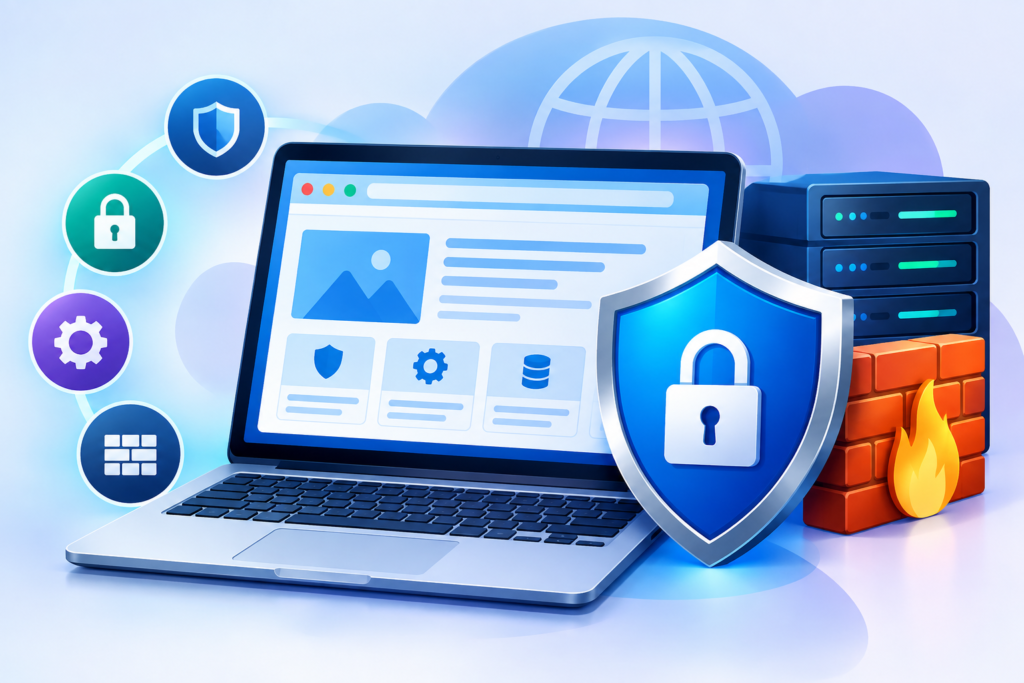
A firewall is one of the most critical defenses in website hardening, acting as a barrier between your server and potential attackers. It filters traffic, allowing legitimate requests while blocking suspicious or harmful ones. By implementing a Web Application Firewall (WAF), you protect your website from common threats like SQL injections, cross-site scripting (XSS), and brute force attempts. Firewalls are especially effective at detecting and preventing automated bot attacks that constantly probe websites for vulnerabilities. By ensuring that your firewall is properly configured, you reduce the risk of unauthorized access and strengthen your website’s resilience.
In addition to firewalls, intrusion detection systems (IDS) and intrusion prevention systems (IPS) play an important role in monitoring and analyzing traffic for suspicious patterns. IDS alerts administrators about potential breaches, while IPS actively blocks malicious activity in real time. Together, these systems provide an advanced layer of protection that goes beyond basic configurations. Their ability to detect unusual activity helps website owners respond swiftly to threats, minimizing potential damage. This is especially crucial for businesses that handle sensitive information or rely on constant uptime for customer trust.
The true power of firewalls and intrusion detection systems lies in their proactive nature. Instead of reacting after an attack has occurred, these tools intercept and neutralize threats before they cause harm. In the broader strategy of website hardening, combining firewalls with IDS/IPS creates a multi-layered defense system that ensures both prevention and real-time monitoring. This approach not only enhances technical security but also boosts confidence for website visitors, reassuring them that their data is being protected at every step.
Database Security Measures
Databases often store the most valuable assets of a website, including customer information, financial details, and proprietary data. Because of this, attackers frequently target databases with the intent of stealing or corrupting information. Database security is, therefore, a critical part of website hardening, ensuring that unauthorized users cannot gain access to sensitive records. One effective strategy is to limit database access only to authorized users and applications, minimizing exposure to potential threats. By applying strict access controls, you reduce the likelihood of unauthorized entry.
 Another key measure is keeping database management systems updated with the latest security patches. Just like CMS platforms and plugins, outdated database software can contain vulnerabilities that hackers exploit. Encryption also plays an essential role in protecting data both at rest and during transmission. Encrypting sensitive fields such as passwords, payment details, and personal identifiers ensures that even if data is intercepted or stolen, it remains unreadable to attackers. This makes encryption a cornerstone of modern database protection strategies.
Finally, regular database backups should be part of your security plan. Even with the strongest defenses, no system is entirely immune to breaches or failures. By keeping secure and encrypted backups, you ensure that data can be restored quickly in case of an incident. Monitoring database activity for unusual patterns, such as excessive queries or failed login attempts, further strengthens protection. Within the context of website hardening, database security ensures that your most critical assets remain safe, trustworthy, and resilient against both internal and external threats.
Securing File Permissions and User Roles
File permissions and user roles are often underestimated when it comes to website security, yet they play a vital role in protecting sensitive areas of a website. Misconfigured file permissions can give attackers unauthorized access to critical files, while poorly managed user roles may grant unnecessary privileges to users who don’t need them. Properly configuring these settings ensures that only the right people have the right level of access, limiting opportunities for misuse or exploitation. This is an essential principle in website hardening, known as the principle of least privilege.
For file permissions, setting strict access rules is crucial. Sensitive files, such as configuration files, should be readable only by the server and not accessible to the public. Similarly, directories should be restricted to prevent unauthorized execution of scripts. By applying these rules, you reduce the chances of attackers manipulating files or injecting malicious code. Maintaining these restrictions also helps contain the damage in case of a successful breach, since attackers won’t be able to move freely across the website’s file system.
User roles must also be carefully managed, especially on content management systems like WordPress or Joomla. Granting administrative privileges to every user increases the risk of insider threats or compromised accounts. Instead, roles should be assigned based on necessity—content editors don’t need admin rights, and contributors should have limited permissions. Regularly reviewing and updating user roles ensures that your access policies remain relevant and secure. In the broader scheme of website hardening, securing file permissions and roles creates a tightly controlled environment where risks are minimized, and accountability is maintained.
Protecting Against SQL Injection Attacks
SQL injection is one of the most common and dangerous vulnerabilities exploited by attackers. It occurs when malicious SQL queries are inserted into input fields, allowing hackers to manipulate databases, steal information, or even gain administrative control. Websites that fail to sanitize and validate user input are especially at risk. Protecting against SQL injection is, therefore, a key element of website hardening, ensuring that attackers cannot exploit weak coding practices to access sensitive data.
The first line of defense is parameterized queries and prepared statements. These coding practices ensure that user input is treated as data, not as executable commands. By enforcing strict separation between code and input, you effectively neutralize the risk of malicious queries. Input validation and sanitization further reduce the chance of attacks by rejecting suspicious or improperly formatted inputs. Regular security audits of website code also help identify vulnerabilities before they can be exploited by attackers.
In addition to secure coding practices, implementing a Web Application Firewall (WAF) adds another layer of protection against SQL injection. Firewalls are capable of filtering suspicious queries before they reach the database, blocking attacks in real time. Database monitoring systems can also alert administrators when unusual query patterns occur, enabling quick responses to attempted breaches. Within a comprehensive website hardening strategy, protecting against SQL injection is not optional—it is an absolute necessity for safeguarding data integrity and maintaining user trust.
Importance of Regular Security Audits
Security is not a one-time process but an ongoing effort, and regular security audits are central to keeping websites protected. A security audit systematically evaluates every aspect of a website to identify weaknesses, misconfigurations, or outdated components that may expose the site to risk. These audits are essential in website hardening because they provide a clear picture of the current security posture and guide administrators in making informed improvements. Without regular evaluations, vulnerabilities can remain unnoticed until they are exploited by attackers.
Audits typically involve reviewing software versions, configuration settings, user permissions, and network defenses. Automated tools can assist in scanning for known vulnerabilities, while manual reviews help uncover more complex issues that tools may miss. Penetration testing, where ethical hackers attempt to breach a website, is another powerful method of identifying real-world weaknesses. By combining automated scans with human expertise, businesses can develop a comprehensive understanding of their website’s security gaps.
The benefits of regular audits extend beyond identifying vulnerabilities. They also demonstrate a commitment to security for customers, stakeholders, and regulatory bodies. In industries where compliance is mandatory, documented security audits can help businesses avoid legal penalties. Additionally, regular audits promote a culture of accountability, ensuring that website administrators remain vigilant and proactive in maintaining security standards. As part of website hardening, audits are a crucial investment that helps maintain long-term protection, resilience, and trust.
Monitoring Website Activity in Real Time
Real-time monitoring is one of the most effective ways to detect suspicious activity before it escalates into a full-scale security incident. By constantly tracking login attempts, file changes, traffic patterns, and server performance, administrators can identify unusual behavior that signals potential attacks. Real-time monitoring tools provide immediate alerts when anomalies are detected, allowing quick responses that minimize damage. In the context of website hardening, this approach creates a proactive environment where threats are stopped early, reducing the risk of prolonged exposure.
The advantage of real-time monitoring lies in its ability to reveal patterns that might otherwise go unnoticed. For example, multiple failed login attempts from the same IP address could indicate a brute force attack in progress. Similarly, a sudden spike in outgoing traffic may suggest that malware has infected the site and is sending stolen data to external servers. By acting quickly on these signs, website owners can contain the issue before it compromises critical systems or customer trust. Proactive monitoring ensures that even if a vulnerability exists, attackers are unable to exploit it undetected.
In addition to security benefits, monitoring also enhances website performance and user experience. Tools that track uptime, load times, and server response help identify technical problems that could affect availability. A website that remains secure and reliable builds stronger customer confidence and brand reputation. Within the broader framework of website hardening, real-time monitoring is not just about defense—it also ensures operational stability, which is equally important for long-term online success.
Securing APIs and Third-Party Integrations
Modern websites often rely heavily on APIs and third-party integrations to provide functionality such as payment gateways, social media logins, and analytics. While these integrations are convenient, they also expand the attack surface, creating additional entry points for hackers. Securing APIs and third-party connections is, therefore, a vital component of website hardening. Without proper safeguards, attackers could exploit these connections to steal data or gain unauthorized access to your systems.
One of the most effective ways to secure APIs is by enforcing strong authentication and encryption. Using API keys, tokens, and OAuth mechanisms ensures that only authorized users and applications can interact with your services. Additionally, encrypting all data transmitted through APIs prevents interception and manipulation by malicious actors. Rate limiting and input validation further strengthen protection by preventing abuse and blocking suspicious requests that could overwhelm servers or attempt injection attacks.
Equally important is evaluating and monitoring third-party services themselves. Not all integrations maintain the same level of security, and a weak link in your chain could compromise your entire website. Regularly auditing third-party tools, updating them when necessary, and removing unused integrations reduce risk significantly. By taking a cautious and structured approach to managing APIs and integrations, you ensure that convenience does not come at the expense of security. In the realm of website hardening, securing these connections closes potential backdoors that attackers often exploit.
The Role of Backups in Website Hardening
Even the most carefully hardened websites are not immune to all forms of cyberattacks or technical failures. This is where backups become an essential safeguard. Backups ensure that in the event of a security breach, server crash, or accidental data loss, your website can be restored quickly and with minimal disruption. In the context of website hardening, backups serve as a fail-safe mechanism, guaranteeing business continuity even under the worst circumstances.
Effective backup strategies involve creating copies of website files, databases, and configurations on a regular schedule. These backups should be stored securely in offsite or cloud-based locations to protect against local failures or ransomware attacks. Encrypted backups add an additional layer of security, ensuring that even if the backup files are intercepted, the data remains inaccessible to unauthorized parties. By automating the backup process, you reduce the chances of human error and ensure consistency in maintaining recoverable data.
Beyond technical safety, backups also provide peace of mind for business owners and customers alike. Knowing that data can be recovered builds trust and reduces anxiety during unexpected incidents. In industries that handle sensitive information, maintaining reliable backups also supports compliance with data protection regulations. Ultimately, while backups do not prevent attacks, they serve as a critical pillar of website hardening by providing assurance that your digital presence can always be restored and maintained.
Securing Hosting Environments
Your hosting environment forms the foundation of your website’s infrastructure, making its security a top priority. Even if your website is well configured, a vulnerable hosting server can expose you to significant risks. Therefore, choosing a secure hosting provider and implementing strict server-level protections is essential for effective website hardening. Secure hosting environments are equipped with firewalls, intrusion detection systems, malware scanning, and DDoS protection that work together to defend against a wide range of threats.
One of the key elements of hosting security is server isolation. Shared hosting, while cost-effective, often leaves websites exposed to risks from neighboring sites. A breach on one site can potentially spread to others on the same server. For businesses that prioritize security, dedicated or managed hosting environments provide better isolation and control. Additionally, ensuring that the server operating system and software are regularly updated reduces vulnerabilities that attackers could exploit. Secure hosting companies often handle these updates automatically, providing extra assurance for website owners.
Securing the hosting environment also includes strong access controls, encrypted connections (such as SSH), and regular monitoring. Hosting providers that offer 24/7 security support give businesses an extra layer of protection, ensuring threats are addressed immediately. By selecting a hosting environment that prioritizes security and combining it with your own hardening efforts, you establish a strong foundation for long-term website protection. In the broader picture of website hardening, secure hosting is not just a convenience—it is an absolute necessity.
Training Employees and Users on Security Best Practices
Technology alone cannot guarantee complete protection—human behavior plays a critical role in website security. Employees, contractors, and even customers must understand how to interact with your website safely, as human error is often the weakest link exploited by attackers. Training individuals on security best practices is, therefore, an indispensable part of website hardening. When users are educated, they become active participants in defending against threats, reducing the likelihood of successful attacks.
 Training should cover fundamental practices such as creating strong passwords, recognizing phishing attempts, and avoiding suspicious links. Employees with administrative access should also be trained to use secure authentication methods, update software regularly, and report unusual activity immediately. Regular workshops, guides, and reminders help reinforce these lessons, ensuring that security remains a priority within the organization. This ongoing education is essential because attackers constantly develop new techniques, and employees must remain prepared.
The impact of training extends beyond individual awareness. A culture of security within an organization ensures that everyone takes responsibility for protecting digital assets. This not only reduces the risk of breaches but also builds customer confidence, as visitors know the organization takes security seriously at all levels. Within the framework of website hardening, user and employee training is a critical complement to technical measures, bridging the gap between human behavior and digital defense.
Future of Website Hardening in Cybersecurity
The future of website hardening is closely tied to the rapid evolution of cyber threats and technological advancements. As attackers continue to develop more sophisticated techniques, website owners must adopt innovative strategies to stay ahead. Traditional defenses such as firewalls and antivirus programs remain important, but the integration of artificial intelligence (AI) and machine learning (ML) is becoming increasingly significant. These technologies allow for predictive analysis, enabling websites to identify and block threats before they even occur. This shift toward proactive defense marks a new era in the fight against cybercrime.
Cloud-based security solutions are also shaping the future of website hardening. With businesses moving operations to the cloud, security tools that offer scalability, flexibility, and real-time monitoring are in high demand. Cloud platforms can quickly deploy patches, filter traffic, and provide distributed protection against large-scale attacks like DDoS. As cloud adoption grows, so too will the reliance on integrated hardening techniques that operate seamlessly across multiple environments. This trend emphasizes the importance of adapting security strategies to align with modern digital infrastructure.
Another important aspect of the future is the focus on zero-trust architecture, where no user or device is automatically trusted, even if they are within the network. This approach relies heavily on continuous authentication, strict access controls, and micro-segmentation to protect digital assets. For website hardening, this means implementing even tighter restrictions and ensuring that every request is verified before being processed. As businesses embrace new technologies such as IoT and blockchain, website hardening will continue to evolve, offering more sophisticated and adaptive measures to protect digital ecosystems against an ever-changing threat landscape.
Conclusion
Website hardening is not a single task but a comprehensive, ongoing process that fortifies every layer of your digital presence. From securing servers and databases to monitoring real-time activity and training employees, each element plays a vital role in defending against cyberattacks. As threats evolve, so must your security measures, ensuring that your website remains resilient, trustworthy, and operational. Businesses that invest in website hardening not only protect themselves from immediate risks but also build long-term credibility with customers and stakeholders.
In today’s digital world, trust is everything. A single breach can destroy years of reputation and customer loyalty. By implementing the techniques discussed in this blog—ranging from authentication protocols and backups to SSL certificates and intrusion detection systems—you establish a multi-layered shield that significantly reduces vulnerabilities. Website hardening is about creating a security-first mindset, ensuring that your platform is prepared for the challenges of both today and tomorrow.
At FixHackedSite, we emphasize the importance of proactive protection through website hardening. Our mission is to help website owners safeguard their online presence, defend sensitive data, and build secure environments where users can interact with confidence. By prioritizing hardening techniques, you not only protect your digital assets but also demonstrate professionalism and responsibility. The future of cybersecurity may be uncertain, but with strong hardening strategies in place, your website can face any challenge with confidence and resilience.