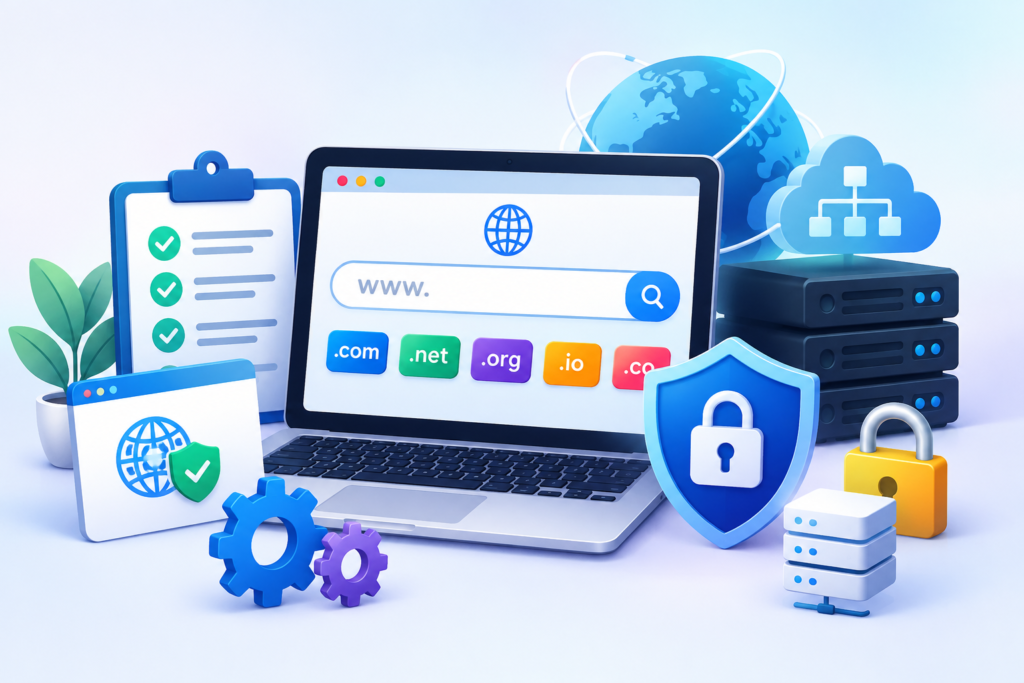
Website Domain Guide: Learn how to choose, secure, optimize, and manage your website domain for SEO, branding, and long-term digital success.
Introduction
In today’s digital-first economy, your website domain is far more than just an address—it is the foundation of your online identity. Whether you’re launching a startup, scaling an eCommerce store, or managing a corporate website, your domain name plays a critical role in branding, trust, and search engine visibility. A well-chosen domain can significantly influence user perception, while a poorly selected one can limit growth and credibility.
At FixHackedSite, we have seen countless businesses struggle with domain-related issues—from poor naming strategies to security vulnerabilities and even domain hijacking. Many of these challenges could have been avoided with the right knowledge and proactive management. This guide is designed to provide you with a comprehensive understanding of how domains work and how to leverage them effectively.
This blog will walk you through every essential aspect of website domains, including selection strategies, SEO optimization, security best practices, and long-term management. Whether you’re a beginner or an experienced webmaster, you’ll find actionable insights that align with Google’s latest standards and industry best practices.
What is a Website Domain and Why It Matters
A website domain is the unique address that users type into their browsers to access your website. It acts as a human-readable version of an IP address, making it easier for people to navigate the internet. For example, instead of remembering a complex string of numbers, users can simply enter your domain name.
Domains are composed of several key elements: the domain name itself, the top-level domain (TLD), and sometimes subdomains. Each of these components contributes to how your website is perceived and ranked. Choosing the right combination is not just a technical decision—it’s a strategic one that impacts your business’s online presence.
From an SEO perspective, domains play a role in branding, keyword relevance, and trust signals. While Google has clarified that keywords in domains are not a major ranking factor, they still influence click-through rates and user perception. According to Google Search Central Guidelines, helpful and user-focused content is more important than keyword-stuffed domains.
A strong domain name enhances credibility, improves memorability, and supports marketing efforts across channels. It becomes the cornerstone of your digital ecosystem, connecting your website, email, and online campaigns into a cohesive brand identity.
Types of Domain Extensions and Their Impact
Domain extensions, also known as Top-Level Domains (TLDs), are the suffixes at the end of a domain name, such as .com, .org, or .net. These extensions can influence how users perceive your website and, in some cases, how search engines interpret its purpose.
There are several categories of TLDs. Generic TLDs (gTLDs) like .com and .net are widely recognized and trusted. Country-code TLDs (ccTLDs) such as .uk or .pk are used to target specific geographic regions. Newer TLDs like .tech, .store, or .ai offer niche branding opportunities but may not carry the same level of trust as traditional extensions.
From an SEO standpoint, Google treats most TLDs equally, but ccTLDs can help signal geographic relevance. According to Google’s documentation on multi-regional sites, using a country-specific domain can improve visibility in local search results.
Choosing the right extension depends on your target audience, industry, and branding goals. For global reach, .com remains the gold standard. For local businesses, ccTLDs can enhance regional trust and relevance. Ultimately, the key is consistency and alignment with your overall digital strategy.
How to Choose the Perfect Domain Name
Selecting the perfect domain name is one of the most critical decisions you’ll make when building a website. It should be short, memorable, and easy to spell. Avoid using complex words, hyphens, or numbers that can confuse users and reduce recall.
A strong domain name reflects your brand identity while remaining flexible for future growth. For example, choosing a name that is too niche may limit your ability to expand into new markets or services. Think long-term and ensure your domain can evolve with your business.
Keyword inclusion can be beneficial for clarity but should not be forced. Instead of stuffing keywords, focus on creating a name that resonates with your audience. According to Google’s helpful content system, content relevance and user satisfaction matter more than keyword manipulation.
Additionally, check for trademark conflicts and ensure your domain is legally safe to use. Conduct thorough research before finalizing your choice to avoid potential legal issues or rebranding challenges later.
Domain Registration Process Explained
Registering a domain involves purchasing the rights to use a specific name for a defined period, typically one year or more. This process is handled through domain registrars, which are accredited organizations authorized to manage domain reservations.
The first step is to check domain availability using a registrar’s search tool. Once you find an available name, you can proceed with registration by providing your contact details and selecting a registration period. Many registrars also offer additional services such as privacy protection and DNS management.
It’s important to choose a reputable registrar to ensure reliability and security. According to ICANN guidelines, domain registrants should maintain accurate contact information and renew their domains on time to avoid expiration.
After registration, you’ll gain access to your domain’s control panel, where you can manage DNS settings, renewals, and security features. Proper management is essential to keep your website accessible and secure.
The Role of DNS in Domain Functionality

The Domain Name System (DNS) is the backbone of how domains function. It translates human-readable domain names into IP addresses that computers use to identify each other on the internet. Without DNS, browsing the web would be significantly more complicated.
DNS operates through a network of servers that store and distribute domain information. When a user enters your domain name, a DNS query is initiated, and the system retrieves the corresponding IP address, directing the user to your website.
Efficient DNS management is crucial for website performance and uptime. Slow or misconfigured DNS settings can lead to delays, downtime, or even security vulnerabilities. According to Cloudflare’s DNS learning center, optimizing DNS can improve speed and reliability.
Implementing advanced DNS features such as DNSSEC (Domain Name System Security Extensions) can further enhance security by preventing attacks like DNS spoofing. Proper DNS configuration ensures your domain operates smoothly and securely.
Domain Security: Protecting Your Digital Identity
Domain security is often overlooked, yet it is one of the most critical aspects of managing your online presence. A compromised domain can lead to website downtime, data breaches, and loss of customer trust.
One of the most common threats is domain hijacking, where attackers gain unauthorized access and transfer ownership. This can happen due to weak passwords, phishing attacks, or lack of security measures. Implementing strong authentication and enabling domain lock features can prevent such incidents.
Using WHOIS privacy protection helps shield your personal information from public databases, reducing the risk of targeted attacks. According to Google security best practices, securing your website and domain is essential for maintaining search rankings and user trust.
Regular monitoring, timely renewals, and secure account management are key components of domain security. Investing in these measures can save you from costly disruptions and protect your brand reputation.
SEO Benefits of a Strong Domain Strategy
A well-planned domain strategy can significantly enhance your SEO efforts. While the domain itself is not a direct ranking factor, it influences several elements that contribute to search visibility.
Brandable domains tend to perform better in the long run because they build trust and recognition. Users are more likely to click on and remember domains that sound professional and credible. This improves click-through rates and user engagement—both important signals for search engines.
Consistency across your domain, content, and branding also strengthens your SEO foundation. According to Google Search Essentials, creating a cohesive and user-friendly experience is key to ranking success.
Additionally, domains that are easy to share and link to can naturally attract backlinks, which are a major ranking factor. A strong domain strategy supports long-term SEO growth and helps establish your authority in your niche.
Domain Age and Authority: Myth vs Reality
There is a common belief that older domains automatically rank higher in search results. While domain age can be an indicator of trust, it is not a direct ranking factor according to Google.
What truly matters is the quality and consistency of the content associated with the domain. A new domain with high-quality, relevant content can outperform an older domain with outdated or low-value content.
Domain authority is influenced by factors such as backlinks, user engagement, and content relevance. According to Google’s ranking systems overview, multiple signals are used to determine rankings, and domain age alone is not a decisive factor.
Focusing on building authority through valuable content, ethical SEO practices, and strong user experience is far more effective than relying on domain age alone.
Subdomains vs Subdirectories: Which is Better?
When structuring your website, you may need to decide between using subdomains (e.g., blog.example.com) or subdirectories (e.g., example.com/blog). Each option has its advantages and use cases.
Subdomains are treated as separate entities by search engines, which can be useful for organizing large or distinct sections of a website. However, they may require additional SEO efforts to build authority independently.
Subdirectories, on the other hand, consolidate authority under a single domain, making it easier to manage and optimize. According to Google’s URL structure guidelines, a clear and logical structure improves crawlability and user experience.
The choice depends on your specific needs, but for most websites, subdirectories are preferred for SEO efficiency and simplicity.
Domain Migration and Its SEO Impact
Domain migration is a significant process that involves moving your website from one domain to another. While it may be necessary for rebranding, expansion, or security reasons, it must be handled carefully to avoid losing search rankings, traffic, and authority.
One of the most critical steps in domain migration is implementing proper 301 redirects. These redirects inform search engines that your content has permanently moved to a new location. Without them, users and search engines may encounter broken links, resulting in lost traffic and reduced credibility. According to Google’s site move guidelines, proper redirection is essential for preserving SEO value during a migration.
Another key factor is updating internal links, sitemaps, and canonical tags. Ensuring that all references point to the new domain helps search engines crawl and index your site efficiently. Additionally, submitting the new domain in Google Search Console and monitoring performance metrics can help identify and resolve issues quickly.
A well-planned migration strategy minimizes risks and ensures a smooth transition. By following best practices and maintaining consistency, you can retain your SEO strength and continue growing your online presence without disruption.
The Importance of Domain Renewals and Ownership Management
Domain ownership is not permanent—it requires regular renewal to maintain control. Failing to renew your domain on time can lead to expiration, making it available for others to purchase. This can result in loss of brand identity, traffic, and even sensitive data.
Most registrars offer auto-renewal options, which help prevent accidental expiration. Enabling this feature is a simple yet effective way to safeguard your domain. According to ICANN domain lifecycle documentation, domains go through several stages after expiration, including grace periods and redemption phases.
Proper ownership management also involves maintaining accurate contact information and securing your registrar account. This ensures you receive important notifications and can recover your domain if needed.
In addition, businesses should consider registering their domains for multiple years to reduce the risk of expiration and demonstrate long-term commitment. Effective domain management is a foundational aspect of maintaining a stable and secure online presence.
Domain Privacy and WHOIS Protection
When you register a domain, your personal information is typically stored in a public database known as WHOIS. This includes your name, email, phone number, and address, making you vulnerable to spam, phishing, and other malicious activities.
WHOIS protection, also known as domain privacy, replaces your personal information with that of a proxy service. This helps protect your identity and reduces the risk of targeted attacks. It is especially important for individuals and small businesses that may not have dedicated security teams.
According to ICANN WHOIS policy, transparency in domain ownership is important, but privacy services provide a balance between openness and security.
Implementing WHOIS protection is a simple yet powerful step toward safeguarding your domain. It enhances your overall security posture and ensures that your personal information remains confidential while maintaining compliance with industry standards.
How Domains Affect Website Speed and Performance
While domains themselves do not directly determine website speed, their configuration and associated services can significantly impact performance. Factors such as DNS resolution time, hosting quality, and CDN integration all play a role.
A fast and reliable DNS provider ensures quick domain resolution, reducing the time it takes for users to access your website. Slow DNS responses can lead to delays and negatively affect user experience. According to Google PageSpeed Insights, performance optimization is crucial for both user satisfaction and SEO.
Using a Content Delivery Network (CDN) can further enhance speed by distributing your content across multiple servers worldwide. This reduces latency and ensures faster loading times for users in different locations.
Optimizing your domain setup, including DNS and hosting configurations, is essential for delivering a seamless user experience. Faster websites not only improve engagement but also contribute to better search rankings.
Branding and Marketing Advantages of a Strong Domain
A strong domain name is a powerful branding tool that can set your business apart from competitors. It serves as the first impression for many users and plays a key role in building trust and recognition.
Memorable domains are easier to recall and share, making them more effective for marketing campaigns. Whether you’re running ads, social media promotions, or email marketing, a clear and concise domain enhances your messaging and improves conversion rates.
Consistency across your domain, logo, and brand voice reinforces your identity and creates a cohesive user experience. According to Google’s brand building insights, strong branding contributes to long-term customer loyalty and business growth.
Investing in a high-quality domain is not just a technical decision—it’s a strategic move that supports your marketing efforts and strengthens your overall brand presence.
Future Trends in Domain Management and Strategy

The domain landscape is continuously evolving, driven by technological advancements and changing user behavior. Understanding emerging trends can help you stay ahead and adapt your strategy accordingly.
One notable trend is the rise of new TLDs, offering more creative and industry-specific options. While traditional extensions remain dominant, niche TLDs provide opportunities for unique branding and differentiation.
Another trend is the increasing importance of security and privacy. With growing cyber threats, businesses are prioritizing secure domain management practices, including DNSSEC, multi-factor authentication, and advanced monitoring tools.
Additionally, the integration of AI and automation is transforming how domains are managed. From predictive analytics to automated renewals and security alerts, these technologies are making domain management more efficient and proactive.
Staying informed about these trends ensures that your domain strategy remains relevant and effective in a rapidly changing digital environment.
Common Mistakes to Avoid with Website Domains
One of the most common mistakes is choosing a domain name that is too complex or difficult to remember. Long and complicated names can confuse users and reduce traffic. Simplicity and clarity should always be a priority.
Another frequent issue is neglecting domain security. Many website owners fail to enable basic protections such as domain lock, two-factor authentication, and WHOIS privacy. This leaves their domains vulnerable to attacks and unauthorized access.
Ignoring renewals is another critical mistake. Expired domains can be quickly acquired by competitors or malicious actors, leading to loss of brand identity and business disruption.
Lastly, poor migration practices can severely impact SEO. Failing to implement redirects or update links can result in broken pages and lost rankings. Avoiding these mistakes requires proactive management and adherence to best practices.
Best Practices Summary
To build and maintain a strong domain strategy, focus on the following best practices:
- Choose a short, memorable, and brandable domain name
- Use a trusted domain registrar with strong security features
- Enable WHOIS privacy and domain lock
- Implement DNS optimization and use a reliable CDN
- Keep your domain renewed and maintain accurate contact details
- Follow proper SEO practices during migrations
- Monitor your domain regularly for security threats
By following these guidelines, you can ensure that your domain remains a valuable asset that supports your business growth and online success.
FAQs
1. What is the best domain extension for SEO?
There is no single “best” extension for SEO. However, .com is widely trusted and preferred by users. Country-specific domains can help with local SEO.
2. Does domain age affect rankings?
Domain age is not a direct ranking factor. Quality content and backlinks have a much greater impact.
3. Can I change my domain without losing SEO?
Yes, but it requires proper 301 redirects, updated links, and adherence to Google’s migration guidelines.
4. How often should I renew my domain?
Domains are typically renewed annually, but registering for multiple years can provide added security and stability.
5. What is WHOIS privacy and why is it important?
WHOIS privacy protects your personal information from being publicly accessible, reducing the risk of spam and attacks.
6. Should I use subdomains or subdirectories?
Subdirectories are generally better for SEO, as they consolidate authority under a single domain.
7. How do I secure my domain?
Use strong passwords, enable two-factor authentication, activate domain lock, and monitor for suspicious activity.
8. What happens if my domain expires?
Your domain enters a grace period, followed by redemption and eventual deletion if not renewed.
Conclusion
A well-managed website domain is the backbone of your online presence. From branding and SEO to security and performance, every aspect of your domain plays a crucial role in your digital success.
At FixHackedSite, we understand the complexities and risks associated with domain management. By following the strategies and best practices outlined in this guide, you can build secure, and future-ready domain that supports your long-term goals.
Investing time and effort into your domain strategy is not optional—it’s essential for staying competitive in today’s digital landscape.
Want to Implement This Easily?
Prompt:
You are an expert consultant. Based on the blog post titled “(Website Domain)”, provide a step-by-step, practical implementation guide. Include tools, best practices, common mistakes to avoid, and advanced tips. Assume the reader wants to implement everything discussed in this article effectively.
Call to Action:
Want our help implementing this? Just reach out to us via our website contact form: https://fixhackedsite.com/contact-us/