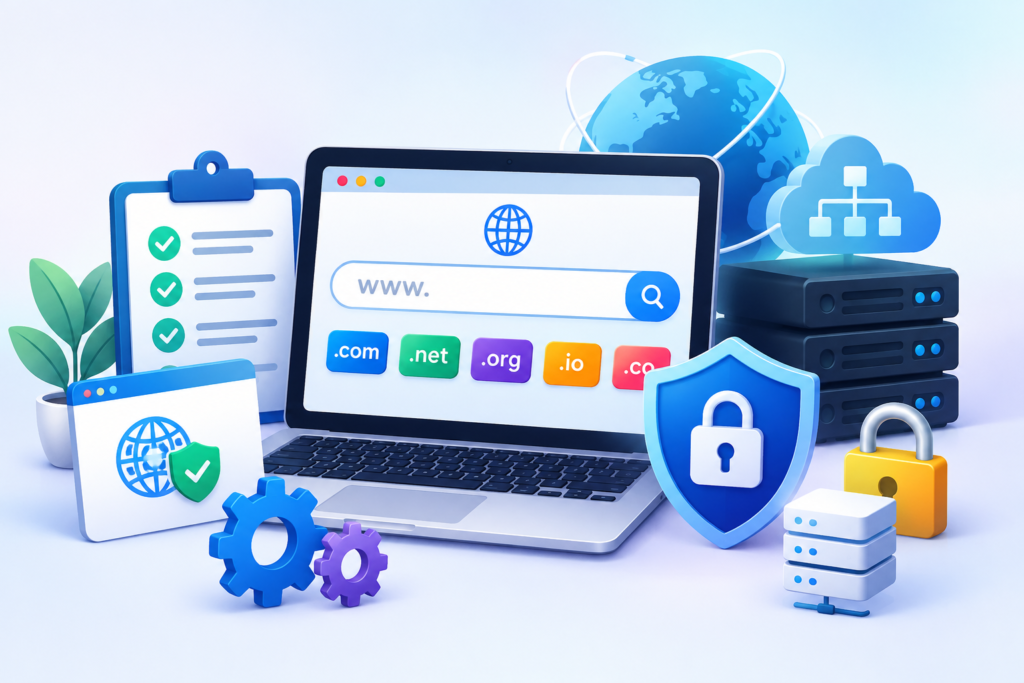
Website Domain is the foundation of your online presence. Learn how domain names impact SEO, security, branding, and performance, along with expert strategies to choose, protect, and optimize your domain for long-term success.
Introduction
A website domain is far more than just a web address—it is the cornerstone of your digital identity, credibility, and discoverability. Whether you are launching a business website, blog, or eCommerce platform, your domain name influences how users perceive your brand and how search engines rank your content. From SEO impact to security considerations, understanding domains is essential for long-term online success.
At its core, a domain name acts as a human-readable version of an IP address, making it easier for users to access your website. However, in today’s competitive digital landscape, domains carry strategic weight. The right domain can improve click-through rates, build trust, and enhance brand recall, while a poorly chosen one can limit growth and visibility.
This comprehensive guide by FixHackedSite explores everything you need to know about website domains—from technical foundations to advanced SEO strategies. Whether you’re a beginner or an experienced webmaster, this guide will help you make informed decisions that align with modern search engine standards and user expectations.
What Is a Website Domain and Why It Matters
A website domain is the unique address that users type into their browser to access your site. It typically consists of two main parts: the domain name (e.g., “example”) and the top-level domain (TLD) such as “.com,” “.org,” or “.net.” This combination forms your digital identity and is a critical element in branding and accessibility.
From a technical standpoint, domains are linked to IP addresses through the Domain Name System (DNS). When a user enters your domain, the DNS translates it into an IP address that points to your web server. This process happens in milliseconds, ensuring seamless access. Understanding this mechanism helps in troubleshooting issues like downtime, DNS misconfigurations, and domain propagation delays.
Beyond functionality, domains play a vital role in marketing and trust-building. A clean, memorable domain name enhances brand recognition and encourages users to revisit your site. Additionally, search engines consider domain relevance and authority when ranking websites. A well-structured domain can contribute to better visibility, especially when aligned with your niche and target keywords.
Types of Domain Extensions and Their SEO Impact
Domain extensions, also known as Top-Level Domains (TLDs), significantly influence how your website is perceived by both users and search engines. Common TLDs include “.com,” “.org,” and “.net,” while newer options like “.tech,” “.store,” and “.ai” offer niche-specific branding opportunities. Choosing the right TLD can impact your credibility and click-through rates.
Search engines like Google have stated that all TLDs are treated equally in terms of ranking. However, user behavior tells a different story. People tend to trust familiar extensions like “.com” more than less common ones. This trust factor can indirectly influence SEO performance by improving engagement metrics such as time on site and bounce rate.
For businesses targeting specific regions, country-code TLDs (ccTLDs) like “.uk” or “.pk” can enhance local SEO. These domains signal geographic relevance, helping search engines deliver your site to users in that region. If your goal is global reach, a generic TLD like “.com” remains the safest and most versatile choice.
How to Choose the Perfect Domain Name
Selecting the right domain name is one of the most important decisions you will make for your online presence. A good domain should be short, memorable, and easy to spell. Avoid using complex words, hyphens, or numbers, as these can confuse users and reduce accessibility.
Keyword inclusion in domain names used to be a strong ranking factor, but modern SEO prioritizes branding and user experience. While it is still beneficial to include relevant keywords, over-optimization can make your domain look spammy. Focus on creating a name that reflects your brand identity while maintaining clarity and simplicity.
Another critical factor is uniqueness. Before finalizing your domain, check for trademarks and existing brands to avoid legal issues. Additionally, ensure that your domain is consistent across social media platforms to maintain brand cohesion. A unified digital identity strengthens your online presence and builds trust with your audience.
The Role of Domains in Branding and Trust

Your domain name is often the first interaction users have with your brand. A professional and relevant domain instantly communicates credibility, while a poorly chosen one can create doubt. This makes domain selection a key component of branding strategy.
A strong domain reinforces brand identity by aligning with your business name, values, and niche. For example, a tech company might benefit from a domain like “yourbrandtech.com,” which clearly communicates its focus. Consistency across your domain, logo, and messaging further enhances brand recognition.
Trust is another critical factor influenced by your domain. Secure domains (HTTPS-enabled) signal safety to users and search engines. According to Google’s security guidelines, HTTPS is a ranking signal and essential for protecting user data. You can learn more from Google HTTPS best practices. A secure and well-branded domain builds confidence and encourages user engagement.
Domain Name and SEO: What You Need to Know
Domains play a subtle but important role in SEO. While exact-match domains (EMDs) are no longer as powerful as they once were, they can still provide relevance when used naturally. The key is to balance keyword inclusion with brand authenticity.
Search engines evaluate multiple factors related to domains, including age, authority, and history. An older domain with a clean backlink profile often has an advantage over a newly registered one. However, this advantage can be negated if the domain has a history of spam or penalties.
User experience also ties into domain SEO. A clear and concise domain improves click-through rates and reduces user confusion. According to Google Search Essentials guidelines, creating a user-friendly website structure—including domain clarity—is essential for better rankings.
Domain Registration: Step-by-Step Overview
Registering a domain is a straightforward process, but it requires careful consideration to avoid future complications. The first step is choosing a reliable domain registrar. Look for providers that offer transparent pricing, strong security features, and responsive customer support.
Once you have selected a registrar, search for your desired domain name. If it is available, you can proceed with registration. If not, consider variations or alternative TLDs. During registration, you will need to provide contact information and choose the registration period, typically ranging from one to ten years.
After registration, it is crucial to configure your DNS settings correctly. This includes pointing your domain to your hosting provider and setting up email services if needed. Proper configuration ensures that your website is accessible and functions smoothly from the start.
Domain Security: Protecting Your Digital Asset
Domain security is often overlooked, yet it is one of the most critical aspects of managing a website. A compromised domain can lead to data breaches, SEO penalties, and loss of user trust. Implementing strong security measures is essential to safeguard your online presence.
One of the first steps is enabling domain privacy protection. This hides your personal information from public WHOIS databases, reducing the risk of spam and identity theft. Additionally, use strong passwords and enable two-factor authentication (2FA) for your domain registrar account.
Another key security measure is domain locking. This prevents unauthorized transfers and changes to your domain settings. Regular monitoring and timely renewal are also crucial to avoid accidental expiration, which can result in domain hijacking. Following best practices from Google security recommendations can help maintain a secure and trustworthy website.
Understanding DNS and Its Importance
The Domain Name System (DNS) is the backbone of how domains function on the internet. It acts as a directory that translates domain names into IP addresses, enabling browsers to locate and load websites efficiently. Without DNS, users would need to remember complex numerical addresses instead of simple domain names.
DNS consists of several components, including nameservers, A records, CNAME records, and MX records. Each plays a specific role in directing traffic and managing services like email. Understanding these elements is essential for troubleshooting issues and optimizing performance.
A well-configured DNS setup ensures fast loading times and minimal downtime. Poor DNS management can lead to slow response times, negatively impacting user experience and SEO. Investing in a reliable DNS provider and regularly reviewing your settings can significantly improve your website’s performance and reliability.
Domain Migration and SEO Preservation
Domain migration is a high-risk, high-reward process that requires precision and planning. Whether you are rebranding, consolidating websites, or moving to a better domain, improper migration can lead to traffic loss, broken links, and ranking drops. The key to a successful migration lies in maintaining SEO equity while ensuring a seamless user experience.
The most critical step in domain migration is implementing proper 301 redirects. These redirects inform search engines that your content has permanently moved, transferring most of the link equity to the new domain. According to Google site move guidelines, correctly setting up redirects is essential for preserving rankings. Every old URL should map to its corresponding new URL to avoid errors and maintain consistency.
Another crucial aspect is updating internal links, sitemaps, and canonical tags. Search engines rely on these signals to understand your site structure. Additionally, verifying your new domain in Google Search Console and submitting updated sitemaps helps accelerate indexing. Monitoring traffic and crawl errors during the transition ensures that any issues are quickly identified and resolved.
Subdomains vs Subdirectories: Which Is Better?
Choosing between subdomains (e.g., blog.example.com) and subdirectories (e.g., example.com/blog) is a strategic decision that impacts SEO, structure, and scalability. While both options are valid, they serve different purposes depending on your goals and content strategy.
Subdirectories are generally preferred for SEO because they consolidate authority under a single domain. This means that all backlinks and signals contribute to the main domain’s ranking power. For businesses aiming to strengthen their primary website, subdirectories provide a more unified approach to content management and SEO growth.
Subdomains, on the other hand, are useful for separating distinct sections of a website, such as support portals or international versions. However, search engines may treat subdomains as separate entities, which can dilute SEO authority. Google explains this distinction in Google URL structure guidelines, emphasizing the importance of clarity and organization. Ultimately, the choice depends on your technical needs and long-term strategy.
Domain Authority and Its Role in Rankings
Domain authority is a metric used to estimate a website’s ability to rank in search engine results. While it is not an official Google ranking factor, it reflects the strength of your domain based on backlinks, content quality, and overall trustworthiness.
Building domain authority requires consistent effort. High-quality backlinks from reputable websites signal credibility to search engines. Additionally, publishing valuable, well-researched content helps establish your site as an authoritative resource in your niche. Over time, these factors contribute to improved rankings and visibility.
It is also important to maintain a clean backlink profile. Toxic or spammy links can harm your domain’s reputation and lead to penalties. Regular audits and disavowing harmful links are essential practices. Following best practices outlined in Google link spam policies ensures that your domain remains trustworthy and compliant with search engine standards.
Expired Domains: Opportunities and Risks
Expired domains can be valuable assets if used correctly. These domains often come with existing backlinks, traffic, and authority, making them attractive for SEO and marketing purposes. However, they also carry risks that must be carefully evaluated.
Before purchasing an expired domain, it is essential to analyze its history. Check for previous ownership, content, and any penalties associated with the domain. Tools like the Wayback Machine can help you understand how the domain was used in the past. A domain with a clean history and relevant backlinks can provide a strong foundation for your website.
On the other hand, domains with spammy backlinks or a history of malicious activity can do more harm than good. These issues can negatively impact your SEO and credibility. Conducting thorough due diligence ensures that you make informed decisions and avoid potential pitfalls.
International Domains and Localization Strategy
For businesses targeting global audiences, international domain strategies play a crucial role in reaching the right users. Options include using country-code TLDs (ccTLDs), subdomains, or subdirectories for different regions and languages.
Country-code TLDs like “.pk” or “.uk” provide strong geographic signals, making them ideal for local SEO. However, managing multiple domains can be complex and resource-intensive. Alternatively, subdirectories with hreflang tags offer a more centralized approach while still targeting specific regions.
Implementing hreflang correctly ensures that search engines deliver the appropriate version of your site to users based on their language and location. Google’s official documentation on hreflang implementation guidelines provides detailed insights into this process. A well-executed localization strategy enhances user experience and improves global search visibility.
Domain Renewal, Ownership, and Long-Term Management
Managing your domain effectively requires ongoing attention and planning. Domain renewal is a critical aspect that should never be overlooked. Allowing your domain to expire can result in downtime, loss of traffic, and even permanent loss of ownership.
Setting up auto-renewal ensures that your domain remains active without manual intervention. Additionally, maintaining accurate contact information with your registrar is essential for receiving important notifications. Keeping track of renewal dates and payment methods prevents unexpected disruptions.
Ownership management also involves securing your domain against unauthorized transfers. Enabling domain locking and monitoring account activity are key practices. Treating your domain as a valuable digital asset ensures its longevity and stability.
Future Trends in Domain Strategy

The domain landscape is continuously evolving, driven by technological advancements and changing user behavior. One of the most notable trends is the rise of new TLDs, offering more branding opportunities and flexibility. While “.com” remains dominant, niche extensions are gaining popularity among startups and tech companies.
Another emerging trend is the integration of domains with artificial intelligence and voice search. As more users rely on voice assistants, having a simple and pronounceable domain becomes increasingly important. This shift emphasizes the need for clarity and accessibility in domain naming.
Blockchain-based domains are also gaining attention for their decentralized nature and enhanced security. While still in early stages, they represent a potential shift in how domains are managed and owned. Staying informed about these trends allows businesses to adapt and remain competitive in the digital landscape.
Common Mistakes to Avoid with Website Domains
One of the most common mistakes is choosing a domain name that is too complex or difficult to remember. This can lead to reduced traffic and poor user experience. Simplicity and clarity should always be prioritized.
Another frequent error is neglecting domain security. Failing to enable HTTPS, 2FA, or domain locking can expose your website to cyber threats. Security should be treated as a fundamental aspect of domain management, not an afterthought.
Lastly, many users overlook the importance of research before purchasing a domain. Ignoring factors like domain history, trademarks, and SEO implications can lead to long-term challenges. Taking the time to evaluate your options ensures a strong foundation for your online presence.
FAQs
1. What is the best domain extension for SEO?
There is no single “best” extension, but “.com” is widely trusted and versatile. The choice depends on your target audience and branding goals.
2. Does domain age affect rankings?
Domain age alone is not a ranking factor, but older domains often have more backlinks and authority, which can improve rankings.
3. Can I change my domain without losing SEO?
Yes, with proper 301 redirects and careful planning, you can preserve most of your SEO value during migration.
4. How long should I register a domain for?
Registering for multiple years can signal stability, but it is not a direct ranking factor. The main benefit is avoiding accidental expiration.
5. What is domain privacy protection?
It hides your personal information from public databases, reducing spam and protecting your identity.
6. Are keywords in domain names still important?
They have less impact than before, but relevant keywords can still improve clarity and user understanding.
7. What happens if my domain expires?
Your website will go offline, and the domain may become available for others to purchase.
8. How do I check a domain’s history?
You can use tools like the Wayback Machine and backlink analysis tools to review past usage and reputation.
Best Practices Summary
A successful domain strategy begins with choosing a simple, memorable, and brand-aligned name. Avoid unnecessary complexity and focus on user experience. Your domain should reflect your identity while remaining easy to type and recall.
Security is equally important. Implement HTTPS, enable domain locking, and use strong authentication methods. Regular monitoring and timely renewal ensure that your domain remains protected and operational.
Finally, align your domain strategy with your long-term goals. Whether it is SEO, branding, or global expansion, every decision should support your overall vision. Following industry best practices and staying updated with trends will help you maintain a competitive edge.
Conclusion
A website domain is not just a technical requirement—it is a strategic asset that influences branding, SEO, security, and user trust. From choosing the right name to managing migrations and implementing advanced strategies, every aspect of domain management plays a role in your online success.
At FixHackedSite, we understand the complexities of domain management and the importance of maintaining a secure and optimized online presence. By applying the insights and best practices outlined in this guide, you can build a strong foundation for your website and achieve sustainable growth.
Want to Implement This Easily?
Prompt:
You are an expert consultant. Based on the blog post titled “(Website Domain )”, provide a step-by-step, practical implementation guide. Include tools, best practices, common mistakes to avoid, and advanced tips. Assume the reader wants to implement everything discussed in this article effectively.
Call to Action:
Want our help implementing this? Just reach out to us via our website contact form: https://fixhackedsite.com/contact-us/