

Discover how website hardening protects websites from vulnerabilities, malware, unauthorized access, data breaches, and cyber threats through practical security controls and proven best practices.
Introduction
A website is no longer simply a collection of pages published for visitors to read. Modern websites can process customer information, manage accounts, accept payments, connect with third-party applications, store business data, and communicate with multiple external services. Every one of these functions introduces potential security considerations. Website hardening provides a structured approach to reducing those risks by strengthening configurations, restricting unnecessary access, removing avoidable exposure, protecting sensitive resources, and establishing multiple layers of defense.
Cyberattacks do not always require sophisticated techniques. Attackers can take advantage of weak passwords, outdated plugins, vulnerable software, unnecessary administrator accounts, exposed services, insecure file permissions, misconfigured servers, and forgotten development environments. The result can range from unauthorized content changes to malware infections, data theft, account takeover, search visibility problems, and prolonged website downtime.
For businesses, effective website hardening should therefore begin before an incident occurs. CISA’s exposure reduction guidance emphasizes understanding internet-facing assets, reducing unnecessary exposure, and addressing weaknesses in systems that must remain accessible from the internet. This principle applies to websites of every size because reducing unnecessary exposure can make an attack more difficult even when vulnerabilities exist elsewhere.
For FixHackedSite, website hardening should be viewed as an ongoing security process rather than a single configuration change. A secure environment requires regular software updates, strong authentication, appropriate permissions, protected communication, secure application configuration, monitoring, backups, and periodic security reviews. Hardening should also evolve whenever the website’s software, hosting environment, integrations, or business requirements change.
This comprehensive guide explains how website owners and technical teams can build a stronger security foundation. It covers server configuration, authentication, software updates, HTTPS, security headers, file permissions, database protection, backups, malware prevention, monitoring, vulnerability management, and long-term security practices.
What Is Website Hardening and Why Does It Matter?
Website hardening is the process of strengthening a website and its supporting infrastructure so that unauthorized access, exploitation, malicious modification, and other security incidents become more difficult. It involves identifying weaknesses, reducing unnecessary functionality, restricting privileges, securing configurations, protecting sensitive information, and introducing multiple defensive controls. Rather than depending on one security product, hardening creates several layers that work together.
One of the most important concepts behind hardening is the attack surface. Every public login page, plugin, API endpoint, administrative interface, upload feature, server service, subdomain, third-party integration, and exposed file can potentially create another route for abuse. OWASP’s Attack Surface Analysis guidance highlights the importance of understanding exposed application components and managing unnecessary exposure. Reducing the attack surface does not mean removing every feature from a website. Instead, it means ensuring that every exposed feature has a legitimate purpose and appropriate protection.
Website hardening matters because a successful compromise can have consequences far beyond a single technical vulnerability. An attacker might install malicious code, create unauthorized accounts, alter website content, redirect visitors, steal credentials, abuse server resources, or use the compromised environment to attack other systems. A security incident may also affect customer trust and business continuity. Hardening is therefore a preventive security discipline, while malware removal and incident response are primarily reactive measures.
A strong hardening strategy also supports broader website quality. Security cannot guarantee search rankings, but compromised websites can create serious technical and user-experience problems. Google recommends creating helpful, reliable, people-first content and maintaining strong overall website experiences. Its page experience guidance also considers secure browsing among the signals website owners should pay attention to.
The most effective hardening programs follow a defense-in-depth model. If one control fails, another should limit the consequences. Strong passwords can be supported by multi-factor authentication. Restricted permissions can limit the damage from compromised accounts. Secure file handling can reduce the risk from malicious uploads. Monitoring can identify unexpected changes. Protected backups can provide a recovery option.
This layered approach makes website hardening valuable for WordPress sites, eCommerce stores, custom applications, business websites, membership platforms, blogs, and other internet-facing systems.
How Website Hardening Reduces the Website Attack Surface
The attack surface is the collection of components and interfaces through which an attacker may interact with a website or its underlying infrastructure. Some parts are obvious, such as login pages and administration panels. Others can be forgotten, including old subdomains, development copies, test accounts, outdated plugins, backup archives, API endpoints, temporary files, and unused server services.
Effective hardening begins with asset discovery. Website owners should know which domains and subdomains exist, where the website is hosted, which software is installed, which administrator accounts are active, which third-party services are connected, and which databases or storage systems contain important information. Without this inventory, security teams can easily overlook an exposed component.
CISA’s exposure reduction recommendations encourage organizations to understand their internet-facing assets and reduce unnecessary exposure. For website administrators, this translates into a simple but powerful principle: do not expose something publicly unless there is a legitimate reason for it to be public.
Unused plugins should be removed. Abandoned test accounts should be disabled. Development dashboards should not remain openly accessible. Old backup files should not be stored in publicly downloadable directories. Unnecessary server services should be disabled where appropriate. Administrative interfaces should receive stronger access controls than ordinary public pages.
Reducing exposure is particularly important because modern websites depend on many interconnected components. A WordPress installation, for example, may include a theme, dozens of plugins, a database, a hosting control panel, CDN services, analytics tools, payment integrations, email services, and external JavaScript resources. Each dependency increases the number of components that must be maintained securely.
Attack surface reduction should therefore become part of normal website management. When a new plugin is installed, a new API is introduced, a subdomain is created, or a new employee receives administrative access, the security implications should be reviewed.
The goal is not to make a website completely inaccessible. A public website must expose certain functionality by design. Instead, the goal is to make legitimate functionality secure while eliminating unnecessary exposure.
This strategy also supports defense in depth. If an attacker discovers a vulnerability in one component, properly restricted permissions, secure authentication, network controls, monitoring, and backups can prevent that vulnerability from becoming a complete website compromise.
Website Hardening Starts With Secure Hosting and Server Configuration
The server provides the foundation on which a website operates. Even a well-developed application can become vulnerable when its hosting environment is poorly configured. Server-level website hardening therefore involves reviewing the operating system, web server, database, control panel, network configuration, permissions, services, logging, and administrative interfaces.
One fundamental principle is least privilege. Users and applications should receive only the permissions they need to perform legitimate tasks. A website process should not automatically receive unrestricted access to every file on a server. A database account should not have unnecessary administrative privileges. Employees should not share powerful administrator credentials when individual accounts can provide better accountability.
OWASP’s secure-by-default guidance recommends restricting application and service-account privileges, removing unnecessary functionality, and avoiding unnecessary test code in production environments. These principles are particularly useful during server hardening because unnecessary services and default configurations can increase exposure.
Administrative interfaces deserve special attention. Hosting control panels, database management tools, remote administration services, staging environments, and development dashboards can provide attackers with valuable access if they are publicly exposed without sufficient protection. Depending on the environment, administrative access may be restricted through network controls, VPN access, identity-based controls, multi-factor authentication, or other appropriate security measures.
Server hardening should also include removal of unnecessary software and default components. Sample applications, unused services, old test scripts, temporary files, and abandoned software should not remain simply because they were installed during an earlier development phase.
Logging is another important server-level control. Authentication attempts, administrative actions, system events, configuration changes, and application errors can provide valuable evidence when investigating suspicious activity. Logs should be protected against unauthorized modification and retained according to operational and security requirements.
A secure server configuration should also be documented. When administrators know which security controls are intentionally enabled, future changes can be evaluated against a known baseline.
The most important principle is that server hardening is not a one-time installation task. Software updates, new services, hosting migrations, configuration changes, and new applications can alter the security posture over time. Regular reviews help ensure that a previously secure environment does not gradually become exposed.
Secure Authentication and Access Control for Website Administrators
Administrative access is one of the most valuable targets for attackers. A compromised administrator account may allow an attacker to modify website files, install malicious software, create additional accounts, access sensitive information, change security settings, or disrupt normal operations. Strong authentication and carefully designed authorization are therefore essential parts of website hardening.
Every privileged user should ideally have an individual account. Shared administrator credentials make accountability difficult because it becomes harder to determine who performed an action. Individual accounts also simplify access removal when employees, contractors, or external developers no longer need access.
Passwords should be unique and resistant to guessing or credential reuse. Administrators should avoid using the same password for the website, hosting account, email, and other important systems. Password managers can help users generate and store strong credentials without requiring them to memorize every password.
Multi-factor authentication provides another important security layer. CISA recommends multi-factor authentication as a way to add protection beyond passwords. If an administrator’s password is stolen through phishing, malware, credential reuse, or another attack, an additional authentication factor can make account takeover substantially more difficult.
Authorization is just as important as authentication. Not every person who can log into a website needs administrator privileges. Editors may only need content-management permissions. Developers may need development or deployment access but not unrestricted customer-data access. Support staff may need limited account-management capabilities without access to security settings.
This follows the principle of least privilege, which reduces the potential impact of compromised accounts. If an ordinary user account is compromised, limited permissions can prevent the attacker from immediately gaining complete control of the website.
Access reviews should be performed periodically. Administrators should identify inactive accounts, former employees, temporary accounts, external contractors, and users with excessive permissions. Unnecessary accounts should be disabled or removed according to the organization’s access-management policy.
Login monitoring can also identify suspicious activity. Repeated failed attempts, unusual authentication locations, unexpected login times, sudden privilege changes, or newly created administrator accounts may deserve investigation.
A mature authentication strategy therefore combines strong credentials, multi-factor authentication, individual accounts, least-privilege permissions, account reviews, and monitoring. No single control is perfect, but together they establish a substantially stronger barrier around administrative access.
Patch Management and Software Updates as Core Hardening Practices
Outdated software is one of the most avoidable sources of website security risk. Websites frequently depend on multiple components, including operating systems, web servers, databases, content management systems, plugins, themes, frameworks, libraries, extensions, and third-party services. A vulnerability in any important component may create an opportunity for exploitation.
A reliable patch-management process begins with an accurate software inventory. Website administrators need to know what is installed and which versions are currently running. Without that information, it is difficult to determine whether a vulnerable component exists.
Security updates should be prioritized according to risk. A critical vulnerability affecting an internet-facing component may require urgent attention, especially when exploitation is known or credible. Lower-risk feature updates may follow a controlled maintenance schedule.
At the same time, updating should not mean blindly applying every change directly to production. Important websites should use appropriate backups and, where practical, staging or testing environments. This allows teams to identify compatibility problems before an update affects customers.
OWASP’s secure-by-default guidance supports minimizing unnecessary functionality and avoiding components that are not required. This is particularly relevant to plugins and extensions. A plugin that is installed but no longer needed still increases the number of components that must be monitored and maintained.
Unsupported software deserves special attention. If a platform no longer receives security updates, continuing to operate it indefinitely creates increasing risk. Migration or replacement may eventually become necessary.
Third-party dependencies should also be tracked. Analytics libraries, payment integrations, external scripts, API clients, JavaScript packages, and embedded services can introduce additional security considerations. Developers should know which external components are loaded and why they are required.
A practical patch-management cycle can include:
- Inventory installed software.
- Monitor vendor security advisories.
- Prioritize updates according to risk.
- Back up important data and configurations.
- Test significant updates where practical.
- Deploy security fixes promptly.
- Verify website functionality afterward.
- Document important changes.
This approach turns software maintenance into a repeatable security process rather than an occasional technical chore.
Most importantly, hardening has to evolve. A website secured several months ago may contain newly discovered vulnerabilities today. Continuous patch management keeps the security baseline aligned with the current technology environment.
HTTPS, TLS, HSTS, and Secure Communication
Secure communication is a fundamental component of website hardening. HTTPS encrypts communication between visitors and the website, helping protect information while it travels between the browser and server. This is especially important for authentication, account management, customer information, payment-related interactions, and administrative sessions.
HTTPS implementation should be consistent across the website. Certificates must remain valid, insecure HTTP access should be handled appropriately, and mixed-content problems should be identified. Sensitive cookies should also use suitable security attributes to reduce exposure during browser communication.
HTTP Strict Transport Security (HSTS) can strengthen HTTPS enforcement by instructing compatible browsers to use HTTPS for future connections. OWASP’s HSTS guidance explains how HSTS helps reduce risks associated with insecure HTTP connections and downgrade scenarios.
HSTS should nevertheless be deployed carefully. Incorrect configuration can create unexpected behavior, particularly when subdomains are included. Website administrators should understand their domain structure and test configurations before applying strict policies broadly.
Secure communication also involves third-party resources. A website may load scripts, images, fonts, APIs, analytics tools, payment components, or other resources from external domains. Each external dependency should be evaluated because the security of the overall page can depend partly on how those resources are integrated.
Another valuable browser-side control is Content Security Policy. OWASP’s Content Security Policy guidance explains how CSP can restrict the sources from which browsers are permitted to load certain resources and can provide defense in depth against some injection and cross-site scripting scenarios.
CSP should not be treated as a replacement for secure development. Input validation, output encoding, secure authentication, access control, and safe application architecture remain essential. A badly developed application cannot become secure simply by adding a browser policy.
Website hardening should therefore combine HTTPS, appropriate TLS configuration, secure cookies, carefully implemented HSTS, and relevant browser security controls.
The broader objective is confidentiality, integrity, and safer browser communication. Visitors should be able to communicate with the website without unnecessary exposure to interception or manipulation, while administrators should understand that encrypted communication is only one layer within a complete security architecture.
Security Headers and Browser-Level Protection
Security headers provide browsers with instructions that can improve the security behavior of a website. They can help control how pages are framed, where resources can be loaded from, how certain content is interpreted, and how browsers handle specific security scenarios.
One of the most powerful examples is Content Security Policy (CSP). A properly designed CSP can restrict approved sources for scripts, styles, images, frames, and other resources. This can limit the impact of certain injection attacks by preventing browsers from freely loading unauthorized resources.
OWASP’s Content Security Policy guidance emphasizes that CSP should be considered a defense-in-depth mechanism rather than the only protection against cross-site scripting. Secure coding practices must remain the primary defense.
Other security headers can address different browser behaviors. Depending on the website’s architecture, administrators may evaluate controls related to framing, referrer information, MIME-type handling, transport security, and permissions.
However, security headers should not be copied blindly from another website. A policy designed for a simple static website may break an eCommerce platform that relies on multiple external payment, analytics, advertising, or customer-support systems.
For this reason, security headers should be introduced through a controlled process. Administrators should first identify legitimate resource requirements, develop appropriate policies, test them, monitor browser behavior, and gradually enforce restrictions.
A strong security configuration is one that protects the website without unnecessarily breaking legitimate functionality.
Developers should also document why each significant security policy exists. This becomes useful when a future developer needs to add an external service or modify an existing integration. Instead of weakening the entire security policy to make something work, the team can determine whether the new dependency is trustworthy and whether it can be integrated safely.
Browser security controls work best when they are combined with server and application protections. A security header cannot repair vulnerable backend code, weak administrator credentials, or excessive database privileges.
Google’s security guidance for website owners also highlights the importance of recognizing and responding to hacked content and security issues. Preventive hardening can help reduce the likelihood that a website reaches that stage.
The right mindset is therefore not “add as many headers as possible.” It is “implement appropriate browser security policies based on the actual application.”
File Permissions, Upload Security, and Sensitive Files
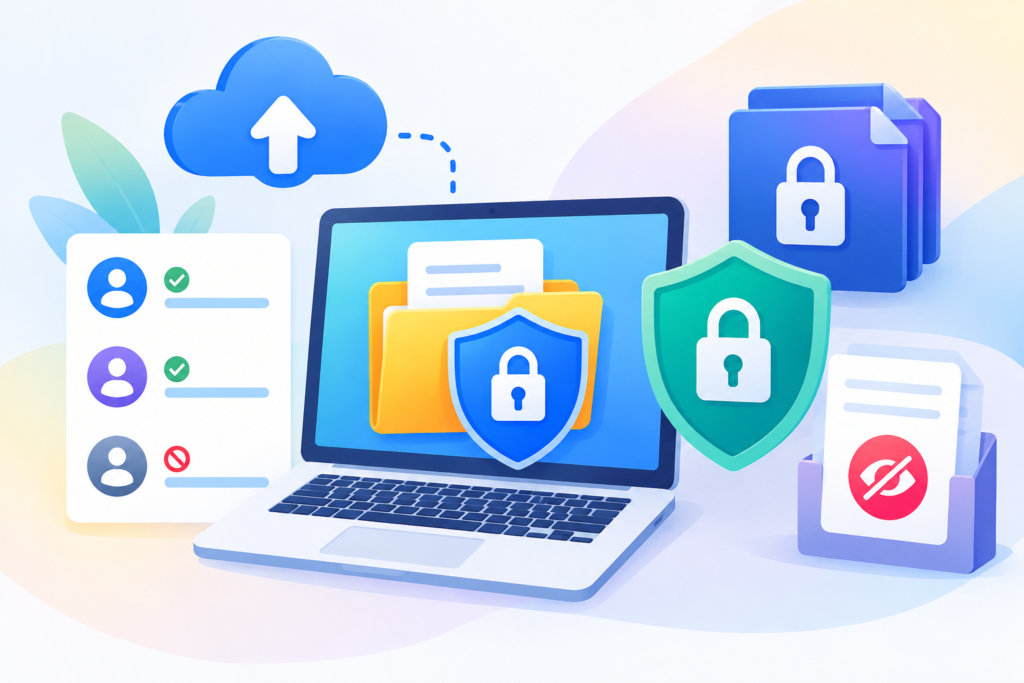
File security is another critical component of website hardening. Websites often need to create and modify files for legitimate functions such as image uploads, caching, logs, temporary storage, and application-generated content. Problems arise when applications receive more filesystem access than they actually need.
The principle of least privilege should apply to files and directories. A web application should not have unrestricted write access to every part of the server when only a small portion actually needs to be writable. Limiting write permissions can reduce the potential impact of a compromised application.
Sensitive files also require careful protection. Configuration files, environment files, database exports, backup archives, source code, diagnostic information, and temporary files may contain credentials or reveal details about the underlying infrastructure.
These resources should not be publicly accessible unless there is a deliberate and justified reason. A simple configuration mistake can expose database credentials or application secrets without requiring an attacker to exploit a sophisticated vulnerability.
File uploads are another important security boundary. Any website that allows users to upload images, documents, avatars, or other files should validate uploaded content and control where those files are stored. File extensions alone should not be treated as sufficient validation.
Upload processing should consider file type, size, filename handling, storage location, permissions, and whether uploaded content could become executable. OWASP provides extensive application-security guidance covering file handling, validation, and related security controls through its application security resources.
Directory listings should also be reviewed. If a directory contains files that should not be publicly visible, directory browsing should not expose them simply because a server setting permits listing.
File integrity monitoring can provide an additional layer. Unexpected modifications to core files, configuration files, templates, or other sensitive resources may indicate unauthorized activity. Monitoring does not prevent every compromise, but it can reduce the time between a malicious modification and its discovery.
Backups require equal care. A backup can restore a website after an incident, but a publicly accessible or poorly protected backup can become a serious security liability. OWASP’s attack surface guidance emphasizes protecting backup systems and considering how exposed backup resources can increase the attack surface.
A hardened website therefore asks two related questions: Who can access each file, and what can that file do?
Strong permissions, controlled uploads, protected configuration files, restricted directories, integrity monitoring, and secure backups can significantly reduce the opportunities available to attackers.
Database Security and Protection of Sensitive Information
The database is one of the most valuable components of many websites because it can contain customer records, account information, order details, content, configuration data, and other business-critical information. If an attacker gains unnecessary access to a database, the consequences can be significantly more serious than simply changing a webpage. Database hardening focuses on reducing that risk by restricting access, minimizing privileges, protecting credentials, validating application interactions, and ensuring that sensitive information is handled appropriately.
A strong database security strategy begins with access control. A website’s database account should have only the permissions required by the application. There is rarely a good reason for a normal application process to use a database account with unrestricted administrative privileges. Separating application accounts from administrative accounts can limit the consequences if application credentials are compromised. Database administration interfaces should also receive additional protection because exposing them unnecessarily can create another attractive target. OWASP’s least privilege guidance emphasizes granting only the permissions necessary for a user’s or application’s legitimate activities.
Database credentials should never be casually embedded in publicly accessible files, source repositories, client-side code, or documentation. Secrets should be stored using appropriate server-side configuration mechanisms and protected from unauthorized access. Credentials should also be rotated when there is a reasonable indication that they may have been exposed. Applications should use secure connections to database systems when the architecture requires communication across networks, particularly when the database is hosted separately from the application server.
Application developers also need to prevent unsafe database queries. SQL injection remains a major application-security concern when user-controlled input is improperly incorporated into database queries. OWASP’s SQL Injection Prevention Cheat Sheet recommends approaches such as prepared statements and parameterized queries. Input validation can provide an additional layer, but it should not replace safe query construction.
Database backups should be encrypted or otherwise protected according to the sensitivity of the stored information. Access to backups should be restricted just as carefully as access to the production database. Retention periods should also be reviewed so that obsolete copies containing sensitive information do not remain indefinitely.
A hardened database environment therefore combines restricted privileges, secure credentials, safe query handling, controlled administrative access, protected backups, and appropriate monitoring. Database security should be reviewed whenever the application architecture changes because new integrations, APIs, reporting tools, and plugins can introduce new paths to sensitive data.
Backup Security and Reliable Website Recovery
Backups are an essential component of website security because even strong preventive controls cannot guarantee that a compromise will never occur. A reliable backup strategy gives website owners an option for restoring legitimate content and configuration after accidental deletion, server failure, malware infection, ransomware, or another serious incident. However, simply having a backup does not automatically mean that the backup strategy is secure or useful.
The first requirement is coverage. Important website files, databases, configurations, and other necessary components should be included according to the website’s recovery requirements. A database-only backup may not be sufficient for a complete application, while a file-only backup may not restore dynamic content correctly. Administrators should understand exactly what is included in every backup and how those components would be restored.
Backups should also be separated from the primary website environment. If an attacker compromises the server and can access or delete every backup from the same environment, the backup strategy may fail when it is needed most. CISA’s ransomware guidance recommends maintaining backups and protecting them from unauthorized modification or deletion. Offline, isolated, or otherwise strongly protected copies can provide additional resilience.
The 3-2-1 backup principle is often used as a practical framework: maintain multiple copies, use different storage media or environments, and keep at least one copy separated from the primary system. The exact implementation should depend on the website’s size, recovery requirements, budget, and operational architecture.
Backup security also includes access control. Only authorized personnel should be able to create, download, delete, or restore backups. Backup credentials should not be shared casually, and backup storage should not be publicly accessible through predictable URLs.
Testing is one of the most overlooked aspects of backup management. A backup that has never been restored is an assumption rather than a proven recovery mechanism. Restoration tests can reveal missing files, corrupted archives, incompatible database versions, incorrect permissions, or undocumented dependencies.
A useful recovery process should answer several practical questions: What needs to be restored? Who is responsible? Where will the restoration occur? How long should recovery take? Which credentials or configuration values are required? How will the restored website be verified?
Backups should also be monitored. Failed scheduled backups can remain unnoticed for weeks if there is no alerting mechanism. Administrators should know when backups succeed, when they fail, how long they are retained, and whether storage capacity is becoming a problem.
For a hardened website, backups are not simply an emergency convenience. They are part of the overall business continuity and incident-response strategy. Preventive controls reduce the likelihood of compromise, while reliable backups reduce the potential impact when prevention is unsuccessful.
Malware Prevention and Protection Against Website Compromise
Malware prevention is an important objective of website hardening because malicious code can affect website functionality, visitors, search visibility, data security, and server resources. Malware may appear as injected scripts, modified application files, malicious plugins, unauthorized server-side code, hidden administrator accounts, redirects, spam pages, or other forms of unauthorized modification.
The strongest malware-prevention strategy starts with reducing the opportunities through which malicious code can enter. Outdated software, vulnerable plugins, compromised credentials, insecure upload functionality, excessive file permissions, and exposed administration interfaces can all contribute to risk. Hardening addresses these areas before they become entry points.
One important control is software integrity. Administrators should know what legitimate website files are expected to exist and monitor important files for unexpected changes. If a core application file suddenly changes without an authorized deployment, that change deserves investigation. File integrity monitoring can help identify suspicious modifications earlier.
Malware prevention also requires protecting administrative credentials. Attackers frequently target privileged accounts because successful access can allow them to make changes that appear legitimate from the perspective of the application. Strong authentication, multi-factor authentication, limited privileges, and individual accounts can significantly improve this security boundary.
Website owners should also be cautious with third-party plugins, themes, scripts, and extensions. A component may provide useful functionality but still create security risk if it is abandoned, poorly maintained, unnecessarily privileged, or sourced from an untrusted location. Components should be selected based on legitimate functionality, maintenance status, reputation, compatibility, and security considerations.
Google provides guidance for website owners dealing with compromised websites and hacked content. Understanding the distinction between preventing a compromise and responding to one is important. Hardening reduces exposure, while incident response addresses the situation after suspicious activity has been detected.
Malware prevention should also include monitoring for symptoms such as unexpected redirects, newly created users, modified files, unusual server processes, unexplained traffic patterns, suspicious JavaScript, unknown administrator activity, or sudden changes in website behavior.
A common mistake is assuming that a website is safe simply because a security plugin reports no current threat. Security tools are useful, but no individual scanner can guarantee that an environment is completely clean or secure. Effective protection combines preventive controls, vulnerability management, monitoring, secure administration, backups, and human review.
The objective is not merely to remove malware after infection. The better goal is to create an environment in which malicious code is harder to introduce, unauthorized changes are easier to detect, and recovery can happen quickly if prevention fails.
Web Application Security and Protection Against Common Vulnerabilities
Website hardening cannot be separated from application security. A server can be configured correctly while the application itself contains vulnerabilities that allow attackers to bypass authentication, inject malicious content, access unauthorized data, or execute unintended actions. Application hardening therefore requires secure development practices alongside infrastructure controls.
A useful starting point is the OWASP Top 10, which identifies major categories of web application security risks. The current OWASP project provides a practical framework for understanding issues such as broken access control, injection, security misconfiguration, vulnerable components, authentication failures, and other application-level risks. Reviewing these categories can help developers and website administrators identify areas that deserve attention.
Input handling is particularly important. Applications receive data through forms, URLs, APIs, cookies, headers, uploads, and other sources. That data should not automatically be trusted. OWASP’s Input Validation Cheat Sheet explains how validation can help ensure that input conforms to expected formats and reduces the possibility of unexpected data reaching sensitive application functions.
Output handling matters as well. Applications that display user-controlled content should use appropriate encoding mechanisms to prevent unintended interpretation by browsers. This is especially important for protecting against cross-site scripting.
Access control is another major area. An application should verify whether a user is actually authorized to perform a requested action rather than assuming that reaching a particular URL means permission has already been granted. Authorization checks should be implemented consistently across sensitive operations.
Error handling also deserves attention. Detailed technical error messages can reveal database structures, internal paths, software versions, debugging information, or other details useful to attackers. Production applications should provide users with appropriate error messages while keeping sensitive diagnostic information available only through protected logging systems.
Session management should also be reviewed. Sessions should expire appropriately, sensitive cookies should be protected, and authentication state should not be exposed unnecessarily.
Secure development should continue after launch. New features, integrations, plugins, APIs, and code changes can introduce vulnerabilities that did not exist in the original version of the website.
For this reason, application hardening is an ongoing development discipline. Security testing, dependency management, code review, vulnerability scanning, secure deployment practices, and monitoring should form part of the development lifecycle.
The strongest result occurs when application security and infrastructure security reinforce each other. Secure code reduces vulnerabilities, while hardened infrastructure limits the potential impact of vulnerabilities that remain.
Website Monitoring, Logging, and Security Alerts
A website cannot be considered fully hardened if nobody knows what is happening inside it. Monitoring provides visibility into authentication activity, file changes, server events, application errors, traffic anomalies, and other indicators that may reveal an attack or configuration problem.
Logging is the foundation of this visibility. Important events may include successful and failed login attempts, administrator actions, privilege changes, account creation, configuration modifications, application errors, suspicious requests, file changes, and security-related events. The exact events worth recording depend on the application and infrastructure.
Logs should be protected from unauthorized modification. If an attacker gains control of the website and can simply delete all evidence of their actions, investigation becomes much more difficult. Depending on the environment, security-relevant logs may be forwarded to separate storage or monitoring systems.
Monitoring should focus on meaningful signals rather than generating enormous volumes of unreadable information. For example, a sudden increase in failed administrator logins may deserve attention. A newly created privileged account may require immediate verification. Unexpected modifications to critical files can also indicate suspicious activity.
Security alerts should be configured according to risk. Excessive alerts can create alert fatigue, causing important warnings to be ignored. The objective should be to identify events that require human attention and establish clear procedures for responding to them.
Website monitoring can also include availability and performance signals. A sudden increase in CPU usage, memory consumption, database activity, or outbound network traffic can sometimes indicate compromise, cryptomining, malicious automation, or another abnormal condition.
Monitoring should not be limited to the website itself. Hosting accounts, DNS changes, cloud resources, third-party authentication systems, repositories, and administrative services may also require oversight.
A useful monitoring strategy establishes a baseline of normal behavior. When administrators understand what ordinary traffic, login activity, file changes, and resource consumption look like, unusual behavior becomes easier to identify.
The response process is equally important. A security alert without an action plan can leave a team unsure about what to do next. Organizations should establish procedures for verifying alerts, preserving evidence, restricting affected accounts, isolating compromised systems, restoring trusted versions, and documenting incidents.
Monitoring transforms website security from a static configuration into an active process. Hardening reduces exposure; monitoring helps determine whether those controls are working and whether something unexpected is happening.
For smaller websites, monitoring does not necessarily require an expensive security operations platform. The appropriate solution may range from hosting-level alerts and application security tools to centralized logging, depending on the website’s risk and complexity.
Vulnerability Scanning, Security Testing, and Regular Hardening Reviews
No website remains secure simply because it passed a security review once. New vulnerabilities are discovered, software changes, employees receive new permissions, plugins are added, integrations evolve, and infrastructure configurations change. Regular vulnerability assessment is therefore an important part of long-term website hardening.
A vulnerability scan can help identify outdated software, known weaknesses, exposed services, insecure configurations, and other potential issues. However, automated scanning should not be treated as a complete security assessment. Scanners can produce false positives, miss application-specific vulnerabilities, or fail to understand business logic.
Manual review can provide additional context. Security professionals can examine authentication flows, authorization rules, file-upload functionality, APIs, administrative interfaces, configuration settings, and other areas that automated tools may not fully understand.
Penetration testing can be appropriate for organizations with higher security requirements. It involves controlled security testing designed to identify vulnerabilities from an attacker’s perspective. Testing should be performed carefully, with appropriate authorization and safeguards to prevent unnecessary disruption.
OWASP’s Web Security Testing Guide provides a structured resource for understanding different categories of web application security testing. It covers areas such as information gathering, configuration testing, authentication, authorization, session management, input validation, business logic, and client-side testing.
A good testing program should prioritize risk. Critical systems and internet-facing administrative functions may deserve more frequent review than low-risk informational pages. The frequency should reflect the website’s complexity, data sensitivity, change rate, and threat environment.
Hardening reviews should also occur after major events. These can include:
- Website migrations
- Hosting changes
- Major software upgrades
- New administrator accounts
- New third-party integrations
- Major plugin or theme changes
- Database architecture changes
- New APIs
- Security incidents
- Significant application redesigns
Each review should compare the current environment against a documented security baseline. This makes it easier to identify configuration drift.
A mature process also tracks remediation. Finding a vulnerability is only the first step. Teams should record its severity, affected component, owner, planned remediation, deadline, and verification status.
After fixes are applied, the relevant area should be retested. Otherwise, organizations may assume that a vulnerability has been resolved when the underlying problem remains.
Regular testing creates a valuable feedback loop: discover, prioritize, fix, verify, document, and review again.
This process helps website owners move from reactive security toward continuous risk management.
Website Hardening for WordPress, eCommerce, and Content Management Systems
Content management systems make website development easier, but their flexibility also introduces additional security considerations. WordPress and other CMS platforms can contain core software, themes, plugins, extensions, integrations, databases, user accounts, and administrative interfaces. Each component should be included in the hardening strategy.
The first step is maintaining the CMS itself. Core software should receive security updates, and outdated themes and plugins should be reviewed. Components that are no longer required should be removed rather than accumulating indefinitely.
Administrator permissions should also be reviewed. A website may have several users who can publish content but do not need full administrative access. Limiting privileges reduces the potential impact of compromised accounts.
For eCommerce websites, the security requirements are often broader because the platform may handle customer information, orders, payment integrations, inventory, and account credentials. Payment processing should use reputable providers and follow applicable security requirements. Sensitive payment information should not be stored unnecessarily.
The CMS database, media directories, configuration files, and administrative interfaces should receive appropriate protection. Upload functionality deserves particular attention because media management is often a normal part of CMS operation.
Plugins and extensions should be evaluated carefully. A popular plugin can still become vulnerable, while an obscure plugin may be poorly maintained. Website owners should consider whether each component is necessary, actively maintained, compatible with the current platform, and sourced from a trustworthy provider.
Caching, CDN services, analytics scripts, customer-support tools, marketing automation, and payment integrations should also be included in security reviews. Hardening only the CMS while ignoring connected services leaves gaps in the overall environment.
For WordPress specifically, administrators can review official WordPress security documentation for platform-specific hardening recommendations. The official guidance covers areas such as updates, passwords, permissions, database protection, and other security considerations.
A CMS hardening strategy should also include backups and restoration testing. Website owners need to know how to restore the database, files, configuration, and required integrations without accidentally restoring compromised content.
For eCommerce environments, availability is especially important. Security controls should therefore be implemented without unnecessarily disrupting checkout, account access, product management, order processing, or payment workflows.
The central principle is simple: secure the entire CMS ecosystem, not just the core platform. A website’s security is determined by the combined behavior of its components and integrations.
DNS, Domain, CDN, and Network-Level Website Protection
Website hardening extends beyond the application and server. DNS records, domain settings, CDN configurations, firewalls, load balancers, and network controls can all affect the website’s security posture. An attacker does not necessarily need to compromise application code if they can manipulate the infrastructure responsible for directing visitors to the site.
Domain accounts should therefore be protected with strong authentication and, where supported, multi-factor authentication. Access should be limited to authorized personnel, and account recovery information should be kept current.
DNS records should be reviewed periodically. Administrators should know which records are active and why they exist. Forgotten subdomains can become security risks when they point to abandoned hosting environments or third-party services that are no longer controlled.
Subdomain management deserves particular attention. When a subdomain points to an external platform and that resource is later removed, the DNS record may remain. In certain circumstances, abandoned configurations can contribute to subdomain takeover risks.
CDN and web application firewall configurations should also be reviewed. A CDN can provide performance benefits and additional security capabilities, while a WAF may help detect or block certain malicious requests. However, these technologies should complement rather than replace secure application design.
Network segmentation can further limit exposure. Databases and internal services generally do not need to be directly accessible from the public internet. Restricting network paths can reduce the number of systems an attacker can reach if one component is compromised.
DNSSEC may also be appropriate in certain environments. It provides a mechanism for helping validate DNS responses and can strengthen trust in DNS resolution when correctly configured. The suitability and implementation details depend on the domain’s DNS provider and operational requirements.
TLS certificates, DNS records, CDN settings, firewall rules, and hosting configurations should be documented so that administrators understand the complete path from visitor to application.
Security reviews should also consider origin-server exposure. If a website uses a CDN or reverse proxy but its origin server remains publicly reachable without appropriate controls, attackers may attempt to bypass the protective layer and communicate directly with the origin.
A strong network-level strategy therefore aims to minimize public exposure, protect administrative infrastructure, secure DNS and domain accounts, restrict origin access, and use network controls as part of a layered defense.
This broader perspective is essential because website security does not stop at the web server. The infrastructure surrounding the application can determine whether an attacker can reach it in the first place.
Security Maintenance, Incident Preparedness, and Continuous Website Hardening

Website hardening is most effective when it becomes an ongoing maintenance program rather than a one-time project. Websites change continuously. New plugins are installed, software is updated, employees join or leave organizations, hosting environments evolve, integrations are introduced, and new vulnerabilities are discovered. A security configuration that was appropriate last year may no longer be sufficient today.
A continuous hardening program should establish a security baseline. This baseline can document approved software, administrator accounts, file permissions, server settings, security headers, backup procedures, authentication requirements, network rules, and monitoring controls. When changes occur, administrators can compare the new environment against that baseline.
Security maintenance should also include scheduled reviews. A monthly review might examine updates, administrator accounts, backups, alerts, and suspicious changes. A more comprehensive quarterly or annual review might evaluate the entire attack surface, permissions, infrastructure, application dependencies, and recovery process.
Incident preparedness is equally important. Organizations should know what they will do if malware is discovered or an administrator account is compromised. A basic response process may include identifying the affected systems, restricting unauthorized access, preserving relevant evidence, changing compromised credentials, removing malicious components, restoring trusted files, validating the environment, and monitoring for recurrence.
Google provides dedicated guidance for security issues, including situations where websites have been hacked. This is particularly relevant because a compromised website can produce consequences that extend into search visibility, user trust, and website reputation.
A security incident should also trigger a post-incident review. Simply cleaning the website without determining how the attacker entered can leave the original vulnerability available. For example, removing malicious files while leaving a vulnerable plugin or compromised administrator account may result in reinfection.
Continuous hardening should therefore follow a cycle:
Assess → Harden → Monitor → Test → Respond → Learn → Harden Again.
Documentation is an important part of this process. Security changes, incidents, vulnerabilities, patches, account changes, and recovery procedures should be recorded appropriately. Documentation reduces dependence on one individual who happens to know how the environment works.
Website owners should also educate people who have access to the website. Phishing-resistant authentication, password hygiene, secure account practices, cautious handling of plugins and files, and awareness of suspicious activity can reduce risks created by human error.
Ultimately, the strongest security posture comes from combining technology with disciplined processes. A hardened website is not a website with one perfect security setting; it is a website supported by consistent security practices.
FAQs
1. What is website hardening?
Website hardening is the process of strengthening a website, application, server, and related infrastructure against unauthorized access and common security threats. It includes reducing unnecessary exposure, updating software, securing authentication, restricting permissions, protecting files and databases, configuring HTTPS and security headers, maintaining backups, and monitoring important activity.
Hardening is different from simply installing a security plugin. A plugin can provide useful protection, but it does not automatically secure every component of a hosting environment. Effective hardening considers the complete technology stack and the ways different components interact.
2. How often should a website be hardened?
Website hardening should be treated as an ongoing process. A comprehensive review can be performed periodically, while high-risk controls such as software updates, administrator accounts, backups, and security alerts should be monitored much more frequently.
A new security review is especially useful after a hosting migration, major software update, new plugin installation, new administrator account, major redesign, new API integration, or security incident.
3. Does website hardening prevent malware?
Hardening can significantly reduce opportunities for malware infection, but no security strategy can guarantee that a website will never be compromised.
Strong authentication, timely updates, restricted permissions, secure uploads, protected files, monitoring, and vulnerability management make unauthorized changes more difficult. If a compromise still occurs, protected backups and incident-response procedures can help limit the damage and restore the website.
4. Is website hardening necessary for small websites?
Yes. Small websites can still contain administrator accounts, plugins, forms, databases, customer information, and vulnerable software. Attackers can also use automated tools to scan large numbers of websites for known weaknesses.
The appropriate level of hardening should depend on the website’s risk rather than its size. A simple informational website may require fewer controls than a large eCommerce platform, but fundamental protections such as updates, strong authentication, backups, and secure hosting remain valuable.
5. Does HTTPS mean a website is completely secure?
No. HTTPS protects communication between the browser and server, but it does not automatically prevent malware, vulnerable plugins, weak passwords, insecure application code, compromised administrator accounts, or server misconfiguration.
HTTPS should be considered one layer of a broader security strategy.
6. What is the difference between website hardening and malware removal?
Website hardening is primarily preventive, while malware removal is primarily corrective.
Hardening strengthens the environment to reduce the likelihood and impact of compromise. Malware removal involves identifying and eliminating malicious code or unauthorized changes after an infection or compromise has occurred.
The two practices work together. After malware is removed, the original entry point should also be identified and addressed through hardening; otherwise, reinfection may occur.
7. Can a security plugin handle all website hardening?
A security plugin can provide valuable controls, especially on supported CMS platforms, but it should not be considered a complete hardening solution.
Server configuration, hosting security, DNS protection, administrator access, database permissions, backups, software maintenance, application security, and third-party integrations may exist outside the plugin’s control.
A layered approach is more reliable.
8. What should be checked first when hardening a website?
Start with visibility and risk assessment. Identify the website’s hosting environment, domains, subdomains, applications, plugins, themes, administrator accounts, databases, external integrations, and public services.
Then prioritize the highest-impact controls: administrator security, software updates, unnecessary exposure, permissions, backups, HTTPS, sensitive files, and monitoring.
Common Mistakes Website Owners Make During Hardening
Website owners often make security mistakes not because they ignore security completely, but because they focus on one control while overlooking the wider environment.
Using Only a Security Plugin
A security plugin can be helpful, but it cannot replace secure hosting, patch management, strong authentication, protected backups, or secure application development.
Keeping Unused Plugins and Themes
Unused components increase maintenance requirements and may eventually introduce vulnerabilities. Remove components that are no longer necessary.
Giving Everyone Administrator Access
Excessive privileges increase the potential damage from compromised accounts and accidental changes. Use the lowest appropriate permission level.
Ignoring Old Administrator Accounts
Former employees, developers, contractors, and temporary users may retain access long after they stop needing it. Conduct regular access reviews.
Storing Backups on the Same Server
If an attacker gains control of the server, they may be able to delete or modify backups stored there. Maintain protected copies in separate environments.
Never Testing Backups
A backup that cannot be restored is not a dependable recovery strategy. Perform restoration tests periodically.
Installing Security Headers Without Testing
Security headers can improve protection, but incorrect policies can break legitimate website functions. Test policies before enforcing them broadly.
Using Outdated Plugins or Software
Known vulnerabilities can remain exploitable long after patches become available. Establish a consistent update process.
Ignoring File Permissions
Excessive write permissions can make it easier for attackers to modify files after compromising an application.
Forgetting Third-Party Integrations
Analytics, payment systems, APIs, external scripts, marketing tools, and embedded services can all affect the website’s security posture.
Assuming a Clean Scan Means Everything Is Safe
Automated security scanners are useful but imperfect. Combine automated tools with configuration reviews, monitoring, and appropriate manual testing.
Hardening Only After an Attack
Reactive security often leaves businesses one step behind attackers. Preventive hardening should happen before a compromise occurs and continue afterward.
Best Practices Summary
A strong website hardening strategy should be layered, documented, continuously reviewed, and based on the actual risk of the website.
The most important practices include:
- Maintain an accurate inventory of domains, subdomains, applications, plugins, themes, servers, databases, and integrations.
- Reduce the public attack surface by removing unnecessary services and functionality.
- Keep operating systems, CMS platforms, plugins, themes, frameworks, and libraries updated.
- Use strong, unique administrative credentials.
- Enable multi-factor authentication for privileged accounts where supported.
- Apply least-privilege access to users, applications, databases, files, and services.
- Protect administrative interfaces from unnecessary public exposure.
- Use HTTPS consistently and configure transport security appropriately.
- Implement relevant browser security headers carefully and test them.
- Secure file uploads and prevent uploaded content from becoming unintended executable code.
- Protect configuration files, environment variables, database credentials, and sensitive backups.
- Use secure database accounts and parameterized queries.
- Maintain multiple protected backups.
- Test restoration procedures rather than assuming backups work.
- Monitor administrator activity, authentication events, file changes, and unusual system behavior.
- Conduct regular vulnerability assessments and security reviews.
- Document the website’s security baseline and important configuration changes.
- Establish an incident-response procedure before a security incident occurs.
- Review security after major website, hosting, software, or integration changes.
- Treat hardening as a continuous lifecycle rather than a one-time task.
The most important principle is defense in depth. No individual setting, plugin, firewall, password, scanner, or backup can provide complete protection. Security becomes substantially stronger when multiple independent controls work together.
Conclusion
Website hardening is one of the most important foundations of responsible website management. A secure website does not happen simply because it uses HTTPS or has a security plugin installed. Effective protection requires a broader approach that considers the complete environment, including hosting, servers, applications, databases, administrator accounts, files, backups, domains, third-party integrations, and monitoring systems.
The most effective strategy begins by reducing unnecessary exposure. From there, website owners can strengthen authentication, apply least-privilege permissions, keep software updated, protect sensitive files, secure databases, implement appropriate browser security controls, monitor activity, maintain reliable backups, and conduct regular vulnerability assessments. Each control addresses a different part of the security problem.
Security should also evolve with the website. New software, new users, new integrations, new APIs, and infrastructure changes can introduce new risks. Regular hardening reviews ensure that security controls remain aligned with the current environment.
For businesses, the value of hardening extends beyond preventing technical compromise. A stronger security posture can help protect customer trust, reduce downtime, preserve website integrity, support reliable operations, and provide a more dependable foundation for long-term digital growth.
FixHackedSite approaches website security with the understanding that prevention, detection, and recovery are connected. A website should not merely be cleaned after an attack; it should also be strengthened so that known weaknesses are addressed and future risks are reduced.
Ultimately, website hardening is a continuous investment in resilience. By combining secure configuration, strong access controls, software maintenance, application security, monitoring, backups, and regular testing, website owners can create a much stronger defense against the evolving threat landscape.
Want to Implement This Easily?
You are an expert consultant. Based on the blog post titled “(Website Hardening)”, provide a step-by-step, practical implementation guide. Include tools, best practices, common mistakes to avoid, and advanced tips. Assume the reader wants to implement everything discussed in this article effectively.
Want our help implementing this? Just reach out to us via our website contact form: (https://fixhackedsite.com/contact-us/)
