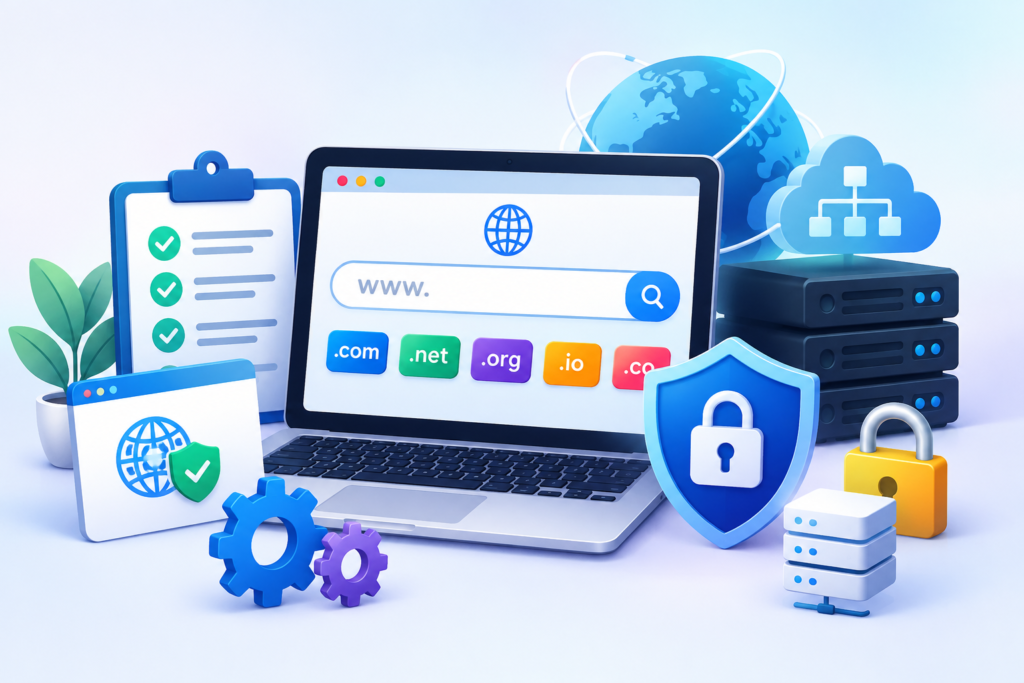
Learn everything about website domains, domain registration, DNS management, domain security, and best practices. Discover how choosing and protecting the right domain strengthens your online presence and helps prevent cyber threats.
Introduction
A website domain is one of the most important digital assets for businesses, organizations, and individuals. It serves as the address people use to find your website and represents your brand across the internet. Selecting the right domain and protecting it properly are essential for building trust, improving visibility, and ensuring long-term online success.
At FixHackedSite, we understand that a website domain is more than just a web address. It plays a critical role in website security, branding, customer confidence, and overall digital growth. A properly managed domain creates a strong foundation for a reliable and secure online presence.
This comprehensive guide explains every important aspect of website domains, including domain registration, security, DNS management, SEO considerations, common mistakes, and industry best practices. Whether you are starting a new website or managing an existing one, understanding domains can help you make smarter decisions and protect your investment.
Understanding What a Website Domain Is
A website domain is the human-readable address used to access websites on the internet. Instead of remembering numerical IP addresses, users can type a memorable name into their browser and instantly reach the desired website. Domains simplify navigation and provide businesses with recognizable identities.
A domain typically consists of several parts. The second-level domain represents the brand or business name, while the top-level domain (TLD) appears after the period. Popular examples include .com, .org, and .net. Together, these components create a unique address that distinguishes one website from another.
Modern businesses rely heavily on domains because they improve accessibility and brand recognition. A professional domain name creates credibility and allows customers to remember and revisit websites easily. Strong domains also contribute to long-term marketing and business growth.
Why Website Domains Matter for Businesses
Website domains influence how customers perceive a business. A professional domain name immediately creates a sense of trust and legitimacy. Users are more likely to interact with websites that have memorable and credible domain names.
Domains also contribute significantly to branding. Matching the domain name with the business name helps customers remember the website and strengthens marketing campaigns. Consistency across social media profiles, email addresses, and websites creates a unified identity.
From a technical standpoint, domains are essential for hosting websites, configuring email systems, and maintaining online services. Businesses that actively manage their domains are better equipped to prevent downtime and maintain uninterrupted access for customers.
Components of a Website Domain
Every domain consists of multiple elements that work together to create a functional internet address. Understanding these components helps website owners manage domains more effectively.
The first component is the subdomain. Common examples include “www” or specialized subdomains such as blog.example.com and support.example.com. Subdomains allow organizations to organize content and services efficiently.
The second-level domain represents the main brand or website name. This section has the greatest impact on recognition and memorability. Finally, the top-level domain determines the extension, such as .com, .org, or .net. Selecting the right combination contributes to branding and user trust.
How Domain Registration Works
Domain registration is the process of reserving a unique internet address through an accredited registrar. Once registered, the owner receives exclusive rights to use the domain for a specified period, typically one year or longer.
Registrars work with domain registries to ensure uniqueness and maintain global internet stability. Organizations such as ICANN oversee the domain naming system and establish policies that help ensure fairness and consistency. Their standards support the secure operation of domain infrastructure worldwide.
Website owners should always register domains using accurate contact information and enable automatic renewal whenever possible. Failing to renew a domain can result in expiration and potential loss of ownership, creating opportunities for competitors or malicious actors to acquire valuable domains.
Choosing the Right Domain Name
Selecting the right domain name requires strategic planning. Short, simple, and memorable names are easier for visitors to remember and type correctly. Complex spellings and unnecessary symbols should generally be avoided.
Brand relevance is equally important. Aligning the domain name with the company name creates consistency and helps users recognize the business more easily. This consistency supports marketing efforts and improves overall brand awareness.
Future expansion should also be considered. Choosing a flexible domain allows businesses to add products, services, or locations without requiring a complete rebranding. Long-term planning helps avoid costly migrations and unnecessary confusion.
Types of Domain Extensions
Domain extensions, also known as top-level domains, affect how websites are perceived by visitors. Traditional extensions such as .com remain highly popular because they are widely recognized and trusted.
Organizations often select specialized extensions based on their goals. Nonprofit organizations commonly use .org, while technology companies may prefer .io or .tech. Country-code domains such as .uk or .ca are valuable for businesses targeting specific geographic regions.
Modern domain extensions provide additional branding opportunities. However, businesses should prioritize trust and audience expectations when selecting an extension. A credible extension can positively influence user confidence and improve brand perception.
Website Domain and Search Engine Optimization
Domains play an indirect role in search engine optimization. While content quality and user experience remain the most important ranking factors, domains contribute to branding and click-through rates.
In the early days of SEO, exact-match keyword domains often provided ranking advantages. Today, search engines focus much more on content relevance, expertise, and overall website quality. High-value content consistently outperforms keyword-stuffed domain strategies.
Maintaining a consistent domain structure also helps establish authority and improve user trust. Secure websites using HTTPS and clear URL structures provide better experiences for visitors and support long-term SEO efforts.
Domain Security and Cyber Threats
Website domains are common targets for cybercriminals. Attackers may attempt domain hijacking, phishing campaigns, or DNS manipulation to redirect traffic and compromise sensitive information.
Strong passwords and multi-factor authentication significantly reduce the risk of unauthorized access. Website owners should also monitor registrar accounts regularly and review security settings to detect suspicious activity early.
Proactive domain protection helps preserve customer trust and maintain business continuity. Investing in domain security prevents disruptions and reduces the likelihood of financial or reputational damage resulting from cyberattacks.
Understanding DNS and Its Role
The Domain Name System, commonly known as DNS, functions as the internet’s phonebook. It translates human-readable domain names into IP addresses that computers use to locate servers and deliver web content.
DNS records perform essential tasks such as directing website traffic and managing email communication. Common record types include A records, MX records, TXT records, and CNAME records. Each serves a unique purpose within the internet infrastructure.
Improper DNS configuration can lead to website outages and email delivery problems. Website administrators should regularly review DNS settings and maintain accurate documentation to minimize disruptions and ensure reliable performance.
Domain Ownership and Administrative Control
Owning a domain means having legal rights to use and manage that internet address for a specified period. However, ownership involves more than registration. Proper administrative control ensures that domains remain secure and accessible.
Businesses should always register domains under company ownership rather than individual employees or third parties. This practice prevents disputes and ensures continuity if staff members leave the organization. Maintaining centralized control is a critical aspect of domain management.
Keeping ownership information accurate and updated helps prevent unexpected issues during renewals or transfers. Organizations that maintain proper records are better prepared to respond to security incidents and operational changes.
Website Domain Branding Strategies
A domain name plays a significant role in branding. It influences how customers remember a business and how they perceive its professionalism. Strong domains often contribute to greater brand awareness and customer trust.
Short and distinctive domains are easier to promote across advertising campaigns, social media platforms, and email communications. Consistency between the company name and domain strengthens recognition and improves marketing effectiveness.
Businesses should also consider future scalability when choosing domains. A versatile name allows companies to expand into new markets or services without needing major branding changes. Strategic domain planning supports sustainable growth and long-term success.
Domain Privacy Protection
Domain privacy protection is an important feature that helps website owners safeguard their personal information. When a domain is registered, contact details such as names, phone numbers, email addresses, and physical addresses may become publicly available through WHOIS databases. Without privacy protection, cybercriminals, spammers, and malicious actors can exploit this information.
Privacy services replace personal information with proxy contact details, reducing exposure and limiting the risk of spam emails and targeted attacks. Businesses that prioritize privacy protection create additional layers of security while maintaining compliance with modern data protection expectations. Protecting sensitive information is particularly important for organizations handling customer data and confidential communications.
In addition to reducing spam and phishing attempts, domain privacy contributes to overall trustworthiness. Website owners should review registrar offerings and enable privacy features whenever available. Taking preventive measures today can help avoid security issues and unnecessary exposure in the future.
Website Domain Migration
Website domain migration involves moving a website from one domain to another. Businesses may choose to migrate due to rebranding, acquisitions, international expansion, or SEO improvements. Although migration offers opportunities for growth, improper execution can lead to traffic loss and indexing issues.
Planning is critical before beginning the migration process. Website owners should create backups, document existing URLs, and implement proper 301 redirects to preserve search engine rankings and user experience. Redirects inform search engines that content has permanently moved and help transfer authority from the old domain to the new one.
Communication is equally important during migration. Customers, partners, and stakeholders should be informed about the change to minimize confusion. Monitoring analytics and search performance after migration allows administrators to identify issues quickly and maintain website visibility.
Domain Renewal and Expiration Risks
Domains require periodic renewal to maintain ownership rights. Most registrations operate on annual terms, although longer registration periods are available. Neglecting renewals can result in domain expiration, website downtime, and email disruptions.
Expired domains often pass through several stages before becoming available to the public. During this period, businesses may have opportunities to recover ownership, but restoration fees can be costly. If a domain becomes publicly available, competitors or domain investors may acquire it, making recovery difficult or impossible.
Automatic renewal is one of the most effective methods for preventing accidental expiration. Website owners should maintain updated payment information and monitor expiration dates regularly. Proactive renewal practices ensure uninterrupted operations and protect valuable digital assets.
Common Mistakes Website Owners Make
Many website owners underestimate the importance of domain management and make mistakes that create security and operational risks. One common error is selecting complicated domain names that are difficult for users to remember and type accurately. Simplicity often contributes to stronger branding and improved usability.
Another frequent mistake involves failing to secure registrar accounts with strong passwords and multi-factor authentication. Weak security measures increase the likelihood of unauthorized access and domain hijacking. Cybercriminals frequently target poorly protected accounts because they provide opportunities to redirect traffic or launch phishing campaigns.
Some businesses also neglect renewals and fail to maintain accurate ownership information. Outdated contact details can complicate transfers and account recovery. Consistent management practices help avoid unnecessary disruptions and preserve long-term control over domain assets.
The Relationship Between Website Domains and Website Security
Website security extends beyond firewalls and malware protection. Domains play a central role in maintaining a secure online presence because they control access to websites, email services, and other digital resources. Compromised domains can expose organizations to severe financial and reputational damage.
Secure domain management includes enabling DNSSEC, implementing registrar locks, and regularly monitoring account activity. These measures reduce the risk of DNS spoofing, unauthorized transfers, and malicious modifications. Preventive security strategies provide greater resilience against evolving cyber threats.
Businesses that prioritize domain security demonstrate responsibility and professionalism. Customers are more likely to trust organizations that maintain secure infrastructures and protect sensitive information. Strong domain security should be viewed as a critical component of overall cybersecurity planning.
International Domains and Global Expansion

As businesses expand into international markets, domain strategies become increasingly important. Country-code top-level domains (ccTLDs) allow organizations to establish localized online identities and improve relevance within specific regions. Examples include .uk, .ca, and .au.
Localized domains can enhance user trust and support regional marketing campaigns. Visitors often feel more comfortable interacting with websites that reflect their country or language preferences. These domains may also contribute to improved local search visibility and stronger customer engagement.
Organizations pursuing international growth should carefully evaluate their domain strategies. Maintaining consistency across multiple markets while respecting regional requirements helps businesses establish stronger global brands and deliver better experiences to diverse audiences.
Future Trends in Website Domains
The domain industry continues to evolve alongside advances in technology and cybersecurity. New top-level domains provide additional branding opportunities, enabling businesses to select extensions that align more closely with their industries and identities.
Artificial intelligence and automation are also influencing domain management. Advanced monitoring systems can detect suspicious activities, predict renewal requirements, and simplify administrative tasks. These innovations improve efficiency and strengthen domain security practices.
Emerging technologies will continue to shape how domains are used and protected. Businesses that remain informed about industry developments are better positioned to adapt to changing requirements and maintain competitive advantages in the digital landscape.
Best Practices Summary
Managing website domains effectively requires a combination of strategic planning, security awareness, and ongoing maintenance. Organizations that adopt best practices are better equipped to protect their online identities and maintain reliable digital services.
One of the most important recommendations is choosing a simple, memorable, and brand-relevant domain name. Strong branding improves recognition and enhances customer trust. Businesses should also select reputable registrars that offer robust security features and reliable support.
Additional best practices include enabling multi-factor authentication, activating domain privacy protection, maintaining accurate ownership records, implementing automatic renewals, and monitoring DNS configurations regularly. These measures help reduce risks and ensure long-term stability. Consistent domain management contributes significantly to website performance, security, and overall business success.
Frequently Asked Questions
1. What is a website domain?
A website domain is the address users type into a browser to access a website. It replaces complex numerical IP addresses with human-readable names that are easier to remember and use.
2. Why is choosing the right domain important?
A strong domain improves branding, builds trust, enhances professionalism, and supports long-term marketing efforts. Memorable domains help customers recognize and return to websites more easily.
3. Can I change my domain name later?
Yes. Website owners can migrate to a new domain, but proper planning and redirects are essential to preserve traffic and search engine rankings.
4. What happens if my domain expires?
Expired domains can cause website downtime and email disruptions. If not renewed promptly, the domain may eventually become available for others to register.
5. What is domain privacy protection?
Domain privacy protection hides personal registration information from public databases. It helps reduce spam, phishing attempts, and unauthorized access risks.
6. How can I secure my domain?
You can improve domain security by using strong passwords, enabling multi-factor authentication, activating registrar locks, and monitoring account activity regularly.
7. Does a domain affect SEO?
Domains influence SEO indirectly. While content quality and user experience are more important ranking factors, trustworthy and memorable domains contribute to branding and click-through rates.
8. How often should domains be renewed?
Most domains are renewed annually, although longer registration periods are available. Automatic renewal is recommended to avoid accidental expiration.
Conclusion
Website domains are among the most valuable assets an organization owns. They influence branding, customer trust, website accessibility, and cybersecurity. Understanding how domains work enables businesses to make informed decisions and build stronger digital foundations.
At FixHackedSite, we recognize the importance of proper domain management and security. Investing in the right domain strategy helps organizations maintain stability, protect their online identities, and support sustainable growth. By following industry best practices and staying informed about emerging trends, website owners can maximize the value of their domains and create more secure online experiences.
Want to Implement This Easily?
Prompt Text:
You are an expert consultant. Based on the blog post titled “Website Domain”, provide a step-by-step, practical implementation guide. Include tools, best practices, common mistakes to avoid, and advanced tips. Assume the reader wants to implement everything discussed in this article effectively.
Call to Action:
Want our help implementing this? Just reach out to us via our website contact form: