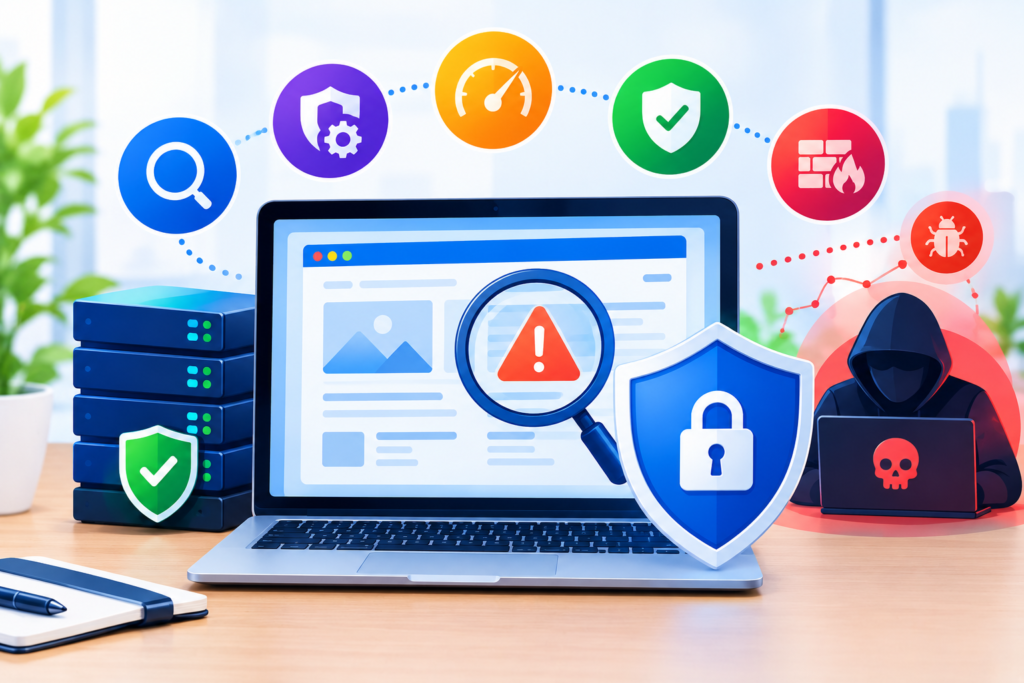
Website Vulnerability refers to weaknesses in a website’s code, configuration, plugins, servers, or applications that attackers can exploit. Learn how to identify, prevent, monitor, and fix website vulnerabilities using industry best practices, security frameworks, and proactive defense strategies.
Introduction
Modern websites are no longer simple collections of web pages. They are dynamic platforms that process user information, manage business operations, handle online transactions, and integrate with numerous third-party services. As websites become more advanced, they also become more attractive targets for cybercriminals looking to exploit security weaknesses. Every website, regardless of its size or industry, contains potential entry points that must be continuously monitored and protected. Understanding Website Vulnerability is one of the most important steps toward building a secure online presence.
At FixHackedSite, we understand that website security is not simply about installing a firewall or using strong passwords. True security requires continuous monitoring, proactive vulnerability management, regular maintenance, secure development practices, and rapid response whenever weaknesses are discovered. Businesses that invest in vulnerability management significantly reduce the likelihood of malware infections, data breaches, website defacement, ransomware attacks, and costly downtime.
This comprehensive guide explains everything you need to know about website vulnerabilities, including how they occur, why they matter, the most common types, methods for identifying security weaknesses, prevention strategies, monitoring techniques, and long-term security practices. Throughout this guide, you’ll learn practical recommendations based on recognized industry standards and cybersecurity frameworks to help strengthen your website against modern threats.
What Is Website Vulnerability?
A website vulnerability is any weakness, flaw, or misconfiguration within a website, web application, server, database, plugin, theme, API, or supporting infrastructure that could allow unauthorized users to compromise the website’s confidentiality, integrity, or availability. These weaknesses may exist because of coding mistakes, outdated software, poor security configurations, insecure third-party components, weak authentication methods, or human error during deployment and maintenance.
Website vulnerabilities differ from active cyberattacks. A vulnerability is simply the weakness itself, while an attacker exploits that weakness to perform malicious actions. For example, an outdated content management system may contain a publicly known security flaw. Until an attacker exploits it, the flaw remains a vulnerability. Once exploited, it may lead to malware installation, unauthorized administrator access, database theft, spam injection, website defacement, or complete server compromise. This distinction highlights why proactive vulnerability management is critical before attackers have an opportunity to exploit weaknesses.
Modern websites operate within complex ecosystems that include web servers, databases, cloud services, APIs, payment gateways, plugins, themes, JavaScript libraries, and third-party integrations. Each additional component increases the potential attack surface. Organizations should follow secure development principles outlined in the OWASP Top 10, implement recommendations from NIST Cybersecurity Publications, and follow Google Search Central Security Issues guidance to minimize risks and improve overall website resilience.
Why Website Vulnerabilities Are a Serious Business Risk
Many organizations mistakenly believe that cybercriminals only target large corporations. In reality, automated scanning tools continuously search millions of websites for known vulnerabilities regardless of business size. Small businesses, eCommerce stores, blogs, healthcare providers, educational institutions, and nonprofit organizations are frequently compromised simply because attackers discover unpatched security weaknesses before website owners do. Automated bots operate around the clock, searching for outdated plugins, vulnerable themes, exposed admin panels, insecure APIs, and improperly configured servers.
The consequences of an exploited vulnerability extend far beyond technical inconvenience. Successful attacks often result in customer data exposure, regulatory compliance violations, financial fraud, SEO penalties, blacklisting by search engines, loss of customer trust, and significant recovery costs. A compromised website may distribute malware, redirect visitors to phishing pages, or become part of a botnet without the owner’s knowledge. These incidents can damage a company’s reputation for years, particularly if sensitive customer information is involved.
Effective vulnerability management reduces these risks through continuous monitoring, timely software updates, secure coding practices, penetration testing, routine security assessments, and rapid remediation. Organizations should also implement defense-in-depth strategies that combine multiple security layers, including web application firewalls, endpoint protection, access controls, encryption, secure authentication, and ongoing employee security awareness training. Security is not a one-time project but an ongoing process of identifying, evaluating, prioritizing, and addressing risks before they become incidents.
Common Types of Website Vulnerabilities
Understanding the most common website vulnerabilities helps organizations prioritize security improvements and reduce their exposure to cyber threats. Attackers typically exploit weaknesses that are already well documented, making regular updates and proactive monitoring essential components of any security strategy.
One of the most recognized categories is SQL Injection (SQLi), where attackers manipulate database queries through improperly validated user input. Another major threat is Cross-Site Scripting (XSS), which allows malicious scripts to execute within a visitor’s browser. Cross-Site Request Forgery (CSRF) tricks authenticated users into performing unintended actions, while Remote Code Execution (RCE) enables attackers to execute arbitrary commands on the server. Additional risks include insecure file uploads, broken authentication, session hijacking, directory traversal, insecure deserialization, server-side request forgery (SSRF), XML External Entity (XXE) attacks, security misconfigurations, exposed administrative interfaces, weak password policies, and vulnerable third-party plugins or themes.
Many vulnerabilities stem from simple oversights rather than sophisticated hacking techniques. Examples include leaving default administrator credentials unchanged, failing to disable unnecessary services, exposing backup files, neglecting software updates, or granting excessive user permissions. Organizations can significantly reduce their attack surface by implementing secure coding standards, conducting regular vulnerability assessments, performing penetration testing, reviewing access permissions, and maintaining an accurate inventory of all software components. Following recognized security frameworks such as the OWASP Web Security Testing Guide and CISA Known Exploited Vulnerabilities Catalog helps prioritize remediation efforts based on real-world threats.
How Website Vulnerabilities Are Discovered
Website vulnerabilities rarely remain hidden for long. Cybercriminals, ethical hackers, automated security scanners, researchers, and even search engines continuously identify weaknesses across the internet. Attackers frequently use automated bots that scan thousands of websites every hour, looking for outdated software versions, exposed configuration files, insecure plugins, weak authentication mechanisms, open ports, and known Common Vulnerabilities and Exposures (CVEs). Because these scans are automated, websites of every size—from personal blogs to enterprise platforms—can become targets. A single overlooked vulnerability can provide an entry point that attackers exploit within hours of a public disclosure.
Organizations should adopt a proactive approach by conducting regular vulnerability assessments before malicious actors find these weaknesses. Vulnerability scanners compare website components against databases of known security flaws, while penetration testing goes a step further by safely simulating real-world attacks to uncover weaknesses that automated tools may miss. Secure code reviews, configuration audits, dependency analysis, and continuous monitoring also play essential roles in identifying hidden risks. Following the OWASP Web Security Testing Guide provides a structured methodology for evaluating website security across authentication, session management, input validation, business logic, and server configurations.
Modern development teams increasingly integrate security directly into the software development lifecycle through DevSecOps practices. Instead of waiting until a website launches, security testing is performed throughout development using automated static application security testing (SAST), dynamic application security testing (DAST), software composition analysis (SCA), and continuous integration security checks. These practices significantly reduce remediation costs because vulnerabilities are identified earlier when they are easier and less expensive to fix. Regular monitoring of National Vulnerability Database (NVD) entries and applying timely security patches further strengthen long-term protection.
Causes of Website Vulnerabilities
Most website vulnerabilities are not caused by highly sophisticated programming errors but by preventable mistakes made during development, deployment, or ongoing maintenance. One of the leading causes is outdated software. Content management systems, plugins, themes, frameworks, programming libraries, and server software frequently receive security updates that address newly discovered vulnerabilities. Delaying these updates leaves websites exposed to exploits that attackers already understand and actively target. Public vulnerability databases often contain detailed technical information, making outdated systems especially attractive to cybercriminals.
Poor coding practices also contribute significantly to website vulnerabilities. Applications that fail to properly validate user input, sanitize uploaded files, implement secure authentication, or encrypt sensitive information often become vulnerable to attacks such as SQL Injection, Cross-Site Scripting (XSS), Broken Access Control, and Remote Code Execution. Developers who prioritize functionality without incorporating secure coding principles may unintentionally introduce exploitable flaws. Following OWASP Secure Coding Practices helps development teams build applications that resist common attack techniques while maintaining performance and usability.
Human error extends beyond developers. System administrators may accidentally expose backup files, leave debugging enabled in production environments, configure incorrect file permissions, reuse weak passwords, or neglect server hardening. Employees may unknowingly install vulnerable plugins or use insecure third-party integrations that expand the website’s attack surface. Comprehensive security awareness training, change management procedures, least-privilege access controls, and documented maintenance processes significantly reduce these operational risks. Organizations that treat cybersecurity as an ongoing operational responsibility rather than a one-time setup consistently achieve stronger security outcomes.
The Business Impact of Website Security Weaknesses

Website vulnerabilities affect far more than technical infrastructure—they directly influence revenue, customer confidence, regulatory compliance, operational continuity, and long-term brand reputation. A compromised website may experience service disruptions, unauthorized data access, malware infections, phishing attacks, spam distribution, ransomware deployment, or complete loss of administrative control. Each incident carries financial costs associated with forensic investigations, system restoration, legal obligations, customer notifications, and business interruption. Even a short period of downtime can result in lost sales and diminished customer trust, particularly for eCommerce businesses and online service providers.
Search engine visibility can also suffer significantly after a security incident. If a website begins distributing malware, redirecting visitors to malicious pages, or hosting phishing content, search engines may display security warnings or temporarily remove affected pages from search results. This reduction in visibility often leads to a decline in organic traffic, conversions, and overall business performance. Website owners should understand Google’s recommendations for handling hacked websites by reviewing Google Search Central Security Issues, which outlines best practices for identifying, resolving, and requesting reconsideration after security incidents.
Beyond immediate recovery costs, organizations must consider the long-term consequences of weakened customer confidence. Clients expect businesses to protect their personal information, payment details, and private communications. A public security breach may cause existing customers to leave while discouraging potential customers from engaging with the business in the future. Regulatory requirements such as data protection laws may impose additional reporting obligations and financial penalties depending on the nature of the breach. Investing in continuous vulnerability management, routine security assessments, disaster recovery planning, and incident response preparation is therefore not simply an IT expense—it is a strategic business investment that protects organizational resilience, preserves customer relationships, and supports sustainable growth.
How to Prevent Website Vulnerabilities
Preventing website vulnerabilities requires a proactive, layered security strategy rather than relying on a single security solution. No website is completely immune to cyber threats, but organizations can dramatically reduce their risk by implementing multiple protective controls across development, hosting, maintenance, and user access. Security should begin during the planning and development stages and continue throughout the website’s lifecycle with regular assessments, updates, and monitoring. Adopting a “security by design” approach ensures that every new feature, integration, and software update is evaluated for potential risks before deployment.
One of the most effective preventive measures is maintaining an up-to-date technology stack. Website owners should promptly install security patches for their content management system, plugins, themes, web server, programming frameworks, and third-party libraries. Automatic updates, where appropriate, help minimize the window of exposure after new vulnerabilities are disclosed. Strong authentication practices—including unique passwords, Multi-Factor Authentication (MFA), and role-based access controls—further reduce the likelihood of unauthorized access. Additionally, implementing secure communication through HTTPS with valid SSL/TLS certificates encrypts data exchanged between users and the server. Website owners should also follow the recommendations provided in the OWASP Cheat Sheet Series and the Authentication Cheat Sheet to strengthen authentication and application security.
Prevention also involves continuous monitoring and regular testing. Scheduled vulnerability scans, penetration testing, security audits, file integrity monitoring, server log analysis, and malware detection tools help identify issues before they become serious incidents. Organizations should implement secure backup strategies, maintain an incident response plan, and periodically review user accounts to remove unnecessary privileges. Employing a Web Application Firewall (WAF), configuring security headers, disabling unused services, and restricting file permissions provide additional layers of defense. By combining secure coding practices, proactive maintenance, and continuous security monitoring, businesses create a resilient environment capable of resisting both automated and targeted cyberattacks.
Essential Tools for Website Vulnerability Assessment
Identifying website vulnerabilities efficiently requires a combination of automated tools and expert analysis. While automated scanners can quickly detect many known security issues, they should be complemented by manual reviews and penetration testing to uncover complex vulnerabilities related to business logic, authentication, or application workflows. The most effective security programs integrate multiple assessment methods to provide a comprehensive understanding of a website’s security posture.
Several industry-recognized tools assist organizations in detecting vulnerabilities. OWASP ZAP (Zed Attack Proxy) is a widely respected open-source web application security testing tool used for discovering vulnerabilities during development and testing. Nmap helps identify open ports, running services, and network configurations that may expose security risks. Nikto scans web servers for dangerous files, outdated software, and common misconfigurations. Organizations may also use commercial vulnerability management platforms that provide continuous scanning, risk prioritization, compliance reporting, and integration with development workflows. Reviewing the OWASP ZAP Project documentation can help security teams incorporate automated testing into their development lifecycle.
Security tools, however, are only as effective as the processes surrounding them. Organizations should establish a routine schedule for vulnerability scanning, especially after software updates, infrastructure changes, or new feature deployments. Findings should be prioritized based on severity, exploitability, and potential business impact rather than simply addressing issues in the order they appear. Integrating vulnerability assessment into continuous integration and deployment pipelines enables developers to identify and remediate issues before code reaches production. Following guidance from the CISA Cyber Hygiene Vulnerability Scanning program further strengthens continuous security monitoring and helps organizations maintain a proactive defense against evolving threats.
Website Vulnerability Scanning Best Practices
Regular vulnerability scanning is one of the most effective ways to identify security weaknesses before attackers exploit them. Schedule automated scans weekly and after every major update. Combine authenticated and unauthenticated scans to detect configuration issues, outdated software, and hidden vulnerabilities. Prioritize findings based on severity using the Common Vulnerability Scoring System (CVSS) and remediate critical issues immediately.
Continuous Website Security Monitoring
Security monitoring is an ongoing process that helps detect suspicious activities in real time. Monitor server logs, authentication attempts, file integrity, and unusual traffic patterns. Deploy a Web Application Firewall (WAF), enable intrusion detection systems, and configure alerts for unauthorized changes. Continuous monitoring allows faster incident response, minimizing downtime and reducing the impact of attacks. Organizations should also review security reports regularly and refine monitoring policies as their infrastructure evolves.
Website Vulnerability Management Lifecycle
An effective vulnerability management lifecycle includes identification, assessment, prioritization, remediation, verification, and continuous monitoring. First, identify vulnerabilities using scanners and audits. Next, evaluate their business impact and exploitability. Prioritize high-risk issues, apply security patches or configuration fixes, and verify that remediation was successful through retesting. Finally, maintain ongoing monitoring to detect new threats. Document every step to improve future response processes and ensure compliance with security standards.
Secure Website Development Practices
Website security should begin during development rather than after deployment. Developers should validate user input, sanitize outputs, use parameterized database queries, implement secure authentication, encrypt sensitive information, and follow secure coding standards. Regular code reviews, dependency management, and automated security testing reduce vulnerabilities before release. Adopting a DevSecOps approach ensures security becomes part of the development lifecycle instead of a separate activity performed after the website goes live.
Website Recovery After Vulnerability Exploitation
If attackers exploit a vulnerability, immediate action is essential. Isolate the affected systems, identify the root cause, remove malicious code, restore clean backups, and apply all missing security patches. Change passwords, rotate API keys, review administrator accounts, and perform a complete security audit before restoring services. Notify affected stakeholders when necessary and document lessons learned to strengthen future security measures. Recovery should always include improving defenses to prevent similar incidents.
Future Trends in Website Vulnerability Management
Cybersecurity continues to evolve as attackers adopt artificial intelligence and automation. Organizations increasingly rely on AI-powered threat detection, behavioral analytics, cloud-native security, zero-trust architecture, software supply chain security, and automated vulnerability remediation. Security testing is becoming integrated into continuous deployment pipelines, allowing vulnerabilities to be detected earlier. Businesses that embrace these technologies will improve resilience while reducing operational risk and response times.
Building a Long-Term Website Security Strategy

Long-term website security requires continuous improvement rather than one-time fixes. Establish clear security policies, schedule routine vulnerability assessments, maintain regular backups, update software promptly, educate employees, and review access permissions periodically. Invest in reliable hosting, professional monitoring, and documented incident response procedures. Organizations that treat cybersecurity as an ongoing business function are better prepared to withstand emerging threats and maintain customer trust over time.
Common Mistakes to Avoid
- Ignoring software updates.
- Using weak or reused passwords.
- Installing plugins from untrusted sources.
- Failing to enable Multi-Factor Authentication.
- Not maintaining regular backups.
- Granting excessive user permissions.
- Neglecting vulnerability scans.
- Ignoring server logs and security alerts.
- Delaying security patch installation.
- Assuming small websites are not targeted by attackers.
Best Practices Summary
- Keep all software updated.
- Use HTTPS and valid SSL/TLS certificates.
- Enable Multi-Factor Authentication.
- Perform regular vulnerability scans.
- Deploy a Web Application Firewall.
- Follow secure coding practices.
- Monitor logs continuously.
- Conduct periodic penetration testing.
- Maintain offline and cloud backups.
- Train employees on cybersecurity awareness.
- Follow OWASP, NIST, CISA, and Google security recommendations.
Frequently Asked Questions
1. What is a website vulnerability?
A website vulnerability is a weakness in software, configuration, or infrastructure that attackers can exploit to compromise security.
2. How often should vulnerability scans be performed?
At least monthly, and immediately after significant updates or infrastructure changes.
3. Are small business websites targeted by hackers?
Yes. Automated bots scan millions of websites regardless of size.
4. What causes most website vulnerabilities?
Outdated software, insecure coding, weak passwords, poor configurations, and vulnerable third-party components.
5. Can website vulnerabilities affect SEO?
Yes. Compromised websites may receive malware warnings, lose rankings, or be removed from search results.
6. What is the difference between a vulnerability assessment and penetration testing?
A vulnerability assessment identifies known weaknesses, while penetration testing actively attempts to exploit them safely.
7. How can I improve website security immediately?
Update all software, enable MFA, install a WAF, scan for vulnerabilities, remove unnecessary plugins, and perform regular backups.
8. Why is continuous monitoring important?
Continuous monitoring detects threats quickly, enabling rapid response before significant damage occurs.
Conclusion
Website vulnerabilities are an unavoidable reality in today’s digital landscape, but they do not have to become security incidents. By implementing proactive vulnerability management, secure development practices, continuous monitoring, regular assessments, and timely patching, organizations can significantly reduce cyber risk. Investing in cybersecurity is an investment in business continuity, customer trust, and long-term success. At FixHackedSite, we help businesses identify, remediate, and prevent website vulnerabilities through expert security services designed to keep websites secure, resilient, and compliant with modern security best practices.
Want to Implement This Easily?
Prompt
You are an expert consultant. Based on the blog post titled “Website Vulnerability”, provide a step-by-step, practical implementation guide. Include tools, best practices, common mistakes to avoid, and advanced tips. Assume the reader wants to implement everything discussed in this article effectively.
Call to Action
Want our help implementing this? Just reach out to us via our website contact form: