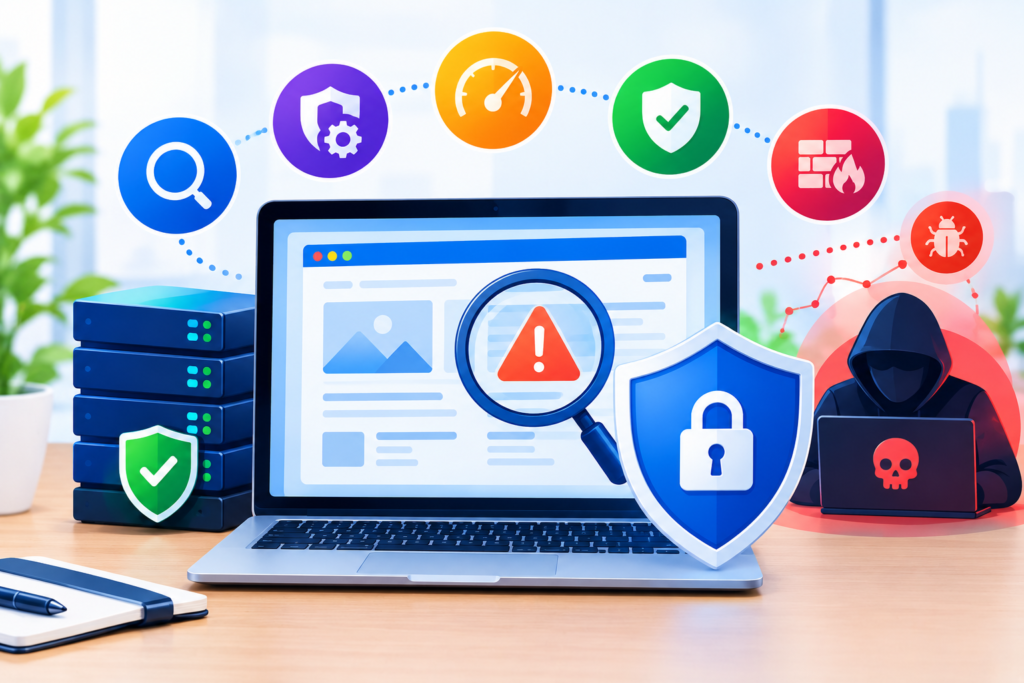
Learn how to identify, prevent, and fix website vulnerabilities with expert strategies, tools, and best practices to protect your site from cyber threats.
Introduction
In today’s digital-first ecosystem, website security is no longer optional—it is a necessity. Businesses, bloggers, and eCommerce platforms are increasingly becoming targets of cyber threats due to rising website vulnerabilities, outdated systems, and poor security configurations. A single vulnerability can expose sensitive data, damage brand reputation, and result in financial loss. Understanding how vulnerabilities work and how to mitigate them is essential for maintaining a secure online presence.
At its core, a website vulnerability is a weakness in a system that attackers can exploit to gain unauthorized access, disrupt services, or steal data. These weaknesses may stem from outdated plugins, insecure code, misconfigured servers, or even human error. As cyberattacks become more sophisticated, website owners must adopt a proactive approach to security rather than reacting after damage is done.
This comprehensive guide by Fixhackedsite explores everything you need to know about website vulnerabilities—from identification and prevention to advanced protection strategies. Whether you’re a beginner or an experienced developer, this guide will equip you with actionable insights to safeguard your website effectively.
Understanding Website Vulnerabilitie: Definition and Importance
Website vulnerability refers to any flaw or weakness in a web application, server, or system that can be exploited by cybercriminals. These vulnerabilities can arise from coding errors, outdated software, or poor configuration practices. Understanding what constitutes a vulnerability is the first step toward securing your website.
A vulnerable website becomes an easy target for attackers who use automated tools to scan for weaknesses. Once detected, these vulnerabilities can be exploited for various malicious purposes such as injecting malware, stealing user data, or defacing the website. Common examples include SQL injection, cross-site scripting (XSS), and insecure authentication mechanisms. Each type of vulnerability poses a unique risk and requires specific mitigation strategies.
The importance of addressing website vulnerabilities cannot be overstated. According to Google Search security best practices, compromised websites can be flagged or removed from search results, severely impacting visibility and traffic. Additionally, users are less likely to trust a website that displays security warnings. Therefore, proactively identifying and fixing vulnerabilities is essential for maintaining credibility, user trust, and search engine rankings.
Common Types of Website Vulnerabilitie You Must Know
There are several types of website vulnerabilities, each with its own attack vector and consequences. Understanding these common vulnerabilities is crucial for implementing effective security measures.
One of the most prevalent vulnerabilities is SQL injection. This occurs when attackers insert malicious SQL queries into input fields, allowing them to access or manipulate the database. Another common vulnerability is cross-site scripting (XSS), where attackers inject malicious scripts into web pages viewed by other users. This can lead to session hijacking or data theft. Additionally, cross-site request forgery (CSRF) tricks users into performing unintended actions, such as transferring funds or changing account details.
Other vulnerabilities include file inclusion flaws, insecure deserialization, and broken authentication systems. These issues often arise due to poor coding practices or lack of proper validation. The OWASP Top 10 security risks provides a comprehensive list of the most critical vulnerabilities affecting web applications today. By understanding these risks, website owners can prioritize security measures and protect their systems more effectively.
Causes of Website Vulnerabilitie in Modern Web Environments
Website vulnerabilities do not appear randomly; they are typically the result of specific weaknesses in development, deployment, or maintenance processes. Identifying these causes is key to preventing future security issues.
One major cause is outdated software. Content management systems, plugins, and themes often release updates to fix security flaws. Failing to update these components leaves your website exposed to known vulnerabilities. Another common cause is poor coding practices, such as lack of input validation or improper error handling. These issues create entry points for attackers to exploit.
Human error also plays a significant role in website vulnerabilities. Weak passwords, misconfigured servers, and lack of security awareness can all contribute to security breaches. Additionally, inadequate testing and lack of security audits can allow vulnerabilities to go unnoticed. Following guidelines like web application security fundamentals helps reduce these risks and ensures a more secure web environment.
How Hackers Exploit Website Vulnerabilitie
Understanding how hackers exploit vulnerabilities can help you better defend against attacks. Cybercriminals use a variety of techniques to identify and exploit weaknesses in websites.
The first step in most attacks is reconnaissance. Hackers use automated tools to scan websites for vulnerabilities such as outdated software, open ports, or weak authentication mechanisms. Once a vulnerability is identified, attackers attempt to exploit it using specialized scripts or manual techniques. For example, in an SQL injection attack, malicious queries are used to extract sensitive data from the database.
Another common exploitation method is phishing combined with website vulnerabilities. Attackers may trick users into revealing login credentials, which are then used to access the website backend. Additionally, brute-force attacks are used to guess passwords, especially when weak credentials are used. According to Google hacked site guidelines, compromised websites often exhibit unusual behavior such as unauthorized redirects or spam content.
By understanding these tactics, website owners can implement preventive measures such as strong authentication, regular monitoring, and security testing.
Impact of Website Vulnerabilitie on SEO and Business Growth
Website vulnerabilities can have a devastating impact on both SEO performance and overall business growth. When a website is compromised, search engines may penalize or deindex it, leading to a significant drop in organic traffic.
One of the primary SEO impacts is the loss of rankings. Search engines prioritize user safety, and a compromised website may be flagged as unsafe. This results in warning messages being displayed to users, discouraging them from visiting the site. Additionally, malicious content injected by hackers can harm your website’s relevance and keyword rankings.
From a business perspective, vulnerabilities can lead to financial losses, data breaches, and reputational damage. Customers are less likely to trust a website that has been hacked, especially if sensitive information is compromised. Furthermore, recovery costs, including security audits and website restoration, can be substantial. Following Google helpful content guidelines ensures that your website remains trustworthy and valuable to users.
Key Tools for Detecting Website Vulnerabilitie
Detecting vulnerabilities early is crucial for maintaining a secure website. Several tools are available to help identify and fix security issues before they are exploited.
Automated vulnerability scanners are among the most effective tools. These tools scan your website for known vulnerabilities, such as outdated software or misconfigurations. Popular options include open-source and commercial tools that provide detailed reports and recommendations for fixing issues. Regular scans help ensure that new vulnerabilities are detected promptly.
Another important tool is a web application firewall (WAF). A WAF monitors incoming traffic and blocks malicious requests, preventing attackers from exploiting vulnerabilities. Additionally, penetration testing tools simulate real-world attacks to identify weaknesses in your system. According to web security testing guide, combining automated tools with manual testing provides the most comprehensive security assessment.
Using these tools effectively requires regular monitoring and updates. By integrating them into your security strategy, you can significantly reduce the risk of website vulnerabilities.
Role of Secure Coding Practices in Preventing Vulnerabilitie

Secure coding practices are essential for minimizing website vulnerabilities. Developers play a critical role in ensuring that applications are built with security in mind from the ground up.
One of the fundamental principles of secure coding is input validation. All user inputs should be validated and sanitized to prevent malicious data from being processed. This helps mitigate risks such as SQL injection and XSS attacks. Additionally, using prepared statements and parameterized queries enhances database security.
Another important aspect is error handling. Detailed error messages can reveal sensitive information about the system, making it easier for attackers to exploit vulnerabilities. Developers should implement generic error messages and log detailed information securely. Following secure coding practices guide ensures that applications are built with robust security measures.
By adopting secure coding standards, developers can significantly reduce the likelihood of vulnerabilities and create more resilient web applications.
Importance of Regular Website Security Audits
Regular website security audits are a cornerstone of maintaining a safe and resilient online presence. A security audit involves a comprehensive evaluation of your website’s infrastructure, code, plugins, and configurations to identify vulnerabilities before attackers can exploit them. Without consistent audits, even well-built websites can become susceptible to evolving threats.
One of the key benefits of regular audits is early detection. Cyber threats evolve rapidly, and new vulnerabilities are discovered frequently. By conducting periodic audits, you can identify outdated software, weak configurations, and potential entry points for attackers. These audits also help ensure compliance with industry standards and best practices. For instance, following OWASP Top 10 security risks during audits ensures that critical vulnerabilities are addressed systematically.
Additionally, security audits provide actionable insights that improve your overall security posture. They highlight areas that need immediate attention and help prioritize fixes based on risk levels. Combining automated scans with manual reviews ensures a thorough assessment. Ultimately, regular audits not only protect your website but also reinforce trust among users and search engines, contributing to long-term success.
How to Fix Website Vulnerabilitie Effectively
Fixing website vulnerabilities requires a structured and proactive approach. Once vulnerabilities are identified, the next step is to prioritize them based on severity and potential impact. Critical vulnerabilities, such as those that allow unauthorized access or data breaches, should be addressed immediately.
The first step in fixing vulnerabilities is applying updates and patches. Software developers regularly release updates to address security flaws, and keeping your system up to date is essential. Additionally, removing unused plugins, themes, or scripts reduces the attack surface. Implementing strong authentication mechanisms, such as multi-factor authentication (MFA), further enhances security.
Another crucial aspect is testing after fixes are applied. Simply patching a vulnerability is not enough; you must verify that the issue has been resolved without introducing new problems. Following guidelines like Google hacked site recovery guidelines ensures that your website is fully restored and secure. By adopting a systematic approach to fixing vulnerabilities, you can minimize risks and maintain a robust security framework.
Role of Web Hosting Security in Preventing Vulnerability
Web hosting plays a critical role in website security. Even if your website is well-coded and maintained, a weak hosting environment can expose it to vulnerabilities. Choosing a reliable hosting provider with strong security features is essential for protecting your website.
Secure hosting providers offer features such as firewalls, malware scanning, regular backups, and intrusion detection systems. These features help prevent unauthorized access and detect suspicious activities. Additionally, hosting providers that follow best practices, such as server hardening and regular updates, reduce the risk of vulnerabilities.
Another important factor is server configuration. Misconfigured servers can create significant security risks, such as open ports or weak permissions. Following recommendations from web security fundamentals ensures that your hosting environment is properly configured. By investing in secure hosting, you create a strong foundation for your website’s overall security strategy.
Importance of HTTPS and SSL for Website Security
HTTPS and SSL certificates are fundamental components of website security. They encrypt data transmitted between the user’s browser and the server, preventing attackers from intercepting sensitive information such as login credentials or payment details.
Implementing HTTPS not only enhances security but also improves SEO performance. Search engines prioritize secure websites, and HTTPS is a ranking factor. Websites without SSL certificates may display “Not Secure” warnings, which can deter users and reduce trust. According to Google HTTPS guidelines, migrating to HTTPS is essential for protecting user data and maintaining search visibility.
Moreover, SSL certificates ensure data integrity by preventing unauthorized modifications during transmission. They also authenticate the website’s identity, helping users verify that they are interacting with a legitimate site. By adopting HTTPS and SSL, you significantly reduce the risk of data breaches and enhance user confidence.
Importance of Backup Strategies in Website Security
A robust backup strategy is a critical component of website security. Even with strong preventive measures, no system is entirely immune to attacks. Backups ensure that you can quickly restore your website in case of a security breach or data loss.
Effective backup strategies involve regular and automated backups stored in secure locations. It is important to maintain multiple backup copies, including offsite storage, to ensure redundancy. Backups should include all essential components, such as databases, files, and configurations.
Testing backups is equally important. A backup is only useful if it can be successfully restored. Regular testing ensures that your backup system is reliable and functional. Following best practices from Google hacked site recovery guidelines helps ensure that your recovery process is efficient and effective. By implementing a comprehensive backup strategy, you can minimize downtime and recover from security incidents.
Monitoring and Continuous Security Improvements
Website security is not a one-time task; it requires continuous monitoring and improvement. Cyber threats are constantly evolving, and staying ahead of attackers requires ongoing vigilance.
Monitoring tools play a crucial role in detecting suspicious activities. These tools track website traffic, login attempts, and system changes, alerting you to potential threats. Real-time monitoring enables quick response to incidents, reducing the impact of attacks.
Continuous improvement involves regularly updating security measures, conducting audits, and staying informed about new threats. Adopting a proactive approach ensures that your website remains secure over time. Following Google security best practices helps maintain a strong security posture. By prioritizing monitoring and improvement, you can effectively protect your website against emerging risks.
Future Trends in Website Vulnerability and Cybersecurity
The landscape of website vulnerabilities is constantly evolving, driven by advancements in technology and the increasing sophistication of cyber threats. Understanding future trends can help you prepare for upcoming challenges and strengthen your security strategy.
One significant trend is the rise of AI-powered attacks. Cybercriminals are using artificial intelligence to automate attacks, identify vulnerabilities, and bypass security measures. At the same time, AI is also being used to enhance security by detecting anomalies and predicting threats.
Another trend is the growing importance of zero-trust security models. This approach assumes that no user or system can be trusted by default, requiring continuous verification. Additionally, the increasing adoption of cloud computing introduces new security challenges and requires robust protection measures. Staying updated with guidelines such as OWASP security standards ensures that your website remains secure in the face of evolving threats.
Comprehensive Strategy to Protect Your Website from Vulnerability

Protecting your website from vulnerabilities requires a comprehensive and multi-layered approach. No single solution can address all security risks, making it essential to combine various strategies.
A strong security strategy begins with risk assessment. Identifying potential threats and vulnerabilities allows you to prioritize security measures effectively. Implementing layered security, including firewalls, encryption, and access controls, provides multiple levels of protection.
User education is another critical component. Training users and administrators on security best practices reduces the risk of human error. Additionally, maintaining regular updates, backups, and monitoring ensures ongoing protection. By following guidelines like Google helpful content guidelines, you can build a secure and trustworthy website that delivers value to users.
Common Mistakes to Avoid
Many website owners unknowingly make mistakes that increase vulnerability risks. One common mistake is ignoring software updates, leaving websites exposed to known security flaws. Another frequent issue is using weak passwords or reusing credentials across multiple platforms.
Failing to perform regular backups is another critical mistake. Without backups, recovering from an attack becomes significantly more difficult. Additionally, neglecting security audits and monitoring can allow vulnerabilities to persist undetected.
Overlooking secure coding practices and relying solely on plugins for security is also problematic. Security should be integrated into every aspect of website development and maintenance. Avoiding these mistakes is essential for maintaining a secure online presence.
Best Practices Summary
To effectively protect your website from vulnerabilities, follow these best practices:
- Keep all software updated to patch known vulnerabilities
- Use strong passwords and enable MFA
- Conduct regular security audits and scans
- Implement HTTPS and SSL certificates
- Use a reliable web hosting provider
- Maintain regular backups and test them
- Monitor website activity continuously
- Follow secure coding practices
By implementing these strategies, you can significantly reduce the risk of security breaches and ensure long-term website stability.
FAQs
1. What is a website vulnerability?
A website vulnerability is a weakness in a system that can be exploited by attackers to gain unauthorized access or cause damage.
2. How can I check if my website is vulnerable?
You can use vulnerability scanners, security audits, and penetration testing tools to identify potential risks.
3. What are the most common website vulnerabilities?
Common vulnerabilities include SQL injection, XSS, CSRF, and broken authentication systems.
4. How often should I perform security audits?
It is recommended to perform audits regularly, at least quarterly, or after major updates.
5. Does HTTPS prevent all vulnerabilities?
No, HTTPS only encrypts data transmission. Additional security measures are required to protect against other vulnerabilities.
6. Can small websites be targeted by hackers?
Yes, hackers often target small websites because they typically have weaker security measures.
7. What should I do if my website is hacked?
Immediately take the site offline, remove malicious code, restore from backups, and follow recovery guidelines.
8. Are plugins safe to use?
Plugins are safe if they are regularly updated and sourced from trusted developers.
Conclusion
Website vulnerabilities are an ever-present threat in the digital landscape, but they can be effectively managed with the right strategies and tools. By understanding the causes, identifying risks, and implementing robust security measures, you can protect your website from potential attacks and ensure a safe user experience.
This guide by Fixhackedsite has provided a comprehensive overview of website vulnerabilities, covering everything from detection and prevention to advanced security practices. By following these insights and adhering to industry standards, you can build a secure, trustworthy, and high-performing website.
Want to Implement This Easily?
Prompt:
You are an expert consultant. Based on the blog post titled “(Website Vulnerability )”, provide a step-by-step, practical implementation guide. Include tools, best practices, common mistakes to avoid, and advanced tips. Assume the reader wants to implement everything discussed in this article effectively.
Call to Action:
Want our help implementing this? Just reach out to us via our website contact form:
https://fixhackedsite.com/contact-us/