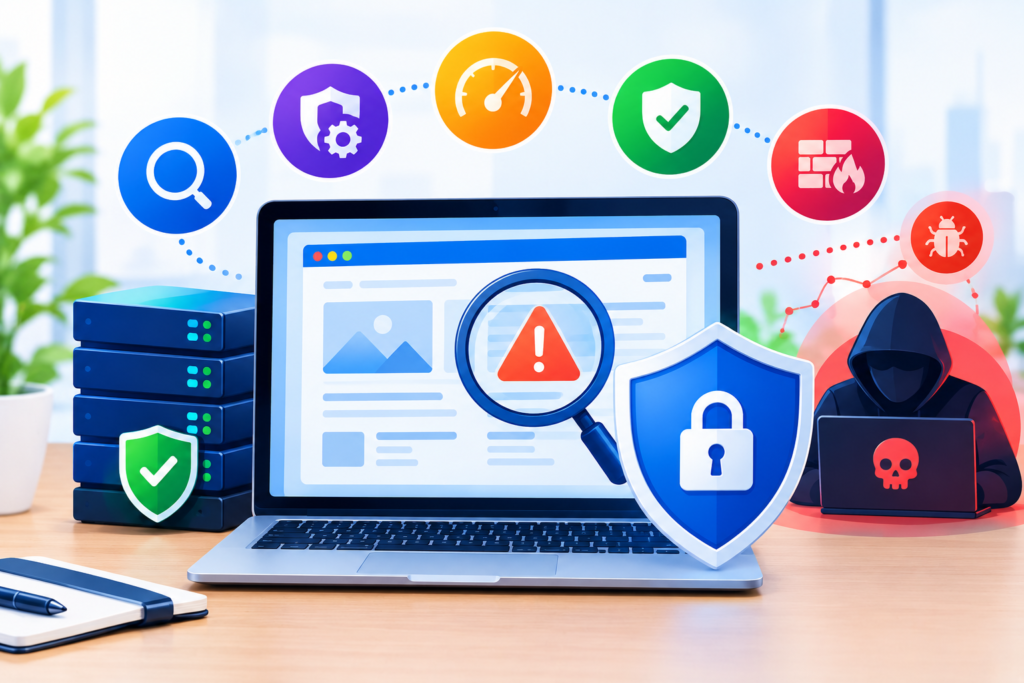
Protect your business from dangerous Website Vulnerability issues with advanced security strategies, vulnerability scanning, malware prevention, patch management, and proactive cybersecurity best practices designed to secure websites against hackers and online threats.
Introduction
In today’s digital environment, every business website faces constant cyber threats. From malware infections and ransomware attacks to unauthorized access attempts and data theft, website security has become one of the most critical aspects of maintaining an online presence. A single overlooked Website Vulnerability can expose sensitive customer data, damage search engine rankings, interrupt operations, and destroy brand credibility within hours.
Modern websites rely on complex ecosystems that include content management systems, plugins, themes, APIs, databases, third-party integrations, hosting environments, and cloud services. While these technologies improve functionality and user experience, they also create multiple attack surfaces that cybercriminals actively target. Understanding how vulnerabilities work and how attackers exploit them is essential for long-term website protection.
Fix Hacked Site helps businesses identify security weaknesses, remove malware, strengthen infrastructure, and build proactive protection strategies that reduce the risk of future attacks. This comprehensive guide explains how website vulnerabilities develop, why they are dangerous, and what organizations can do to secure their websites effectively.
What Is a Website Vulnerability?
A website vulnerability is a weakness, flaw, or misconfiguration within a website or web application that attackers can exploit to gain unauthorized access, steal data, inject malicious code, disrupt services, or compromise systems. Vulnerabilities may exist in software code, server configurations, plugins, APIs, authentication systems, databases, or third-party tools integrated into the website.
Some vulnerabilities result from outdated software, while others stem from insecure coding practices or improper server management. Attackers continuously scan the internet for websites with known weaknesses because automated exploitation tools can quickly compromise thousands of vulnerable websites at scale. Even small businesses become targets because hackers often use compromised sites to distribute malware, send spam, or launch phishing campaigns.
Common website vulnerabilities include SQL injection, cross-site scripting (XSS), remote code execution, insecure file uploads, broken authentication systems, exposed admin panels, insecure APIs, and outdated CMS plugins. Many of these vulnerabilities are listed in the OWASP Top 10, which identifies the most critical web application security risks affecting websites globally.
A vulnerability does not automatically mean a website has already been hacked. However, vulnerabilities significantly increase the likelihood of exploitation. Once attackers identify weaknesses, they may inject malicious scripts, steal customer information, redirect visitors, manipulate databases, or take complete control of the website environment.
Understanding website vulnerabilities is the first step toward building a secure and resilient digital infrastructure.
Why Website Vulnerabilities Are Growing Rapidly
The number of website vulnerabilities reported each year continues to increase dramatically. Businesses are adopting more plugins, integrations, cloud services, APIs, and automation tools than ever before. While these technologies improve efficiency and functionality, they also introduce additional security risks that require continuous monitoring and maintenance.
One major reason vulnerabilities are increasing is the growing complexity of web applications. Modern websites are no longer simple HTML pages. They contain dynamic functionality, payment gateways, customer portals, live chat systems, cloud storage integrations, marketing tools, analytics platforms, and eCommerce features. Every additional component creates another potential entry point for attackers.
Cybercriminals are also becoming more sophisticated. Automated vulnerability scanners can identify outdated plugins, weak passwords, exposed ports, and insecure configurations within seconds. Attackers frequently exploit known vulnerabilities before businesses have time to apply security patches. According to the National Vulnerability Database, thousands of new vulnerabilities are disclosed annually across websites, applications, and digital systems.
Remote work and cloud migration have also contributed to the rise in cybersecurity risks. Organizations increasingly rely on cloud-based infrastructure and remote administration tools, which require proper security configurations to prevent unauthorized access. Misconfigured cloud storage and insecure remote access systems often become targets for attackers.
Another factor is poor security awareness. Many businesses underestimate website security until an attack occurs. They delay software updates, ignore plugin vulnerabilities, reuse passwords, or neglect regular security audits. Unfortunately, attackers actively search for these weaknesses because they are easy to exploit.
As cyber threats evolve, businesses must adopt proactive security strategies rather than relying solely on reactive malware cleanup after an incident occurs.
Common Types of Website Vulnerabilities
Website vulnerabilities come in many forms, and understanding the most common types helps organizations identify potential risks before attackers exploit them. Each vulnerability affects websites differently, but all can lead to serious security incidents if ignored.
One of the most dangerous vulnerabilities is SQL injection. This occurs when attackers insert malicious SQL commands into website input fields, allowing them to manipulate databases, extract sensitive information, or bypass authentication systems. Poorly sanitized form fields and insecure database queries are major causes of SQL injection attacks.
Another common threat is Cross-Site Scripting (XSS). In XSS attacks, hackers inject malicious scripts into website pages viewed by other users. These scripts may steal session cookies, redirect visitors to malicious websites, or compromise user accounts. Websites with comment sections, search forms, and user-generated content are especially vulnerable if input validation is weak.
Broken authentication vulnerabilities occur when login systems are poorly configured. Weak passwords, exposed admin panels, lack of multi-factor authentication, and insecure session management make it easier for attackers to gain unauthorized access. Businesses often overlook authentication security despite it being one of the most exploited attack vectors.
Remote Code Execution (RCE) vulnerabilities are particularly severe because they allow attackers to execute malicious commands directly on the web server. Exploiting RCE vulnerabilities may lead to full server compromise, malware deployment, or complete website takeover.
File upload vulnerabilities are another major risk. Attackers may upload malicious scripts disguised as images or documents if file validation controls are weak. Once uploaded, these files can execute malicious code on the server.
The National Institute of Standards and Technology recommends implementing secure coding practices, input validation, access controls, and continuous patch management to reduce the likelihood of these vulnerabilities being exploited.
The Relationship Between Website Vulnerabilities and Malware
Website vulnerabilities and malware infections are closely connected. Vulnerabilities create entry points that attackers use to inject malicious code, deploy ransomware, steal information, or establish persistent access inside website environments. Without vulnerabilities, most malware infections would be significantly more difficult to execute.
Attackers commonly exploit outdated plugins, insecure themes, vulnerable APIs, and weak admin credentials to inject malware into websites. Once malware is installed, hackers may manipulate SEO rankings, redirect traffic, inject spam content, mine cryptocurrency, steal payment information, or infect website visitors with malicious downloads.
Many malware infections remain undetected for long periods because attackers intentionally hide malicious code inside core files, databases, scheduled tasks, or obfuscated scripts. Businesses often discover infections only after Google blacklists the website, customers report suspicious activity, or hosting providers suspend services due to security violations.
Certain types of malware are specifically designed to exploit vulnerable websites repeatedly. For example, backdoor malware creates hidden access points that allow attackers to return even after the visible infection is removed. This is why malware cleanup without addressing the original vulnerability often results in reinfection.
Search engines also consider malware-infected websites a major security threat. Google may display browser warnings or remove infected pages from search results entirely. Businesses can review security recommendations through Google Search Central to understand how compromised websites affect visibility and trust.
Proactive vulnerability management significantly reduces malware risk. Security hardening, regular updates, firewall protection, malware scanning, and intrusion detection systems work together to prevent attackers from exploiting weaknesses before infections occur.
Organizations that treat vulnerability management as an ongoing process rather than a one-time task are far better protected against modern malware threats.
How Hackers Discover Website Vulnerabilities
Cybercriminals rarely attack websites randomly. Most attacks begin with automated reconnaissance techniques designed to identify vulnerabilities quickly and efficiently. Attackers use scanning tools, bots, search engine indexing data, leaked credentials, and publicly disclosed exploits to locate weak websites across the internet.
Automated vulnerability scanners can detect outdated CMS versions, exposed plugins, insecure ports, weak SSL configurations, directory listings, open databases, and vulnerable server software within minutes. Hackers often prioritize websites running outdated software because known exploits already exist for many older systems.
Search engines themselves sometimes unintentionally expose sensitive information. Misconfigured websites may index admin pages, backup files, staging environments, or error logs that reveal technical details useful to attackers. Publicly accessible configuration files and version disclosures can also help hackers identify exploitable weaknesses.
Credential stuffing attacks are another common tactic. Attackers use databases of leaked usernames and passwords from previous breaches to attempt unauthorized logins on websites. Businesses that reuse passwords across systems significantly increase their exposure to these attacks.
Some attackers specifically monitor newly disclosed vulnerabilities listed in resources like the CISA Known Exploited Vulnerabilities Catalog. Once a vulnerability becomes public, attackers rapidly scan the internet searching for websites that have not yet applied security patches.
Social engineering also plays a role in vulnerability exploitation. Hackers may trick employees into revealing login credentials, installing malware, or granting unauthorized access. Technical defenses alone are not enough if human error creates security gaps.
To reduce exposure, businesses should regularly conduct vulnerability scans, disable unnecessary services, restrict access permissions, monitor server logs, and maintain strict patch management procedures. Proactive detection is essential because attackers continuously search for weaknesses around the clock.
The SEO Impact of Website Vulnerabilities

Website vulnerabilities can severely damage search engine visibility, organic rankings, and overall online reputation. Search engines prioritize user safety, and websites associated with malware, phishing, spam injections, or suspicious behavior often face penalties that reduce visibility in search results.
When attackers exploit vulnerabilities, they frequently inject spam pages, malicious redirects, hidden links, or cloaked content into websites. These manipulations can trigger search engine penalties because the compromised site begins distributing harmful or deceptive content without the owner’s knowledge.
Google may display warnings such as “This site may be hacked” or “This site may harm your computer” directly in search results. These warnings drastically reduce click-through rates and erode user trust. Recovery from search engine penalties often requires complete malware cleanup, vulnerability remediation, and security reviews before rankings stabilize again.
Website performance may also decline after exploitation. Malware scripts consume server resources, increase load times, and interfere with user experience metrics. Slow performance negatively affects SEO because page speed and user engagement are important ranking factors. Google’s PageSpeed Insights tool helps businesses analyze performance-related issues that may impact visibility.
Compromised websites can additionally lose backlinks and customer trust. Other websites may remove links to infected pages, while users avoid interacting with compromised platforms. Reputation damage often continues long after the technical issues are resolved.
Search engines encourage website owners to follow secure development practices, maintain HTTPS encryption, and monitor security issues through tools like Google Search Console. Security and SEO are now deeply connected because user trust directly influences search quality.
Businesses that prioritize vulnerability management not only improve cybersecurity but also protect their organic traffic, brand authority, and long-term search performance.
The Role of Software Updates in Vulnerability Prevention
Keeping website software updated is one of the most effective ways to prevent security vulnerabilities. Outdated CMS platforms, plugins, themes, frameworks, and server applications often contain publicly known security flaws that attackers actively target using automated exploitation tools.
Software developers regularly release security patches to fix vulnerabilities discovered by researchers, ethical hackers, or internal testing teams. These updates close security gaps before attackers can exploit them. However, businesses that delay updates remain exposed even after patches become available publicly.
One of the most common causes of website compromise is outdated plugins. Many website owners install plugins and forget to maintain them over time. Unsupported or abandoned plugins are particularly dangerous because vulnerabilities may never receive security patches. Attackers routinely scan websites for outdated extensions associated with known exploits.
Operating systems, web servers, PHP versions, database software, and cloud applications also require continuous updates. Vulnerabilities at the server level can expose entire hosting environments, not just individual websites. Proper patch management should include all components within the website infrastructure.
Before applying updates, businesses should create backups and test changes in staging environments to avoid compatibility issues. While some organizations fear updates may disrupt functionality, ignoring patches poses a far greater risk. Automated update systems combined with manual security oversight often provide the best balance between protection and stability.
The Cybersecurity and Infrastructure Security Agency (CISA) strongly recommends timely patch management as a core cybersecurity defense strategy. Vulnerability remediation becomes significantly easier when businesses adopt structured maintenance procedures instead of reacting after an attack occurs.
Regular updates are not optional in modern cybersecurity environments. They are essential for maintaining website integrity, protecting customer data, and reducing exposure to rapidly evolving cyber threats.
How Weak Passwords Create Security Vulnerabilities
Weak passwords remain one of the most exploited website security vulnerabilities worldwide. Despite growing awareness about cybersecurity, many businesses still rely on predictable passwords, reused credentials, or insecure login practices that attackers can compromise using automated tools.
Hackers use brute force attacks, credential stuffing, and password spraying techniques to gain unauthorized access to websites. These attacks rely on massive databases of leaked credentials collected from previous data breaches. If website administrators reuse passwords across multiple accounts, attackers can often compromise systems without needing advanced hacking skills.
Simple passwords such as “admin123,” “password,” or company-related phrases are especially dangerous because automated bots test these combinations constantly. Weak passwords dramatically reduce the effectiveness of otherwise secure systems because attackers only need one compromised account to access sensitive areas of the website.
Strong password policies are critical for vulnerability prevention. Businesses should enforce long, complex passwords that combine uppercase letters, lowercase letters, numbers, and special characters. Password managers help users generate and store unique credentials securely without relying on memory.
Multi-factor authentication (MFA) adds another essential layer of protection. Even if attackers obtain passwords, MFA requires additional verification steps before access is granted. This significantly reduces the risk of unauthorized logins. The Google 2-Step Verification system demonstrates how additional authentication layers improve account security.
Limiting login attempts, restricting admin access by IP address, and monitoring suspicious login behavior also help reduce password-related vulnerabilities. Businesses should regularly audit user accounts to remove inactive users and identify weak credentials before attackers exploit them.
Password security is often underestimated because it appears simple compared to advanced cybersecurity technologies. However, strong authentication controls remain one of the most important defenses against website compromise and unauthorized access.
How Hosting Environments Affect Website Security
Website hosting environments play a major role in determining overall cybersecurity strength. Even well-designed websites can become vulnerable if hosted on insecure servers with weak configurations, outdated software, or poor isolation controls.
Shared hosting environments are particularly risky because multiple websites operate on the same server infrastructure. If one website becomes compromised, attackers may attempt to move laterally across the server and infect neighboring websites. Weak server isolation increases the likelihood of cross-site contamination.
Poor server configurations can also expose sensitive files, directories, or administrative interfaces publicly. Misconfigured permissions may allow attackers to upload malicious files, access databases, or manipulate website content. Default server settings often prioritize convenience over security, which creates unnecessary risks if administrators fail to harden the environment properly.
Secure hosting providers implement firewalls, malware scanning, intrusion detection systems, DDoS protection, server monitoring, automated backups, and patch management. Businesses should carefully evaluate hosting security features before selecting a provider because infrastructure quality directly affects website resilience.
SSL/TLS encryption is another critical hosting consideration. HTTPS protects data transmitted between users and the website by encrypting communications. Websites without proper SSL certificates expose login credentials, payment data, and sensitive information to interception attacks. The Let’s Encrypt initiative has made HTTPS adoption more accessible for websites of all sizes.
Cloud hosting environments introduce additional security considerations. While cloud platforms offer scalability and flexibility, improper configurations can expose storage buckets, APIs, databases, and administrative dashboards publicly. Continuous monitoring and configuration reviews are essential for cloud security management.
Choosing a secure hosting environment is not just a technical decision. It is a foundational cybersecurity strategy that influences every aspect of website vulnerability prevention and long-term operational stability.
The Importance of Website Vulnerability Scanning
Website vulnerability scanning is one of the most effective methods for identifying hidden security weaknesses before attackers exploit them. Regular scans help businesses detect outdated software, insecure configurations, exposed services, weak authentication mechanisms, and coding flaws that may otherwise remain unnoticed for long periods.
Automated vulnerability scanners analyze websites against databases of known security issues. These tools inspect CMS versions, plugins, themes, APIs, SSL certificates, server configurations, and application behavior to identify potential attack vectors. Scanning helps organizations proactively fix weaknesses rather than discovering them after a cyberattack occurs.
However, automated scanning alone is not enough. False positives and overlooked vulnerabilities are common limitations of automated tools. This is why experienced security professionals often combine automated scans with manual penetration testing and code review processes. Manual testing can identify complex vulnerabilities related to business logic, access controls, and custom application functionality that scanners may miss.
Continuous vulnerability assessment is especially important because websites constantly evolve. New plugins, feature updates, third-party integrations, and server modifications may unintentionally introduce fresh security weaknesses. Organizations that perform scans only once or twice per year often fail to identify rapidly emerging threats.
Businesses should also integrate vulnerability monitoring into their broader cybersecurity strategies. Security Information and Event Management (SIEM) systems, endpoint monitoring tools, web application firewalls, and threat intelligence feeds help organizations detect suspicious behavior associated with attempted exploitation. The OWASP Vulnerability Scanning Tools resource provides valuable guidance for understanding various vulnerability assessment approaches.
Proactive scanning reduces downtime, minimizes data breach risks, improves compliance readiness, and strengthens customer trust. In modern cybersecurity environments, regular vulnerability assessments are no longer optional. They are essential operational requirements for maintaining secure websites.
Why Web Application Firewalls Are Critical
A Web Application Firewall (WAF) acts as a protective barrier between websites and incoming traffic, filtering malicious requests before they reach the application. WAFs play a critical role in defending against website vulnerabilities because they help block exploitation attempts even when software flaws exist.
Attackers frequently exploit vulnerabilities using automated bots that scan websites for weak points such as SQL injection flaws, cross-site scripting vulnerabilities, remote code execution issues, and insecure file uploads. A properly configured WAF can detect and block these malicious patterns in real time, significantly reducing exposure to attacks.
Unlike traditional network firewalls that primarily focus on server-level traffic, WAFs specialize in application-layer security. They inspect HTTP and HTTPS requests, identify suspicious payloads, monitor unusual behavior, and apply predefined security rules to filter harmful activity. This provides an additional security layer specifically tailored to website protection.
Modern WAF solutions often include bot mitigation, DDoS protection, rate limiting, geo-blocking, virtual patching, and threat intelligence integration. Virtual patching is particularly valuable because it allows organizations to block exploitation attempts temporarily while permanent software updates are being tested and deployed.
Cloud-based WAF services have become increasingly popular because they are easier to deploy and maintain than traditional hardware solutions. Businesses can rapidly improve security without significant infrastructure changes. Many providers also offer automated threat intelligence updates that adapt to emerging attack techniques continuously.
The Google Web Security Guidelines emphasize proactive protection measures such as traffic filtering and vulnerability mitigation to prevent website compromise and malicious activity.
Although WAFs are highly effective, they should not replace secure coding practices, patch management, or vulnerability remediation. Instead, they function best as part of a layered cybersecurity strategy that combines prevention, monitoring, and incident response capabilities.
How Secure Coding Reduces Website Vulnerabilities
Secure coding practices form the foundation of website security. Many vulnerabilities originate during the development process when applications are built without sufficient input validation, access controls, error handling, or authentication safeguards. Addressing security during development dramatically reduces the risk of future exploitation.
Developers should follow secure development lifecycle (SDLC) principles that integrate security into every stage of application creation. Instead of treating security as an afterthought, secure coding requires proactive risk assessment, code review, testing, and continuous improvement throughout the software lifecycle.
Input validation is one of the most important secure coding principles. Applications should never trust user input automatically. Form submissions, search queries, file uploads, API requests, and URL parameters must all be sanitized and validated carefully to prevent injection attacks and malicious payload execution.
Authentication and authorization controls must also be implemented correctly. Developers should enforce session expiration, password hashing, role-based access controls, and secure authentication protocols to reduce unauthorized access risks. Hardcoded credentials and insecure API keys should never be included in production environments.
Error handling is another critical area. Detailed error messages can unintentionally reveal sensitive technical information about server environments, database structures, or application logic. Secure applications display generic user-facing messages while logging detailed errors internally for administrators.
Code dependencies and third-party libraries should be monitored continuously for vulnerabilities. Many attacks exploit insecure packages included within otherwise secure applications. Developers can use dependency monitoring tools to identify outdated or vulnerable components before attackers exploit them.
The OWASP Secure Coding Practices Guide provides industry-recognized recommendations for building safer applications and reducing vulnerability exposure.
Organizations that prioritize secure coding reduce remediation costs, improve application stability, strengthen customer trust, and minimize the likelihood of devastating cybersecurity incidents.
The Financial Impact of Website Vulnerabilities
Website vulnerabilities can create severe financial consequences for businesses of all sizes. While many organizations focus primarily on technical damage, the economic impact of cybersecurity incidents often extends far beyond immediate remediation costs.
One major financial risk involves downtime. If attackers compromise a website, businesses may lose access to critical systems, online sales channels, customer portals, or operational tools. Even a few hours of downtime can lead to substantial revenue loss, especially for eCommerce platforms and service-based businesses that rely heavily on online operations.
Data breaches caused by vulnerabilities can also trigger regulatory fines, legal expenses, and compliance violations. Businesses that collect customer information must often comply with data protection regulations such as GDPR, PCI DSS, or regional privacy laws. Failure to secure sensitive information may result in investigations, penalties, and mandatory disclosure requirements.
Incident response and recovery expenses can become extremely costly. Organizations may need to hire cybersecurity specialists, conduct forensic investigations, restore backups, rebuild servers, implement security upgrades, and monitor systems for ongoing threats. Malware removal alone may not fully resolve the underlying issues if vulnerabilities remain unaddressed.
Reputation damage creates additional long-term financial harm. Customers lose trust in compromised businesses, particularly when personal data or payment information becomes exposed. Negative publicity and reduced consumer confidence often lead to customer churn, lower conversion rates, and decreased brand loyalty.
SEO and digital marketing performance may also suffer significantly. Search engine penalties, blacklisting, and browser security warnings reduce traffic and marketing ROI. Businesses may spend months rebuilding rankings and repairing online credibility after major security incidents.
The IBM Cost of a Data Breach Report consistently demonstrates how cybersecurity incidents impose substantial operational and financial burdens across industries worldwide.
Investing in proactive vulnerability management is almost always less expensive than recovering from a successful cyberattack. Prevention remains one of the most cost-effective cybersecurity strategies available.
Common Mistakes That Create Website Vulnerabilities
Many website vulnerabilities result not from sophisticated hacking techniques but from avoidable operational mistakes. Businesses often unintentionally expose themselves to serious security risks due to poor maintenance, weak policies, or inadequate security awareness.
One of the most common mistakes is ignoring software updates. Outdated CMS platforms, plugins, themes, and server applications frequently contain publicly known vulnerabilities that attackers actively exploit. Delaying updates gives cybercriminals more opportunities to compromise websites using automated attack tools.
Weak password management is another major issue. Businesses sometimes use predictable passwords, share credentials among employees, or fail to enable multi-factor authentication. These practices significantly increase the likelihood of unauthorized access and credential-based attacks.
Many organizations also neglect regular backups. Without secure and tested backups, recovering from ransomware attacks, malware infections, or accidental data loss becomes extremely difficult. Backups should be encrypted, stored securely, and tested regularly to ensure reliable restoration capabilities.
Poor access control management creates additional vulnerabilities. Employees may retain unnecessary administrative privileges long after role changes occur. Excessive permissions increase the potential damage caused by compromised accounts or insider threats.
Some businesses install excessive plugins or third-party tools without evaluating security risks. Every additional integration expands the attack surface and may introduce vulnerabilities if developers fail to maintain proper security standards.
Ignoring server logs and security alerts is another critical mistake. Early warning signs of attacks often appear in logs long before visible damage occurs. Organizations that fail to monitor suspicious activity may overlook ongoing exploitation attempts until the compromise becomes severe.
The OWASP Cheat Sheet Series provides practical guidance for avoiding many common website security mistakes and implementing stronger defensive controls.
Cybersecurity failures are often preventable when businesses adopt disciplined security practices, continuous monitoring, and proactive vulnerability management strategies.
The Future of Website Vulnerability Management

Website vulnerability management continues evolving rapidly as cyber threats become more advanced and digital ecosystems grow increasingly complex. Organizations must adapt continuously to emerging attack techniques, evolving technologies, and changing cybersecurity requirements.
Artificial intelligence and machine learning are already transforming vulnerability detection and threat analysis. Advanced security platforms can now analyze massive volumes of traffic, identify abnormal behavior patterns, and detect suspicious activity faster than traditional rule-based systems. AI-driven automation improves response speed while reducing the burden on security teams.
Cloud computing, containerization, and serverless architectures are also changing how websites are built and secured. While these technologies offer scalability and flexibility, they introduce new security considerations related to APIs, identity management, workload isolation, and cloud configuration monitoring.
Zero Trust security models are gaining popularity because traditional perimeter-based defenses are no longer sufficient. Zero Trust assumes that no user, device, or application should automatically receive trust. Continuous verification, least-privilege access controls, and identity validation are becoming essential components of modern vulnerability management strategies.
Regulatory requirements surrounding cybersecurity and data protection are expected to become stricter worldwide. Businesses will increasingly need to demonstrate proactive risk management, security monitoring, and incident response readiness to maintain compliance and customer trust.
Attackers are also leveraging automation and AI to accelerate exploitation efforts. Automated attack frameworks can rapidly identify vulnerable websites, customize payloads, and bypass traditional defenses. This means businesses must invest in adaptive, intelligence-driven security systems capable of evolving alongside threats.
The NIST Cybersecurity Framework remains one of the most respected resources for organizations seeking structured approaches to cybersecurity governance and vulnerability management.
The future of website security will depend heavily on continuous adaptation, proactive defense strategies, automation, and strong security culture across organizations of every size.
Frequently Asked Questions
What is the biggest cause of website vulnerabilities?
The biggest cause of website vulnerabilities is outdated software combined with poor security maintenance. Unpatched CMS platforms, plugins, themes, and server applications often contain publicly known flaws that attackers actively exploit.
How often should vulnerability scans be performed?
Businesses should perform vulnerability scans regularly, ideally weekly or monthly depending on website complexity and risk exposure. High-traffic or eCommerce websites may require continuous monitoring and real-time threat detection.
Can small business websites become targets for hackers?
Yes. Small businesses are frequent targets because attackers often assume they have weaker security controls. Automated attack bots scan websites indiscriminately, regardless of company size.
Does HTTPS completely secure a website?
No. HTTPS encrypts data transmission between users and the website, but it does not protect against malware, insecure coding, vulnerable plugins, or server misconfigurations. HTTPS is only one component of a complete security strategy.
What happens if Google detects malware on a website?
Google may display security warnings, reduce search rankings, remove pages from search results, or blacklist the website entirely until the malware and vulnerabilities are resolved.
Are plugins always dangerous?
Not necessarily. Well-maintained plugins from trusted developers can improve website functionality safely. However, outdated, abandoned, or poorly coded plugins often become major security risks.
What is the difference between a vulnerability and malware?
A vulnerability is a weakness that attackers can exploit, while malware is malicious software installed after exploitation occurs. Vulnerabilities create entry points for malware infections.
Can a website be reinfected after malware removal?
Yes. If the original vulnerability remains unresolved, attackers may reinfect the website repeatedly. Effective remediation requires both malware removal and vulnerability patching.
Best Practices Summary
Protecting websites from vulnerabilities requires a proactive, layered cybersecurity strategy that combines prevention, monitoring, maintenance, and rapid response capabilities.
Key best practices include:
- Keep CMS platforms, plugins, themes, and server software updated consistently
- Use strong passwords and enable multi-factor authentication
- Conduct regular vulnerability scans and penetration testing
- Deploy Web Application Firewalls for threat filtering
- Limit administrative access and apply least-privilege principles
- Monitor logs and suspicious activity continuously
- Maintain secure backups and disaster recovery procedures
- Use HTTPS encryption and secure hosting environments
- Remove unused plugins, themes, and inactive user accounts
- Follow secure coding standards during development
- Monitor third-party integrations and dependencies carefully
- Educate employees about phishing and social engineering threats
Businesses that implement these security practices significantly reduce the likelihood of website compromise, data breaches, malware infections, and operational disruptions.
Conclusion
Website vulnerabilities are among the most serious cybersecurity risks facing modern businesses. Attackers continuously search for weak websites to exploit, inject malware, steal information, disrupt operations, and damage online reputations. Even small vulnerabilities can lead to devastating financial, operational, and SEO consequences if ignored.
Effective vulnerability management requires continuous monitoring, timely updates, secure development practices, strong authentication controls, proactive scanning, and layered security defenses. Organizations that treat website security as an ongoing operational priority are far better equipped to defend against evolving cyber threats.
Fix Hacked Site helps businesses strengthen website security, identify vulnerabilities, remove malware, and implement long-term protection strategies that improve resilience against cyberattacks. Proactive security investments not only protect digital assets but also build customer trust, preserve search engine visibility, and support sustainable business growth.
Want to Implement This Easily?
Prompt Text:
You are an expert consultant. Based on the blog post titled “Website Vulnerability”, provide a step-by-step, practical implementation guide. Include tools, best practices, common mistakes to avoid, and advanced tips. Assume the reader wants to implement everything discussed in this article effectively.
Call to Action:
Want our help implementing this? Just reach out to us via our website contact form: https://fixhackedsite.com/contact-us/