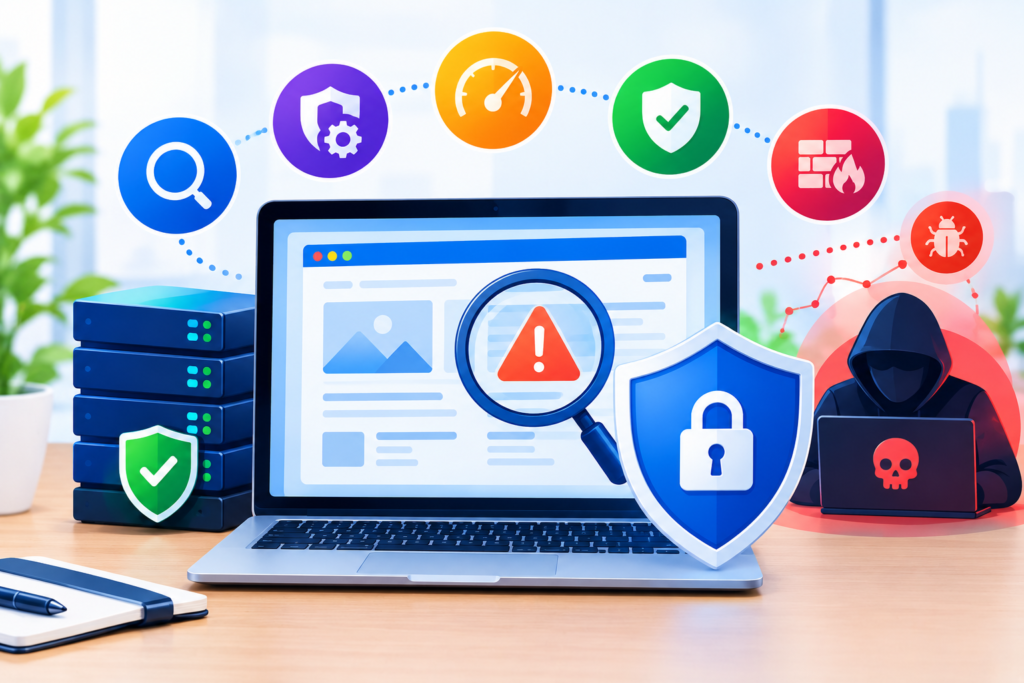
Protect your online presence with advanced Website Hardening strategies designed to secure servers, applications, CMS platforms, and databases against cyber threats, malware infections, unauthorized access, and data breaches while improving website stability, trust, and long-term performance.
Introduction
Modern websites face an overwhelming number of cyber threats every single day. From malware injections and ransomware attacks to brute-force login attempts and database exploitation, online businesses are increasingly becoming targets for cybercriminals. This growing risk has made Website Hardening one of the most important components of digital security strategy. A hardened website is significantly more resistant to attacks because its vulnerabilities are minimized, unnecessary services are disabled, and security layers are properly configured.
Businesses that ignore proactive security often suffer from devastating consequences including SEO penalties, data theft, website blacklisting, financial loss, and reputation damage. Website hardening helps organizations establish a stronger security posture by implementing preventative measures that reduce attack surfaces before hackers can exploit them. According to Google Search Essentials, trustworthy and secure websites contribute to better user experiences and long-term search visibility.
At FixHackedSite, website security professionals understand that prevention is always more cost-effective than recovery. A compromised website can impact search rankings, customer trust, and operational continuity for months. Implementing structured hardening practices ensures that websites remain secure, reliable, and resilient against evolving cyber threats. This guide explains the most effective website hardening techniques, best practices, and implementation methods for businesses, developers, and website owners.
Understanding Website Hardening and Why It Matters
Website hardening refers to the process of strengthening website infrastructure, software, applications, and server environments against unauthorized access and cyberattacks. It involves identifying weaknesses and applying protective measures that reduce the chances of exploitation. Hardening is not a single action but an ongoing security strategy designed to protect websites from known and emerging threats.
Cybercriminals typically target websites with outdated plugins, weak passwords, insecure configurations, exposed databases, and vulnerable server settings. Many attacks are automated using bots that continuously scan the internet for weaknesses. Once vulnerabilities are found, attackers can inject malware, steal credentials, manipulate files, or gain administrative access. Implementing proper website hardening reduces these opportunities and strengthens the website’s defense mechanisms.
The importance of hardening extends beyond cybersecurity. Secure websites contribute to improved user trust, compliance with industry standards, and stronger SEO performance. Search engines prioritize safe browsing experiences, and websites infected with malware may receive browser warnings or ranking penalties. Organizations that invest in website hardening demonstrate responsibility, professionalism, and long-term commitment to protecting user data and digital assets.
The Core Principles of Website Security Hardening
Successful website hardening begins with understanding the core principles that form the foundation of cybersecurity. These principles guide organizations toward creating stronger, more resilient digital environments capable of resisting attacks and minimizing damage during security incidents.
The principle of least privilege is one of the most critical hardening concepts. Users, applications, and systems should only have the permissions necessary to perform required tasks. Excessive administrative access increases security risks because attackers can exploit privileged accounts more easily. Restricting permissions limits the impact of compromised accounts and reduces the attack surface significantly.
Another essential principle involves minimizing unnecessary services and software. Every installed application, plugin, extension, or open port introduces potential vulnerabilities. Removing unused components reduces opportunities for attackers to exploit outdated or insecure software. Security experts also recommend maintaining secure default configurations instead of relying on factory settings that may prioritize convenience over security.
Defense in depth is equally important. Rather than relying on a single security solution, hardened websites use multiple protective layers including firewalls, malware scanners, access controls, encryption, monitoring systems, and intrusion prevention mechanisms. Layered security ensures that even if one defense fails, additional protections remain active to stop attackers from progressing deeper into the system.
Server Hardening for Enhanced Website Protection
Server hardening is one of the most important aspects of website security because the server forms the backbone of the entire hosting environment. A vulnerable server can expose websites, databases, applications, and user information to attackers. Proper server hardening reduces risks by securing operating systems, services, network configurations, and user permissions.
The first step in server hardening involves updating the operating system and installed software regularly. Outdated server software often contains publicly known vulnerabilities that attackers actively exploit. Security patches provided by vendors address these weaknesses and should be installed promptly. Organizations should also disable unnecessary services, applications, and ports to minimize exposure.
Secure server configurations are equally important. Administrators should change default settings, enforce strong authentication methods, and implement SSH key authentication instead of relying solely on passwords. Firewall rules should restrict unnecessary inbound and outbound traffic. OWASP security recommendations emphasize the importance of limiting exposure and implementing secure configurations to reduce attack opportunities.
Monitoring and logging are also critical components of server hardening. Continuous monitoring helps identify suspicious activities such as unauthorized login attempts, unusual traffic spikes, or malicious file modifications. Detailed logs allow administrators to investigate incidents quickly and respond effectively before threats escalate into larger compromises.
CMS Hardening for WordPress and Other Platforms
Content Management Systems like WordPress, Joomla, Magento, and Drupal power millions of websites worldwide. Their popularity also makes them prime targets for cybercriminals. CMS hardening focuses on securing the platform itself along with its plugins, themes, extensions, and administrative interfaces.
One of the most common causes of website compromise is outdated CMS software. Developers regularly release updates to patch security vulnerabilities and improve stability. Website owners who delay updates leave their sites exposed to publicly documented exploits. Enabling automatic updates where appropriate can significantly improve security while reducing maintenance risks.
Plugins and themes require careful management because third-party extensions often introduce vulnerabilities. Only trusted and actively maintained plugins should be installed. Unused plugins and themes should be removed entirely rather than merely deactivated. Security professionals also recommend limiting plugin usage to essential functionality to reduce the attack surface.
Administrative security is another critical aspect of CMS hardening. Login URLs should be protected using two-factor authentication, login attempt limitations, CAPTCHA verification, and strong password policies. Changing default usernames and restricting admin access by IP address can further reduce brute-force attack risks. These practices create additional barriers that make unauthorized access significantly more difficult.
The Role of Firewalls in Website Hardening
Web Application Firewalls play a major role in protecting websites from malicious traffic, hacking attempts, and automated attacks. Firewalls act as a filtering system between incoming traffic and the website server, blocking suspicious requests before they can exploit vulnerabilities or compromise sensitive data.
There are different types of firewalls used in website hardening strategies. Network firewalls protect server infrastructure at the network level, while Web Application Firewalls focus specifically on HTTP and HTTPS traffic. WAF solutions can block SQL injection attempts, cross-site scripting attacks, malicious bots, and distributed denial-of-service traffic before they reach the application layer.
Modern firewall solutions also provide advanced security intelligence features. They use threat databases, machine learning, and behavioral analysis to identify evolving attack patterns. Many cloud-based firewalls continuously update their rulesets to defend against newly discovered threats. This proactive protection significantly strengthens a website’s security posture against sophisticated cyberattacks.
Proper firewall configuration is essential for effectiveness. Misconfigured firewalls can either block legitimate users or fail to stop malicious traffic. Organizations should regularly review firewall rules, monitor blocked requests, and fine-tune security policies based on traffic patterns and threat intelligence. Layering firewalls with additional security measures creates stronger overall protection.
Secure Authentication and Access Control Strategies
Authentication systems represent one of the most targeted areas of websites because attackers frequently attempt to steal or bypass login credentials. Weak authentication mechanisms expose websites to brute-force attacks, credential stuffing, phishing campaigns, and unauthorized administrative access.
Strong password policies form the foundation of secure authentication. Passwords should be complex, unique, and regularly updated. Administrators and users should avoid predictable combinations or reused credentials. Password managers help generate and securely store strong passwords, reducing human error and credential reuse vulnerabilities.
Two-factor authentication adds an additional verification layer beyond passwords. Even if attackers obtain login credentials, they still require secondary verification such as authentication apps or temporary codes. This greatly reduces the likelihood of unauthorized access. According to NIST Digital Identity Guidelines, multi-factor authentication is a highly effective method for protecting sensitive systems.
Access control policies are equally important in website hardening. Administrative privileges should only be granted to authorized personnel, and user roles should follow least-privilege principles. Session timeouts, login monitoring, IP restrictions, and account lockout mechanisms help reduce risks associated with unauthorized access attempts and compromised credentials.
Website File and Directory Protection Techniques
Protecting website files and directories is essential for preventing unauthorized modifications, malware injections, and sensitive data exposure. Attackers often target improperly secured directories to upload malicious scripts, access configuration files, or manipulate website content.
One effective hardening technique involves setting secure file permissions. Files and directories should only have the minimum permissions necessary for functionality. Overly permissive settings such as writable directories for all users create major security risks. Proper ownership and permission structures prevent attackers from modifying sensitive files even if certain accounts become compromised.
Critical system files should also be protected against unauthorized access. Configuration files containing database credentials, API keys, or security settings should never be publicly accessible. Server configurations can restrict direct access to sensitive files and prevent directory browsing. Disabling script execution within upload directories adds another layer of protection against malicious file uploads.
Regular file integrity monitoring is another valuable security practice. Monitoring systems can detect unauthorized changes to website files and alert administrators immediately. Early detection allows organizations to respond quickly before attackers can escalate their activities or spread malware throughout the environment.
Database Security and Hardening Best Practices
Databases store some of the most sensitive information associated with websites including customer records, login credentials, financial data, and application configurations. Weak database security can lead to severe data breaches, compliance violations, and operational disruptions.
Database hardening begins with strong authentication practices. Default usernames should be changed, and complex passwords should be enforced for all database accounts. Administrative access should be restricted to authorized users only, while applications should use accounts with minimal privileges required for operations.
Encryption plays a critical role in protecting sensitive database information. Encrypting data both at rest and in transit helps prevent unauthorized access during storage or transmission. SSL/TLS certificates secure communications between applications and databases, reducing interception risks. SQL Injection Prevention Guidelines recommend using parameterized queries and input validation to prevent database exploitation.
Regular database backups are also essential for recovery and resilience. Backups should be encrypted, stored securely, and tested frequently to ensure reliability. Organizations should implement monitoring systems that detect suspicious database activities including unusual queries, privilege escalations, or unauthorized access attempts.
Importance of SSL Certificates and HTTPS Security
SSL certificates and HTTPS encryption are fundamental components of modern website hardening. Websites without secure encryption expose user data to interception, manipulation, and unauthorized access. HTTPS establishes secure communication channels between browsers and web servers using encryption protocols.
SSL certificates authenticate website identity and encrypt transmitted data such as login credentials, payment details, and personal information. This prevents attackers from intercepting sensitive information during transmission. Modern browsers also warn users when websites lack HTTPS protection, negatively impacting trust and user engagement.
Search engines strongly encourage HTTPS adoption because it improves online safety. Google has publicly confirmed HTTPS as a ranking signal through Google HTTPS recommendations. Websites using secure encryption may benefit from improved credibility, user confidence, and better search visibility.
Strong HTTPS configurations are equally important. Organizations should disable outdated protocols and weak ciphers while enabling modern TLS standards. HTTP Strict Transport Security policies can enforce encrypted connections and reduce downgrade attack risks. Proper SSL management ensures consistent protection against evolving cybersecurity threats.
Malware Prevention and Threat Detection Strategies
Malware infections remain one of the most damaging cybersecurity threats affecting websites today. Attackers use malware to steal data, redirect visitors, distribute spam, inject malicious code, or gain persistent access to systems. Effective website hardening strategies must include robust malware prevention and detection mechanisms.
One of the most effective prevention strategies involves proactive vulnerability management. Keeping software updated, removing unused components, and applying secure configurations greatly reduce malware infection opportunities. Attackers frequently exploit outdated plugins, insecure scripts, and vulnerable themes to inject malicious code into websites.
Continuous malware scanning provides early threat detection capabilities. Automated scanners analyze files, databases, scripts, and website behavior for indicators of compromise. Advanced detection systems use heuristic analysis and threat intelligence databases to identify both known and emerging malware variants. Early detection significantly reduces damage and recovery costs.
Behavioral monitoring is another critical security layer. Suspicious activities such as unauthorized file changes, outbound spam traffic, hidden redirects, or unusual server resource consumption may indicate malware infections. Organizations should establish incident response plans that define how threats will be isolated, removed, and investigated to minimize operational disruption.
Backup and Disaster Recovery Planning for Website Security
Even the most secure websites can experience unexpected incidents including server failures, ransomware attacks, accidental deletions, or sophisticated cyber intrusions. This is why backup and disaster recovery planning are essential components of a complete website hardening strategy. Backups provide a reliable method for restoring operations quickly while minimizing downtime and data loss.
A strong backup strategy involves creating multiple backup copies stored in different secure locations. Security professionals often follow the “3-2-1 backup rule,” which recommends maintaining three copies of data, using two different storage mediums, and storing one copy offsite. This approach reduces the risk of losing critical information during catastrophic failures or security incidents. Backups should include website files, databases, configurations, media uploads, and application settings.
Automated backups improve consistency and reduce human error. Daily or real-time backup solutions ensure that the most recent website data remains recoverable. However, creating backups alone is not enough. Organizations must regularly test backup restoration procedures to verify integrity and usability. Many businesses discover corrupted or incomplete backups only after a major incident occurs, leading to prolonged downtime and financial damage.
Disaster recovery planning extends beyond data restoration. A comprehensive plan should define recovery priorities, communication procedures, emergency contacts, and incident response responsibilities. Organizations should also establish Recovery Time Objectives and Recovery Point Objectives to guide restoration goals. Effective disaster recovery strategies help businesses maintain continuity while protecting customer trust and operational stability.
Security Monitoring and Incident Response Strategies
Website hardening is not a one-time project. Cyber threats evolve constantly, which makes ongoing monitoring and incident response critical for long-term protection. Security monitoring allows organizations to detect suspicious activities early and respond before attackers cause significant damage.
Continuous monitoring systems analyze website traffic, user behavior, login attempts, file modifications, and server activity for anomalies. Suspicious indicators may include repeated failed logins, unauthorized file changes, unexpected outbound traffic, or abnormal spikes in server resource usage. Modern security platforms use artificial intelligence and behavioral analysis to identify hidden attack patterns that traditional monitoring tools may overlook.
Log management is another important aspect of website monitoring. Detailed logs provide valuable insights into security events and help investigators understand how incidents occurred. Logs should be securely stored, monitored regularly, and protected against tampering. Centralized log management systems simplify analysis while improving visibility across servers, applications, and network environments.
An effective incident response plan ensures that organizations can react quickly during security events. The plan should outline procedures for identifying threats, isolating compromised systems, removing malicious code, restoring operations, and conducting forensic investigations. According to CISA cybersecurity guidance, rapid incident response significantly reduces recovery costs and operational disruption. Organizations that prepare for incidents in advance are far more resilient against evolving cyber threats.
API Security Hardening for Modern Websites
Modern websites rely heavily on APIs to connect applications, payment gateways, mobile apps, cloud services, and third-party integrations. While APIs improve functionality and user experience, they also introduce additional attack surfaces that cybercriminals frequently target. API security hardening is therefore a critical component of website protection.
One of the most common API vulnerabilities involves weak authentication and authorization controls. Attackers often exploit poorly secured APIs to gain unauthorized access to sensitive data or administrative functions. APIs should use secure authentication methods such as OAuth tokens, API keys, or JWT authentication combined with strong access restrictions. Limiting API permissions based on least-privilege principles reduces exposure significantly.
Input validation and rate limiting are equally important. APIs should never trust incoming data automatically because malicious requests can contain injection attacks, malformed payloads, or attempts to bypass authentication mechanisms. Proper validation ensures that only expected and safe inputs are processed. Rate limiting also helps defend against brute-force attacks, denial-of-service attempts, and excessive resource consumption.
Encryption is essential for securing API communications. All API traffic should use HTTPS encryption to protect transmitted data against interception or manipulation. Developers should also avoid exposing sensitive information within API responses. OWASP API Security standards emphasize secure coding practices, proper authentication, logging, and threat monitoring as key defenses against API-related vulnerabilities.
Common Website Hardening Mistakes Businesses Make
Many organizations invest in cybersecurity tools yet still experience website compromises because of avoidable mistakes. Understanding these common errors helps businesses improve their security posture and reduce vulnerabilities before attackers can exploit them.
One of the most widespread mistakes is neglecting software updates. Website owners frequently delay updating plugins, themes, CMS platforms, or server applications because they fear compatibility issues. Unfortunately, outdated software remains one of the leading causes of website infections. Attackers actively scan for known vulnerabilities in unsupported systems, making delayed updates extremely risky.
Weak credential management is another serious problem. Businesses often rely on simple passwords, shared accounts, or default administrative usernames. In some cases, administrators reuse the same passwords across multiple systems, dramatically increasing compromise risks. Without strong password policies and multi-factor authentication, attackers can gain access through brute-force attacks or credential leaks.
Another major mistake involves relying solely on reactive security measures instead of proactive hardening. Many businesses only address security after experiencing malware infections or data breaches. Effective website hardening requires continuous prevention, monitoring, and maintenance rather than emergency recovery alone. Failing to implement layered defenses, monitor logs, or maintain secure backups leaves organizations vulnerable to repeated attacks and prolonged recovery challenges.
Best Practices Summary for Effective Website Hardening
Successful website hardening requires a structured, proactive, and continuously evolving approach to cybersecurity. Organizations that follow established best practices significantly reduce the likelihood of compromise while improving website reliability, trustworthiness, and operational stability.
The first best practice involves maintaining regular updates across all software components. Operating systems, CMS platforms, plugins, server applications, and security tools should always remain current. Timely patch management closes known vulnerabilities before attackers can exploit them. Organizations should also remove unused software and services to minimize attack surfaces and improve overall system performance.
Layered security implementation is another essential strategy. Websites should combine firewalls, malware scanning, intrusion detection systems, access controls, encryption, monitoring tools, and secure authentication mechanisms. Relying on a single defense layer creates dangerous gaps that attackers may exploit. Multiple security layers provide stronger resilience against sophisticated threats.
Regular security assessments are equally important. Vulnerability scans, penetration testing, file integrity monitoring, and security audits help identify weaknesses before they become serious problems. Businesses should also educate employees about phishing attacks, password security, and safe administrative practices. Human error remains one of the most significant cybersecurity risks, making awareness and training valuable components of website hardening.
Organizations should additionally implement reliable backup strategies, incident response planning, and continuous monitoring systems. Combined with proactive maintenance and expert oversight, these practices create a comprehensive defense framework capable of protecting websites against evolving cyber threats and operational disruptions.
Frequently Asked Questions
What is website hardening?
Website hardening is the process of securing a website by reducing vulnerabilities, applying security configurations, restricting unnecessary access, and implementing protective measures against cyber threats. It strengthens servers, applications, databases, CMS platforms, and user authentication systems to minimize attack opportunities.
Why is website hardening important?
Website hardening protects websites from malware infections, hacking attempts, data breaches, unauthorized access, and SEO penalties. A secure website improves customer trust, operational stability, compliance readiness, and search engine credibility while reducing financial and reputational risks.
How often should website security updates be performed?
Security updates should be applied as soon as they become available, especially critical patches addressing known vulnerabilities. Delaying updates increases exposure to cyberattacks because attackers actively target outdated software with publicly documented weaknesses.
What are the most common causes of website hacking?
The most common causes include outdated plugins or themes, weak passwords, insecure hosting environments, vulnerable server configurations, poor access controls, phishing attacks, and unpatched software vulnerabilities. Misconfigured permissions and lack of monitoring also contribute significantly.
Does HTTPS improve website security?
Yes, HTTPS encrypts data transmitted between browsers and servers, protecting sensitive information such as passwords, payment details, and personal data. HTTPS also improves user trust and aligns with Google HTTPS recommendations for safer browsing experiences.
What role do firewalls play in website hardening?
Firewalls filter incoming traffic and block malicious requests before they reach the website. Web Application Firewalls can prevent SQL injection attacks, cross-site scripting attempts, malicious bots, and other common cyber threats while improving overall website protection.
Are backups part of website hardening?
Absolutely. Secure backups are essential for disaster recovery and business continuity. If a website becomes compromised, backups allow administrators to restore operations quickly while minimizing downtime, financial loss, and data corruption risks.
Can small businesses benefit from website hardening?
Yes, small businesses are frequent targets because attackers often assume they have weaker security defenses. Website hardening helps small businesses protect customer data, maintain trust, prevent downtime, and avoid expensive recovery costs associated with cyberattacks.
Conclusion
Website hardening has become an essential cybersecurity strategy for businesses operating in today’s increasingly hostile digital environment. Cyber threats continue to evolve rapidly, targeting websites of all sizes across every industry. Organizations that fail to implement proactive security measures risk malware infections, data breaches, search engine penalties, financial losses, and long-term reputation damage.
A properly hardened website combines multiple security layers including secure server configurations, strong authentication systems, firewalls, malware monitoring, encrypted communications, access controls, backup strategies, and continuous vulnerability management. These protections work together to reduce attack surfaces and improve resilience against evolving cyber threats.
At FixHackedSite, the focus remains on helping businesses build secure, reliable, and trustworthy online environments capable of resisting sophisticated attacks. Website hardening is not simply about preventing hacks; it is about protecting customer trust, preserving operational continuity, and ensuring long-term digital success. Businesses that prioritize cybersecurity today position themselves for stronger growth, stability, and resilience in the future.
Want to Implement This Easily?
Prompt Text
You are an expert consultant. Based on the blog post titled “Website Hardening”, provide a step-by-step, practical implementation guide. Include tools, best practices, common mistakes to avoid, and advanced tips. Assume the reader wants to implement everything discussed in this article effectively.
Call to Action
Want our help implementing this? Just reach out to us via our website contact form:
https://fixhackedsite.com/contact-us/