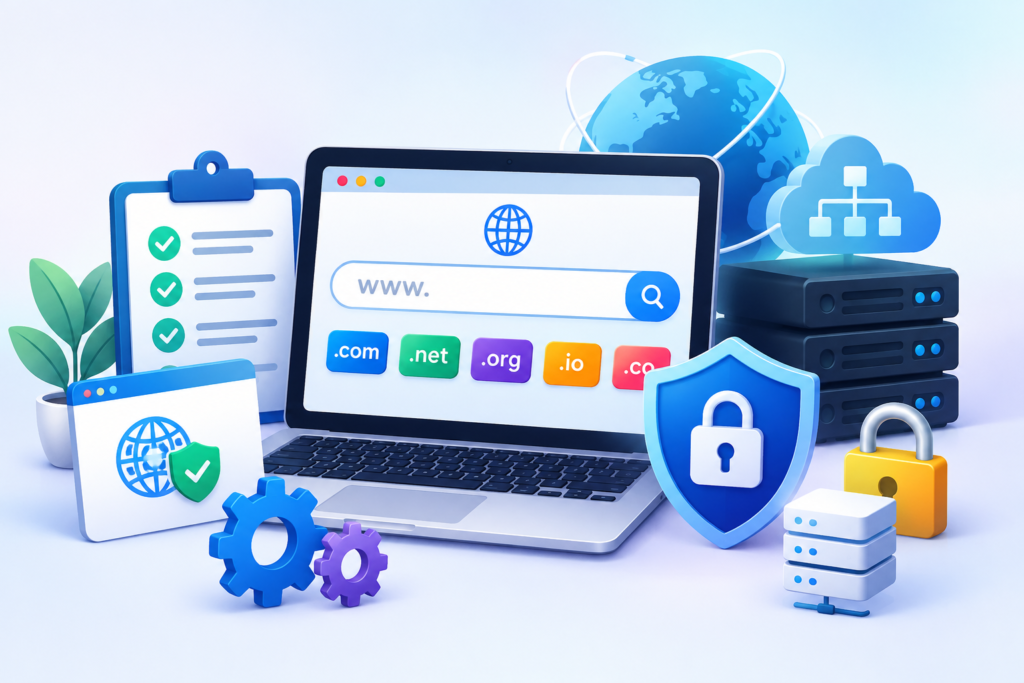
Learn everything about website domains, domain registration, domain extensions, DNS management, domain security, SEO impact, and best practices for choosing and maintaining a strong domain name for long-term online success.
Introduction
A website domain is one of the most important digital assets a business or individual can own. It serves as the address users type into their browsers to access a website and plays a significant role in branding, trust, visibility, and online growth. Whether you are launching a new business, building an eCommerce platform, or creating a personal blog, selecting the right domain can influence how people perceive your brand and how search engines understand your website.
At FixHackedSite, we understand that a domain is much more than a web address. It represents credibility, identity, and long-term digital value. Businesses that invest time in selecting and protecting their domains are often better positioned to establish authority and build customer trust.
Modern websites rely heavily on properly configured domains, secure DNS settings, and reliable domain management practices. Understanding these components allows website owners to avoid costly mistakes and create a strong foundation for growth. This comprehensive guide explores every aspect of website domains, helping beginners and experienced professionals make informed decisions.
Understanding What a Website Domain Is
A website domain is a unique name that identifies a website on the internet. Instead of remembering numerical IP addresses, users can simply enter a memorable domain name into their browser. Domains make websites easier to locate while providing businesses with a recognizable online identity. Every website, from small blogs to multinational corporations, relies on domain names to establish accessibility and branding.
Domains are composed of multiple parts. The most recognizable element is the domain name itself, followed by the domain extension. For example, in “example.com,” “example” is the domain name, while “.com” represents the top-level domain. Different extensions serve different purposes and industries, making domain selection an important strategic decision.
From a technical perspective, domains connect with servers through the Domain Name System (DNS). Organizations such as ICANN oversee the domain name system and maintain standards that ensure websites remain accessible worldwide.
Understanding how domains function enables website owners to build stronger brands and maintain greater control over their online presence.
Why Website Domains Matter for Online Success
A domain name contributes significantly to the success of any website. It acts as a first impression and influences user trust. Visitors often judge the professionalism of a website based on its domain name, making the selection process an essential branding exercise.
Search engines also use domains to understand website relevance and authority. While exact-match domains no longer guarantee rankings, memorable and trustworthy domain names improve user engagement and brand recognition. Websites with clear identities are often easier to promote across digital marketing channels, social media platforms, and email campaigns.
Another advantage of owning a strong domain is long-term asset value. Domains can become valuable intellectual property over time. Businesses that establish authority through quality content and customer trust often find that their domains become increasingly important to their overall brand strategy. Therefore, investing in a professional domain name can provide benefits that extend far beyond website accessibility.
Types of Website Domains
Website domains come in several categories, each serving different purposes. Understanding these categories helps organizations choose the most suitable option for their goals and target audiences.
Generic Top-Level Domains (gTLDs)
Generic top-level domains include popular extensions such as:
- .com
- .org
- .net
- .info
- .biz
Among these, “.com” remains the most widely recognized and trusted extension. Businesses frequently choose it because users naturally associate it with established organizations.
Country Code Top-Level Domains (ccTLDs)
Country-specific domains represent particular geographic regions. Examples include:
- .uk
- .ca
- .au
- .pk
These domains help businesses target local audiences and build regional trust. Country domains are especially beneficial for companies focusing on a specific market.
New Top-Level Domains
Modern domain extensions offer industry-specific branding opportunities, including:
- .tech
- .store
- .online
- .agency
- .blog
These alternatives provide flexibility for businesses seeking unique branding while maintaining relevance within their industries.
Selecting the right domain type should align with your audience, expansion plans, and branding objectives.
How Domain Names Work Behind the Scenes
The internet relies on complex systems that make domain names function seamlessly. One of the most important components is the Domain Name System (DNS), often referred to as the internet’s phonebook.
When users enter a domain into their browser, DNS translates that human-readable address into a numerical IP address. This process directs visitors to the correct server where the website files are stored. Without DNS, users would need to remember long strings of numbers to access websites.
The standards governing DNS are documented by the Internet Engineering Task Force.
Proper DNS configuration affects website speed, availability, and security. Incorrect settings may lead to downtime, email delivery failures, or website inaccessibility. Therefore, understanding DNS records and their functions is crucial for maintaining reliable online services.
Businesses that actively monitor DNS performance often experience improved website stability and reduced technical issues.
Choosing the Perfect Domain Name
Choosing the right domain name requires careful planning. A domain should represent your brand, be easy to remember, and remain relevant as your business grows.
Several characteristics define a strong domain name:
- Short and memorable.
- Easy to spell.
- Easy to pronounce.
- Relevant to your industry.
- Free from confusing characters.
Long and complicated names increase the likelihood of typing errors and reduce brand recall. Simplicity generally leads to stronger recognition and easier marketing.
Keyword relevance can also provide contextual clarity. However, excessive keyword usage should be avoided because modern search engines prioritize quality and user experience rather than keyword manipulation.
Businesses should think about future growth when selecting a domain. Names that are overly restrictive may limit expansion opportunities later. A flexible and timeless domain name often provides greater long-term value.
Ultimately, a domain should reflect professionalism, trust, and a clear brand identity.
Popular Domain Extensions and Their Uses
Domain extensions influence branding and user perception. Although hundreds of extensions exist today, some continue to dominate due to familiarity and trust.
.com Domains
The “.com” extension remains the most popular choice worldwide. It is recognized universally and is suitable for nearly every industry.
.org Domains
Organizations, charities, and non-profit institutions frequently use “.org” domains. These extensions often communicate credibility and community focus.
.net Domains
Originally intended for networking companies, “.net” domains are now widely used across multiple sectors.
Industry-Specific Extensions
New extensions allow businesses to create distinctive identities:
- .tech
- .design
- .store
- .agency
- .digital
While these options can strengthen branding, businesses should consider whether users are familiar with them. Trust and recognition remain important factors when choosing extensions.
Extensions alone do not determine SEO performance. According to Google’s documentation, most generic top-level domains are treated equally from a ranking perspective.
Selecting an extension should prioritize branding, trustworthiness, and audience expectations.
Domain Registration Process Explained
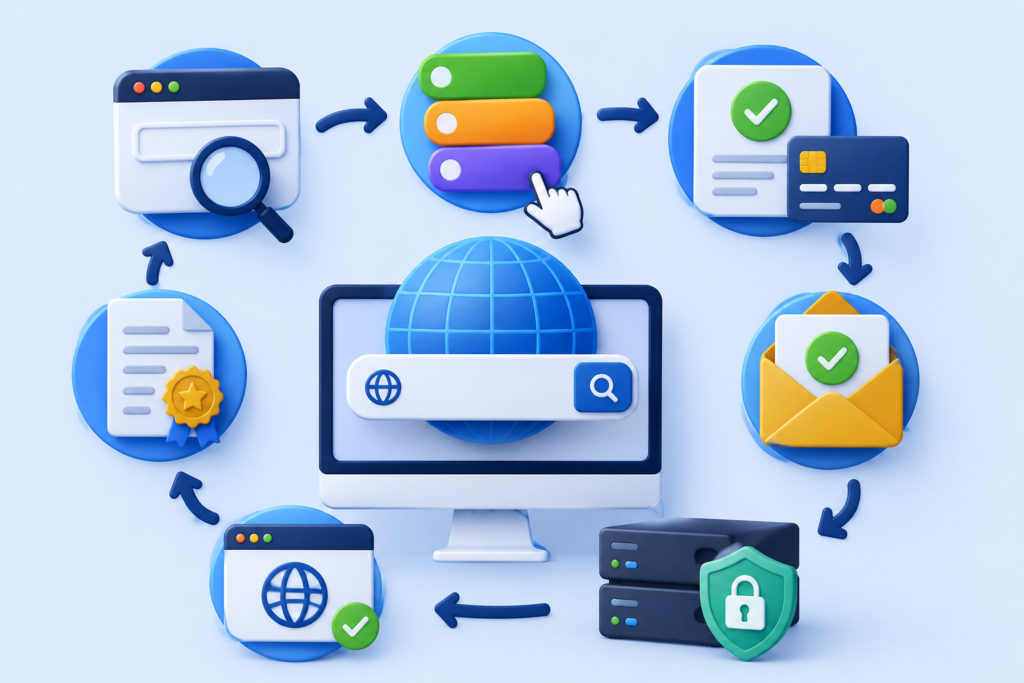
Registering a domain is a straightforward process, but making informed decisions during registration is essential. Website owners begin by searching for available domain names through accredited registrars.
The registration process generally involves:
- Searching domain availability.
- Selecting an extension.
- Choosing a registration period.
- Adding privacy protection.
- Configuring DNS settings.
- Completing ownership verification.
Domain registration rights are temporary rather than permanent. Owners must renew their domains periodically to maintain control. Failure to renew can result in expiration and possible acquisition by third parties.
Accredited registrars operate under standards established by ICANN.
Businesses should maintain accurate ownership information and enable automatic renewals whenever possible. Losing a valuable domain due to expiration can cause significant disruption and financial losses.
Proper domain management ensures continuity and protects digital assets over the long term.
The Role of DNS in Website Performance
DNS directly affects how efficiently visitors reach a website. Even the fastest hosting infrastructure can experience problems if DNS configurations are poorly managed.
Several common DNS records play important roles:
A Records
These records connect domains to specific IP addresses.
CNAME Records
CNAME records create aliases that point one domain to another.
MX Records
MX records manage email routing and ensure messages reach the correct servers.
TXT Records
TXT records are commonly used for email authentication and domain verification.
Google recommends implementing email authentication standards to improve email security.
Efficient DNS infrastructure contributes to:
- Faster response times.
- Improved website reliability.
- Better email deliverability.
- Enhanced security.
- Reduced downtime.
Organizations that prioritize DNS optimization often experience stronger performance and a more dependable online presence.
Domain Security and Website Protection
Protecting a website domain is just as important as selecting the right one. Since domains represent valuable digital assets, cybercriminals often target them through phishing attacks, domain hijacking, unauthorized transfers, and DNS manipulation. Losing control of a domain can lead to website downtime, loss of customer trust, and serious financial consequences.
One of the most effective ways to secure a domain is by enabling domain lock features and multi-factor authentication. Domain lock prevents unauthorized transfers, while two-factor authentication adds another layer of protection to account access. Website owners should also use strong passwords and monitor account activity regularly. Security awareness plays a major role in preventing attacks that exploit weak credentials.
Modern internet standards emphasize the importance of DNS security and encryption. In addition, website owners should use HTTPS encryption. A proactive approach to domain security reduces risks and helps maintain trust with users and search engines.
Website Domains and Their Impact on SEO
A website domain influences branding and user trust, but its direct impact on search engine rankings is often misunderstood. Search engines focus more on content quality, user experience, and authority rather than simply rewarding keyword-rich domains. However, a strong domain can still support SEO efforts indirectly.
Memorable domains encourage repeat visits and improve brand recognition. When users trust a website, they are more likely to engage with content, share resources, and link naturally to pages. These positive signals contribute to long-term organic growth. Search engines prioritize helpful content and reliable websites rather than exact-match domain names.
Google’s official search documentation explains how websites are evaluated and indexed.
Modern SEO success depends on several factors:
- Content quality.
- User experience.
- Website speed.
- Security.
- Backlinks.
- Mobile responsiveness.
A trustworthy domain supports these efforts by providing a strong foundation for building authority and brand recognition. Instead of chasing keyword-heavy names, businesses should prioritize clarity, professionalism, and long-term usability.
Understanding Domain Authority and Website Reputation
Domain authority is a popular concept used by SEO professionals to estimate the relative strength of a website. Although Google does not officially use third-party authority scores, reputation and trust remain critical components of search visibility.
High-quality websites generally earn backlinks naturally through valuable content and industry recognition. These links signal credibility and help search engines understand the importance of a website within its niche. Building authority requires patience, consistency, and a focus on providing genuine value to users.
Factors that contribute to stronger website reputation include:
- High-quality content.
- Positive user experiences.
- Natural backlinks.
- Technical optimization.
- Secure infrastructure.
- Consistent publishing.
Google’s Search Quality Evaluator Guidelines emphasize Experience, Expertise, Authoritativeness, and Trustworthiness (E-E-A-T).
Establishing authority is a long-term process rather than a quick tactic. Websites that prioritize user needs and publish trustworthy information often develop stronger reputations over time, leading to improved visibility and sustained growth.
Domain Transfers and Website Migration
Businesses occasionally need to transfer domains between registrars or migrate websites to new environments. These transitions require careful planning because mistakes can result in downtime, lost traffic, and broken email systems.
Domain transfers involve moving ownership management from one registrar to another. Website migration, on the other hand, may involve changing hosting providers, redesigning websites, or restructuring URLs. Proper preparation minimizes disruptions and preserves SEO value.
Important migration steps include:
- Backing up website data.
- Reviewing DNS settings.
- Verifying domain ownership.
- Updating records carefully.
- Testing website functionality.
- Monitoring traffic after migration.
Google provides guidance for website moves and URL changes. Organizations that plan migrations carefully can maintain rankings and provide users with uninterrupted experiences. Documentation, testing, and monitoring are essential components of successful domain transfers.
Expired Domains and Their Potential Value
Expired domains attract interest because they may carry existing authority, backlinks, and brand recognition. When owners fail to renew domains, these assets can become available for registration or auction. Some businesses use expired domains strategically to acquire established web properties.
Despite their potential advantages, expired domains should be evaluated carefully. Poor-quality domains with spam histories can create more problems than benefits. Before purchasing an expired domain, website owners should analyze backlink profiles, historical usage, and reputation.
Consider evaluating:
- Historical website content.
- Existing backlinks.
- Previous ownership.
- Spam signals.
- Trademark issues.
- Indexing history.
Acquiring a domain solely for manipulation violates search engine quality principles. Sustainable growth depends on creating valuable content rather than exploiting expired assets. Responsible evaluation ensures that purchased domains contribute positively to long-term goals.
When used wisely, expired domains can offer branding opportunities and strategic advantages without compromising trust or quality.
Subdomains vs Main Domains

Subdomains provide organizations with additional flexibility for structuring content. A subdomain appears before the primary domain name and can serve separate functions without requiring a completely new domain.
Examples include:
- blog.example.com
- support.example.com
- store.example.com
Subdomains help businesses organize content, separate applications, and manage different audiences. They are commonly used for blogs, knowledge bases, and international versions of websites. However, deciding between subdomains and subdirectories depends on technical requirements and SEO goals.
Benefits of subdomains include:
- Better organization.
- Separate management systems.
- Increased flexibility.
- Scalability.
Despite these advantages, businesses should avoid unnecessary complexity. Maintaining a logical structure improves usability and simplifies long-term website management. The best approach depends on business objectives and technical considerations.
International Domains and Global Expansion
Businesses serving international audiences often need domain strategies that support multiple languages and regions. International domains help organizations establish credibility within local markets while improving user trust.
Country-code top-level domains such as:
- .uk
- .de
- .ca
- .pk
allow businesses to target specific geographic areas. Alternatively, organizations may use subdomains or subdirectories to manage multilingual content. The choice depends on branding, resources, and long-term expansion goals.
Successful global websites focus on:
- Local language support.
- Cultural relevance.
- Geographic targeting.
- Regional SEO optimization.
- User experience.
International growth requires careful planning. Businesses that understand local audiences and deliver tailored experiences are more likely to build trust and achieve sustainable expansion.
Common Mistakes Website Owners Make
Many website owners underestimate the importance of domain management. Small mistakes can lead to serious consequences affecting security, branding, and search visibility.
One common mistake is selecting complicated domain names. Long names, unusual spellings, and excessive keywords reduce memorability and create confusion. Simplicity usually provides better branding and user experience.
Another frequent problem involves neglecting renewals. Expired domains may become available to competitors or malicious actors. Failure to secure domain accounts with strong passwords and two-factor authentication also exposes websites to hijacking risks.
Additional mistakes include:
- Ignoring privacy protection.
- Choosing irrelevant extensions.
- Misconfiguring DNS records.
- Failing to monitor ownership details.
- Using trademarked terms improperly.
- Neglecting security practices.
Avoiding these issues helps businesses maintain stability and protect their online identities. Preventive management is often more effective and less expensive than recovering from avoidable mistakes.
Best Practices Summary
Successful domain management involves balancing branding, security, usability, and long-term growth. A domain should serve users while supporting broader business objectives.
Best practices include:
- Choose short and memorable names.
- Use trusted domain extensions.
- Enable two-factor authentication.
- Activate domain lock features.
- Maintain accurate ownership information.
- Monitor DNS configurations regularly.
- Renew domains before expiration.
- Prioritize website security.
- Focus on user trust and quality content.
- Plan for future expansion.
These practices contribute to stronger digital foundations and help businesses maintain reliable online presences. Long-term success depends on consistency, proactive management, and a commitment to user experience.
Frequently Asked Questions
1. What is a website domain?
A website domain is the address users enter into a browser to access a website. It acts as the identity of a website and makes online navigation easier than using numerical IP addresses.
2. Why is a .com domain so popular?
The .com extension is widely recognized and trusted by users worldwide. It is suitable for almost every industry and provides strong branding opportunities.
3. Does a domain name affect SEO?
Domains influence branding and trust, but content quality, backlinks, user experience, and technical optimization play much larger roles in search rankings.
4. How long can I register a domain?
Most domains can be registered for one to ten years, depending on the registrar and extension.
5. Can I transfer my domain to another provider?
Yes. Domains can usually be transferred between accredited registrars. Proper planning helps avoid downtime during the process.
6. What happens if my domain expires?
If a domain expires and is not renewed, it may eventually become available to others. Losing ownership can disrupt websites, email systems, and branding efforts.
7. Are country-specific domains good for SEO?
Country-code domains can help businesses target local markets and build trust among regional audiences.
8. How can I protect my domain from hackers?
Use strong passwords, enable two-factor authentication, activate domain lock features, and monitor account activity regularly.
Conclusion
Website domains are much more than simple web addresses. They represent brand identity, credibility, security, and long-term digital value. Choosing the right domain, protecting it properly, and maintaining strong management practices create a solid foundation for sustainable online growth.
At FixHackedSite, we understand that every successful website begins with a strong and secure domain strategy. By following industry best practices and prioritizing trust, businesses can build resilient online presences that support future expansion and long-term success.
Want to Implement This Easily?
Prompt Text:
You are an expert consultant. Based on the blog post titled “Website Domain”, provide a step-by-step, practical implementation guide. Include tools, best practices, common mistakes to avoid, and advanced tips. Assume the reader wants to implement everything discussed in this article effectively.
Call to Action:
Want our help implementing this? Just reach out to us via our website contact form: