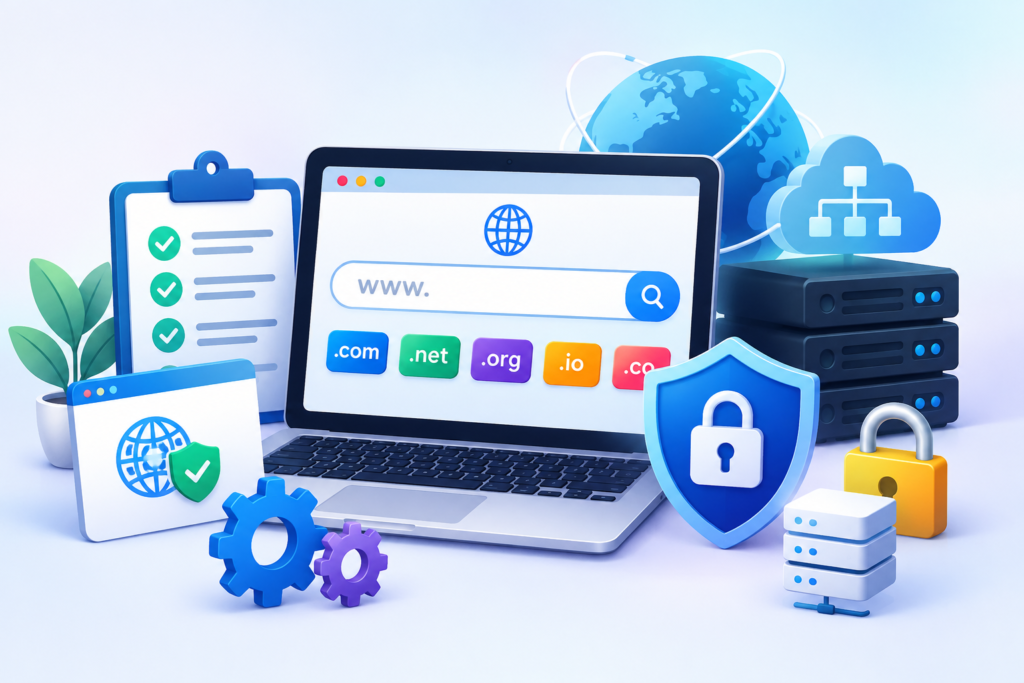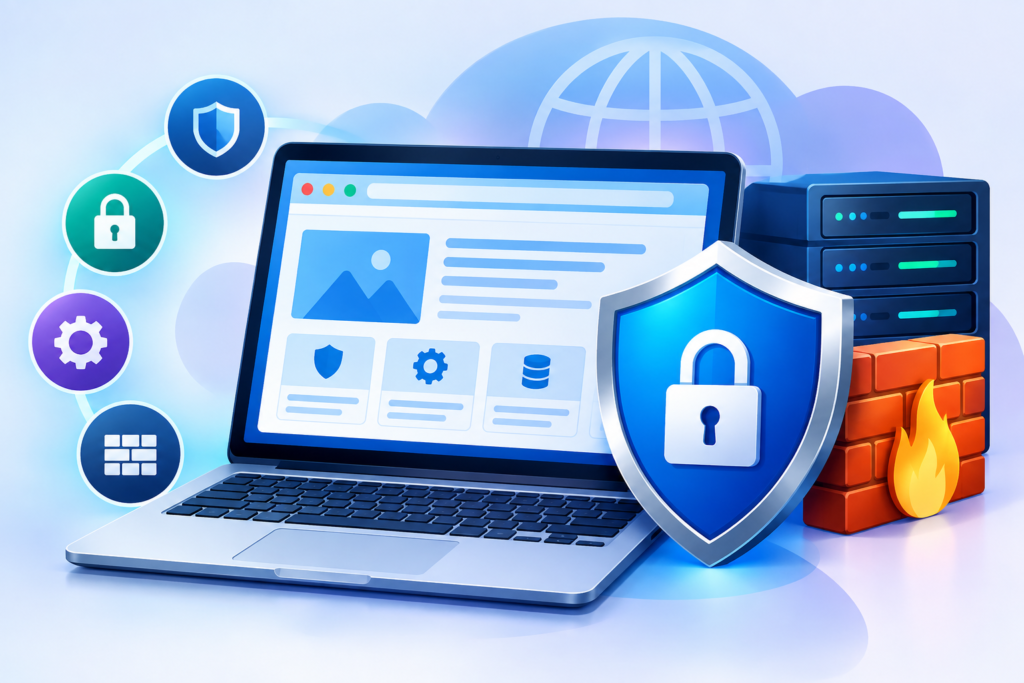
Website and Domain Migration is one of the most delicate processes in modern digital management, and even the smallest mistake can lead to data loss, ranking drops, downtime, or broken functionality. Whether a business is shifting to a faster hosting provider, upgrading its infrastructure, or simply changing its domain name for better branding, the migration journey must be executed with precision and expert planning. When handled properly, it strengthens a website’s performance, enhances user experience, and improves long-term SEO stability. When executed poorly, it can damage online visibility and disrupt daily operations. This is why understanding the full depth of Website and Domain Migration is essential for maintaining online success.
Introduction
Website and Domain Migration has become a critical component of digital transformation as businesses strive to improve speed, security, branding, and user experience. Whether a company is scaling its online presence, shifting from shared hosting to cloud infrastructure, or rebranding with a completely new domain, the migration process plays a crucial role in preserving website integrity. At FixHackedSite, we understand how sensitive and technical this process can be, because even the slightest misconfiguration can lead to downtime, SEO drops, or complete website failure. A successful migration requires strategic planning, deep technical knowledge, and a structured approach that ensures every element—files, databases, DNS settings, security layers, and URLs—remains intact during the transition.
In today’s digital landscape, websites are no longer simple pages; they are complex ecosystems containing dynamic scripts, automation tools, SEO patterns, user sessions, analytics tags, and integrated third-party systems. Migrating all of these components without disrupting the user experience is an art that demands specialized expertise. A poorly executed migration can cause issues such as broken permalinks, missing images, plugin incompatibility, email failures, and even search engine penalties. This is why Website and Domain Migration must be carried out with a level of precision that protects every layer of your online presence and ensures a seamless shift.
Furthermore, as search engines like Google place heavy emphasis on website stability, performance, and security, a proper migration can significantly increase your long-term SEO outcomes. When the process is done right, it strengthens the website’s technical foundation, increases load speed, ensures data integrity, and provides a cleaner environment for future growth. This blog post explains Website and Domain Migration in detail, covering essential strategies, technical challenges, and best practices to help you navigate the transition with confidence.
Understanding the Core Concept of Website and Domain Migration
Website and Domain Migration represents a complete transformation of where and how a website operates, and understanding its core concept is the first step toward ensuring a smooth transition. It is more than simply copying files from one server to another; it involves a structured, multi-layered process designed to retain a site’s identity, SEO value, and full functionality across different digital environments. The goal is not just relocation but preservation and enhancement, ensuring that every component performs exactly as it did before, or even better. When a business changes hosting providers, web servers, domain names, or overall website structure, the migration process becomes the bridge that allows these changes to happen without compromising user experience or data integrity.
The reason this process is so important is that modern websites rely on a combination of databases, coded frameworks, dynamic scripts, security protocols, and backend configurations. Each of these elements must be transferred with precision because even a single mismatch between server settings or database versions can create errors that disrupt the entire system. A deep understanding of the underlying architecture is essential for migration experts because the Website and Domain Migration process is not universal; it varies based on CMS platforms, server types, PHP versions, DNS configurations, and email routing rules. A technically sound migration requires a comprehensive understanding of how every component interacts with both the old and new environment. This is why the concept of migration must always be approached with careful planning and technical insight.
Finally, Website and Domain Migration is not only about preserving what already exists—it is also about unlocking improvements that were previously impossible. When executed properly, migration offers the opportunity to upgrade performance, enhance security features, restructure URLs, refine SEO architecture, modernize the hosting environment, and improve overall site health. It gives businesses a chance to start fresh on a faster and more stable foundation. Understanding the depth and purpose of migration helps ensure that the transition supports long-term growth and strengthens the digital identity of the brand. This foundational knowledge serves as the base for all other strategies in the migration journey.
Why Businesses Need Website and Domain Migration in the Modern Digital Era
The need for Website and Domain Migration has grown massively as businesses expand, scale, and adapt to modern technological requirements. Businesses today cannot afford slow websites, outdated hosting environments, or domain names that do not match their branding vision. This is why migration becomes essential. When a business transitions to a new hosting provider or shifts to a domain name that better aligns with its brand identity, the purpose is to maintain competitiveness in a fast-paced digital world. A well-planned migration ensures that businesses stay relevant while improving their website performance and stability. The shift is often driven by the need for enhanced server resources, stronger security layers, better bandwidth, and access to modern technologies that their current hosting setup may not support.
 In many cases, growth itself becomes the primary reason why businesses migrate their websites or domains. As traffic increases, the old hosting infrastructure may struggle to handle the load, leading to slow speeds or frequent downtime. This affects not only SEO performance but also customer satisfaction and conversions. Website and Domain Migration acts as a gateway to a more reliable and scalable digital environment. When a business undertakes this migration, it ensures that its platform can support more advanced functionalities, faster loading times, and overall improved user experience. This transition is crucial for businesses looking to establish long-term digital sustainability and avoid performance bottlenecks.
Another major reason behind migration is branding evolution. Businesses evolve over time, and their domain names must reflect that change. When companies rebrand, they often adopt a new domain name that represents their modern identity. This requires a careful domain migration strategy to ensure that SEO rankings, backlinks, and search visibility remain unaffected. Website and Domain Migration ensures continuity, allowing businesses to update their identity without losing the trust they’ve built. The modern digital landscape is constantly shifting, and migration enables businesses to stay aligned with new trends, better technology, and enhanced industry standards. This is why Website and Domain Migration remains a crucial step in business growth and evolution.
The Technical Importance of Planning Before Website and Domain Migration
Planning is the foundation of a successful Website and Domain Migration project because even the smallest oversight can lead to major complications. A website contains thousands of interconnected parts—databases, email routing, DNS settings, server configurations, URLs, permissions, plugins, scripts, security layers, and content structures. Each one must be identified, analyzed, and prepared before the migration begins. A well-structured plan acts as a safeguard against errors that might otherwise cause downtime, broken pages, or the loss of valuable data. Planning ensures every digital asset moves correctly from the old environment to the new one without interrupting website performance or accessibility. Technical planning is the backbone that supports the entire migration journey.
A major part of planning involves conducting a complete website audit. This includes evaluating the current hosting environment, reviewing database stability, checking file compatibility, analyzing server software versions, and inspecting URL structures. Without this assessment, businesses risk transferring hidden issues into the new environment, which can cause even more complex problems. Planning also ensures that the migration team understands which components need upgrading, which ones must remain untouched, and which ones can be optimized during the process. This level of preparation eliminates guesswork and ensures a smooth transition. A strong migration plan reduces risks and prepares the website for improved performance on the new platform.
In addition, pre-migration planning involves coordination between hosting providers, DNS registrars, security tools, and technical teams. Every step must be synchronized because a delay or mistake in one area can disrupt the entire website. For example, incorrect DNS timing can cause email interruptions, while database version conflicts can break dynamic website features. Effective planning prevents these issues by establishing a clear roadmap with detailed steps, fallback strategies, and testing procedures. This ensures that the migration not only transfers a website but strengthens it, providing a better digital infrastructure for future growth. Planning is essential because it removes uncertainty, safeguards digital assets, and ensures that the migration process meets the highest standards of precision.
Choosing the Right Hosting Environment for a Smooth Migration
Choosing the right hosting environment is one of the most important steps in Website and Domain Migration, as the new server directly determines the stability, speed, and scalability of the website once the migration is complete. A hosting environment acts as the foundation of the entire digital presence, meaning even a powerful website will fail to perform well if the server infrastructure is weak or outdated. Businesses must evaluate factors like server speed, uptime guarantees, bandwidth, storage capacity, PHP and database versions, and overall server security before making a decision. Selecting the right host ensures that the migrated website runs smoothly and performs better than before. The goal is not just to move the site, but to move it to a better, more reliable environment that supports long-term growth.
Another critical factor when selecting a hosting provider is compatibility with the website’s CMS and scripting languages. Some servers are optimized for WordPress, others for custom PHP applications, and some work better for eCommerce platforms or enterprise-level systems. When the hosting environment does not match the website’s technical requirements, migration becomes more complex, and the chances of errors increase dramatically. Understanding these compatibility elements helps businesses avoid conflicts, broken features, or slow performance after migration. A perfect hosting match ensures that the website continues to operate without interruptions, regardless of how advanced or resource-heavy it may be. The right hosting choice lays the groundwork for a seamless transition and guaranteed performance boost.
The hosting provider also influences long-term scalability and security. Modern digital platforms require continuous upgrades, integration opportunities, and expansion abilities. A hosting provider that offers cloud-based infrastructure, advanced firewalls, DDoS protection, and scalable resources becomes a valuable asset to any business undergoing Website and Domain Migration. Such features ensure that the new environment remains protected against cyber threats while providing enough flexibility to grow as traffic increases. Choosing the right host strengthens the website’s long-term foundation, ensuring that the migration not only shifts the website but enhances the overall digital experience. With the correct hosting environment, businesses can confidently migrate without risking performance, speed, or security.
Understanding DNS Management and Its Role in Website and Domain Migration
DNS management plays a central role in Website and Domain Migration, as DNS is the system responsible for pointing the domain name to the new server. Without proper DNS configuration, users may not be able to access the migrated website, or they may be directed to the old server, causing confusion and downtime. DNS essentially acts as the address book of the internet, ensuring that when a user enters your domain, they are connected to the correct hosting environment. A proper understanding of DNS settings, including A records, MX records, CNAMEs, and propagation timing, is necessary to execute a smooth and error-free migration. DNS accuracy ensures continuous website accessibility during the transition.
Another important element of DNS management is ensuring that email services continue to function properly during and after the migration. Many businesses rely heavily on email for communication, and simple DNS misconfigurations can cause emails to stop working temporarily or be delivered to the wrong mail server. Understanding how email routing settings, such as MX records, interact with the domain ensures that email downtime is prevented. Migration experts carefully verify DNS configurations before making any changes to avoid disruptions to business communication. This step is crucial because the entire mission of Website and Domain Migration is to ensure smooth continuity without damaging essential business operations. Proper DNS management eliminates one of the most common sources of downtime during migration.
Finally, DNS propagation timing plays a major role in how quickly a migrated website becomes globally accessible. After updating DNS records, it can take several hours for the changes to fully propagate across the internet. During this period, some users may still see the old site while others access the new environment. This temporary inconsistency is normal, but it highlights why understanding DNS behavior is essential for successful migration. By planning propagation timing carefully, businesses can minimize user confusion, avoid data discrepancies, and ensure that the newly migrated website becomes fully accessible as quickly as possible. Knowledge of DNS management ensures that the transition is stable, predictable, and optimized for minimal downtime.
Preparing the Complete Website Backup Before Migration
Creating a complete website backup is one of the most crucial steps in Website and Domain Migration, and skipping this step can lead to irreversible data loss. A full backup includes all website files, databases, configurations, email accounts, and even server-level settings. This backup acts as a safety net, ensuring that if anything goes wrong during the migration process, the website can be restored to its original state without losing valuable information. A complete backup ensures continuity and protects the website from unexpected interruptions during the migration. It provides peace of mind and allows the migration team to move forward with confidence knowing that the site is fully preserved.
A proper backup must include not only static files but also dynamic components such as user-generated content, form submissions, orders, comments, and any stored data within the website’s database. Without backing up the database, many essential features may break, and the website might fail to load correctly after the migration. This is why migration experts use advanced backup tools and manual methods to ensure that every piece of data is captured accurately. A complete backup eliminates the risk of losing content, functionality, or SEO value during the migration process. It also ensures that every post, product, media file, and system configuration is transferred properly to the new environment.
Finally, a backup allows for testing and verification before the site goes fully live on the new server. By restoring the backup to a staging environment, the migration team can test the website’s performance, verify functionality, and detect issues before making the final switch. This staging-based approach ensures that the migration proceeds smoothly and without surprises. A complete backup stands as the first line of defense against errors during Website and Domain Migration. With a secure backup in place, businesses can transition confidently, knowing that no matter what happens, their digital assets are fully protected.
Migrating Website Files Safely and Efficiently
Migrating website files is a major pillar of the entire Website and Domain Migration process, as it involves transferring every piece of your site’s structure from one server to another. This includes media files, theme files, scripts, frameworks, configuration data, and any custom-coded components that define the appearance and functionality of the website. The key to migrating files safely lies in ensuring that all data is extracted accurately without corruption or missing elements. A stable file migration ensures that the website behaves exactly as expected once it is placed on the new server. Using secure and efficient file-transfer methods such as SFTP, SSH, or automated migration tools helps preserve data integrity and prevents file damage during the transition.
Another important aspect of file migration is ensuring that hidden or system files are also transferred. Many websites contain backup folders, configuration files, cache directories, and log files that may not be visible through standard interfaces. If these files are not transferred correctly, the website may fail to load or behave differently on the new environment. Attention to detail is critical because even a single missing file can break the overall structure of the site. Thoroughly checking and verifying file paths, folder permissions, and file ownership ensures that the site remains fully functional and secure after migration. A safe file migration also involves comparing file versions between the old and new server to detect discrepancies before going live.
Additionally, after the files are successfully transferred, they must be tested within the new hosting environment. This step ensures that the website is compatible with the server’s software versions, security modules, and resource limitations. Testing helps identify errors related to missing libraries, outdated software, or unsupported modules before the website is made publicly accessible. Proper testing guarantees that the transferred files will perform optimally without conflicts on the new server. When files are migrated safely and efficiently, businesses experience a smooth transition, improved performance, and a stronger foundation for future updates and scaling.
Transferring Databases Without Losing Important Data
The database is the heart of any dynamic website, storing essential information such as user data, settings, posts, forms, transactions, and system configurations. Transferring the database accurately during Website and Domain Migration is critical because any corruption or formatting error can break the website entirely. A reliable database export ensures that all tables, rows, and relationships are preserved exactly as they were. The migration process must handle database content with extreme care to avoid losing critical information that powers the website’s functionalities. Exporting the database using proper tools, maintaining compatibility between versions, and ensuring proper encoding formats are essential to achieving a flawless transfer.
After exporting the database, the next challenge is importing it into the new hosting environment. This step requires compatibility between the old and new database engines, character sets, and storage formats. If the new server uses different database versions or settings, the import process may create errors, broken tables, or incomplete data transfer. Ensuring version alignment and preparing the new environment beforehand helps avoid these issues and allows the database to integrate smoothly. Properly configuring database users, host privileges, and connection parameters ensures that the website can communicate reliably with its database on the new server. Without these preparations, the migration may result in login errors, script failures, or missing content.
Once the database is successfully imported, verification is crucial. Database integrity checks help confirm that all content, settings, and relationships remain intact. Testing allows the migration team to identify broken links, missing fields, incompatible plugins, or corrupted entries before the website goes live. Performing these checks ensures a stable and error-free environment, maintaining the functionality that users expect from the website. A well-executed database transfer not only preserves data but also strengthens the website’s long-term reliability, making it ready to operate smoothly in its newly migrated environment.
The Role of URL Structure in Successful Domain Migration
URL structure plays a vital role in Website and Domain Migration, especially when shifting from an old domain to a new one. URLs serve as the digital address for every page on a website, and if they are changed incorrectly, users may encounter errors or broken links. Maintaining URL consistency ensures that search engines and visitors can still access all existing pages without interruption. A well-managed URL structure protects the website’s SEO authority by ensuring that every old URL correctly points to its new equivalent. Managing URL structure is essential for preserving both user experience and search engine ranking during migration. Without careful attention, even a small misconfiguration can lead to a loss of visibility.
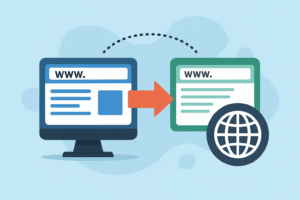 Another important factor in URL migration is ensuring that internal links, media paths, scripts, and CSS references are updated accordingly. If the domain changes but old URLs remain hardcoded inside the website, they will continue pointing to the outdated domain, causing broken images, missing resources, or layout issues. This is why updating all internal references during migration is essential for maintaining a clean and functional website. By updating paths and ensuring compatibility with the new domain, businesses eliminate the risk of errors and create a seamless browsing experience. Proper URL updates contribute to the stability and reliability of the newly migrated website.
Furthermore, search engines depend heavily on URL signals to understand how pages relate to one another. If a domain changes but search engines are not properly informed through correct redirects, the website may lose a significant amount of ranking power. Implementing a strong URL strategy during domain migration ensures that search engines understand the new domain structure clearly. This allows the website to retain its existing ranking value while gaining opportunities for improved visibility on the new domain. When URL structure is managed effectively, domain migration becomes smooth, consistent, and optimized for both users and search engines, ensuring long-term success.
Importance of 301 Redirects in Website and Domain Migration
301 redirects are one of the most critical elements in Website and Domain Migration, especially when shifting from an old domain to a new one. A 301 redirect serves as a permanent instruction that informs browsers and search engines that a page has moved to a new location. When implemented correctly, 301 redirects ensure that users are seamlessly transferred to the new URLs without experiencing any interruptions. This not only protects user experience but also prevents the loss of valuable website traffic during migration. Without proper redirects, users may encounter broken links, errors, or outdated pages, harming the website’s credibility and performance.
Another major purpose of 301 redirects is to preserve SEO ranking. Search engines build authority around existing URLs based on their age, backlinks, traffic, and relevance. If a domain or page URL changes without a redirect, search engines treat the new URL as a completely different page. This results in immediate ranking drops, loss of organic traffic, and weakened online visibility. 301 redirects transfer the ranking power and authority of old URLs to the newly migrated ones, ensuring that the website does not lose its search presence. When migration involves large websites with hundreds or thousands of URLs, the redirection process becomes even more important, requiring careful mapping and execution.
Finally, 301 redirects also support long-term growth on the new domain. When search engines consistently see that old URLs are permanently redirected to new ones, they gradually replace the old links in their index. This strengthens the new domain’s authority, making it easier to rank higher for relevant keywords. A strong redirect strategy creates a clean and organized structure that supports future SEO performance. By using 301 redirects correctly, businesses ensure a seamless transition where old traffic flows smoothly to the new environment, maintaining visibility, trust, and long-term website stability.
Ensuring SEO Preservation During Migration
Preserving SEO is one of the biggest concerns during Website and Domain Migration, as a poorly planned migration can immediately disrupt rankings, visibility, and organic traffic. SEO is built over time through backlinks, authority, high-quality content, internal linking, and user engagement, all of which must be protected during migration. A proper SEO-focused migration ensures that every ranking signal is transferred to the new environment without loss. This involves retaining URL structures, implementing redirects, optimizing metadata, and maintaining consistent content across the site. When these elements are handled correctly, the migrated website maintains its search engine performance even after major changes.
Another key part of SEO preservation is analyzing which pages generate traffic and ensuring that they remain accessible. If high-performing pages are overlooked during migration, the website may experience sudden ranking drops. Migration teams must identify all SEO-critical pages, including blogs, service pages, landing pages, and backlinks, to ensure that they transition smoothly. Maintaining internal linking structures also helps search engines understand the website’s hierarchy after migration. This keeps the website’s search profile strong and prevents errors that could lead to lost traffic or indexing issues.
Lastly, post-migration SEO auditing plays a major role in ensuring long-term success. Once the site is fully migrated, search engines must be guided to crawl the new domain and update their index. Submitting updated sitemaps, fixing crawl errors, optimizing new pages, and monitoring performance ensures that the migrated site remains healthy and visible. This post-migration SEO process confirms that all ranking signals have been successfully carried over to the new domain. By preserving SEO during migration, businesses protect their digital presence while opening opportunities for improved search performance on the new platform.
Minimizing Downtime Throughout the Migration Process
Minimizing downtime is a major priority in Website and Domain Migration, as even a few minutes of unplanned interruption can affect user trust, brand reputation, and business revenue. Downtime occurs when a website becomes temporarily unavailable, often due to DNS changes, file transfers, or server configuration updates. A strategic migration plan ensures that the website remains accessible to users throughout the transition. This involves scheduling migration during low-traffic hours, preparing backups, and coordinating updates between hosting environments. With proper planning, downtime can be reduced to nearly zero, ensuring a seamless experience for users.
Another factor in reducing downtime is using staging environments. Instead of migrating the live website directly, experts first transfer it to a staging server where they can perform testing and verification without affecting real users. This allows the team to detect issues like broken links, plugin conflicts, or server compatibility problems before making the site live. By testing everything beforehand, businesses avoid unexpected errors that could cause downtime during the actual migration. Staging environments also allow developers to rehearse the migration steps, making the final transition faster and more efficient.
DNS propagation also affects downtime. When DNS records are updated during a domain migration, it may take hours for the changes to spread across global servers. To minimize disruption, migration experts configure DNS settings in advance and reduce TTL (Time To Live) values before the migration begins. This proactive step ensures that DNS updates propagate more quickly, resulting in shorter transition periods. By combining strategic planning, testing, and smart DNS management, businesses can ensure that downtime is minimized and the migration process remains smooth, reliable, and user-friendly.
Testing the Migrated Website for Functionality and Performance
Testing the migrated website is one of the most important stages in Website and Domain Migration, as it allows the migration team to verify that every element of the site works exactly as it did before. A website consists of many interconnected components, and even a small error can disrupt the entire user experience. Testing ensures that pages load correctly, features behave as expected, and no broken functionality occurs after the transition. Carefully reviewing each section of the website ensures that all files, scripts, and databases have been transferred accurately. The goal is to ensure that users enjoy the same or better experience on the new server.
Another critical part of testing is verifying performance. After migration, the website may load differently depending on the server configuration, caching settings, or resource allocation. Testing performance includes checking page speed, responsiveness, server response time, and overall stability across different devices and browsers. These performance checks help identify bottlenecks or conflicts caused by the new hosting environment. By resolving these issues before going live, businesses ensure that their migrated website functions optimally and provides a smooth experience for visitors. The performance testing phase helps confirm that the new environment improves, rather than harms, the user experience.
Testing also includes examining the backend and administrative areas of the website. Content management systems like WordPress, Joomla, Magento, or custom platforms rely heavily on database connections, plugin compatibility, and extension functionality. If any feature fails to operate correctly in the new environment, it must be fixed immediately to avoid affecting site administration. Testing backend processes ensures that the website remains manageable and stable for long-term updates and content publishing. During Website and Domain Migration, thorough testing acts like a quality assurance layer that guarantees stability, accuracy, and functionality across all areas of the website.
Handling Email Accounts and MX Records During Domain Migration
Handling email accounts during Website and Domain Migration requires careful planning, as email services are often tied directly to the domain’s DNS settings. If MX records, email routing rules, or mailbox configurations are not transferred correctly, business communication may be disrupted. Ensuring that email accounts are backed up and properly configured on the new server is essential for maintaining uninterrupted communication. Migration teams must verify email hosting types, whether they are server-based emails or third-party services like Google Workspace or Microsoft 365. Proper handling of email accounts ensures a smooth transition without affecting daily operations.
MX records play a major role in ensuring email continuity during migration. An MX record determines where incoming emails should be delivered, and failing to update it correctly can cause messages to bounce or disappear. When migrating to a new domain or hosting provider, MX records must be updated in the DNS settings to reflect the new mail server information. Incorrect MX configurations can lead to delayed or lost emails, reducing business reliability. Testing email routing before making the final switch ensures that all services remain functional once the domain migration is complete. Email continuity is just as important as website accessibility.
Additionally, migration teams must synchronize email authentication records like SPF, DKIM, and DMARC with the new domain. These records help protect the domain from spam, spoofing, and phishing attempts. If authentication settings are not updated, the domain may experience deliverability issues where outgoing emails end up in spam folders. Ensuring that all authentication protocols match the new server environment improves email trustworthiness and protects the brand’s communication quality. Managing email accounts and MX records properly during migration ensures a seamless transition where both website and email services remain stable, secure, and fully functional.
Post-Migration Monitoring and Fixing Common Issues
Post-migration monitoring is a critical step in Website and Domain Migration, as it ensures that the website continues to function smoothly after being moved to the new environment. Even the most carefully executed migration can produce unexpected issues that only appear once the site is live. Monitoring tools and manual testing help detect errors such as broken links, slow-loading pages, missing images, or incorrect redirects. This ongoing observation helps the migration team quickly identify and resolve issues before they affect user experience. Post-migration monitoring is essential for maintaining a stable and high-performing website after the transition.
Another important part of post-migration management is checking server logs and analytics data. These tools provide valuable insights into user behavior, page performance, and potential system errors. Monitoring traffic patterns helps identify whether users are encountering difficulties accessing the site, or if certain pages are loading slower than expected. By analyzing these indicators, the team can address root causes and enhance site performance further. Migrated websites often need fine-tuning to fully align with the new hosting environment, and monitoring ensures that all necessary adjustments are made promptly.
Additionally, search engine crawlers must be monitored during the post-migration phase. Search engines need time to index the new domain and understand the updated site structure. Using webmaster tools helps track crawl errors, sitemap submissions, and indexing status. Fixing issues like 404 errors, redirect loops, or missing metadata ensures that SEO performance remains strong even after migration. Post-migration monitoring serves as an essential safety net that protects the website from losing authority or running into unexpected problems. With proper follow-up management, the migration remains successful both technically and strategically.
Website and Domain Migration with Zero Downtime
Website and Domain Migration with zero downtime is one of the most critical expectations for any business that relies on continuous online performance. When a website becomes temporarily unavailable during migration, it can lead to frustrated users, loss of conversions, damaged search rankings, and poor user experience. To achieve a seamless migration, it is important to strategically prepare the server, domain, DNS records, and hosting environment before the switch happens. This approach ensures that the old site remains active while the new one is being configured, allowing users to continue browsing without interruption. By synchronizing files, databases, and DNS propagation ahead of time, businesses can maintain full accessibility while the migration process takes place behind the scenes, protecting both traffic and credibility.
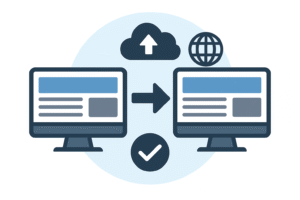 Achieving zero downtime also requires implementing techniques like lowering DNS TTL values early, duplicating the website onto the new server, testing functionality before switching DNS, and monitoring the propagation process in real time. These steps ensure that visitors are always served by a functioning version of the website, regardless of which server their request reaches. Additional safeguards, such as maintaining temporary redirects, enabling caching, and monitoring error logs, create a buffer against unexpected disruptions. When done correctly, users will not even notice that a migration took place, making the transition smooth, stable, and completely invisible to your audience.
In the final stage, the successful execution of a zero-downtime Website and Domain Migration improves overall system reliability and enhances user trust. Businesses benefit from uninterrupted site performance, search engines maintain ranking consistency, and customers continue engaging without experiencing defects or slow loading times. This level of precision demonstrates professionalism and commitment to digital experience. When combined with structured planning and advanced monitoring, zero-downtime migration becomes one of the most valuable technical achievements for growing brands that rely on continuous website availability.
Post-Migration Optimization and Performance Enhancement
Once the migration is successfully completed, the next step is Post-Migration Optimization and Performance Enhancement, which ensures that the new hosting environment operates at peak performance. Even if the migration itself went smoothly, the new server configuration may still require adjustments to improve speed, stability, and security. This includes fine-tuning caching layers, optimizing databases, configuring CDN settings, and ensuring all scripts load efficiently. Testing site speed, monitoring response time, and reviewing server load are essential to confirm that the new hosting environment is performing better than the previous one. These improvements help websites deliver fast loading times, seamless interactions, and an enhanced user experience.
Performance Enhancement also involves validating SEO-critical components such as redirects, canonical tags, schema, sitemaps, and robots.txt accuracy. When search engines detect inconsistencies after migration, rankings can fluctuate. By optimizing these elements immediately after the migration, websites preserve their search visibility and maintain user traffic. Additionally, analyzing crawl logs, repairing broken links, and optimizing image compression significantly boost website performance on both desktop and mobile platforms. These refinements not only improve speed and indexing but also strengthen long-term SEO health.
In the final evaluation, Post-Migration Optimization ensures long-term success and prevents issues that might surface weeks after the migration. Continuous monitoring, error log reviews, uptime tracking, and performance audits ensure that the migrated website remains efficient, secure, and fully optimized. This ongoing optimization phase transforms the new hosting environment into a stable and powerful foundation capable of supporting future growth, scalability, and high traffic demands. The end result is a website that performs better than before, benefiting users, search engines, and business goals simultaneously.
Conclusion: A Secure and Seamless Migration Experience with FixHackedSite
A well-executed Website and Domain Migration is more than just transferring files from one server to another; it is a strategic process that ensures continuity, performance, and long-term security. When migration is handled with expertise, businesses gain improved speed, better infrastructure, enhanced security, and stable search engine visibility. Every stage—from planning and DNS configuration to testing, optimization, and monitoring—plays a crucial role in protecting the digital presence of the brand. A smooth migration preserves user confidence and eliminates risks like broken pages, downtime, or data loss, ensuring the website remains fully accessible throughout the transition.
Effective migration also contributes to higher SEO visibility, faster loading time, improved server reliability, and better resource allocation. Whether a business is scaling to a more powerful hosting plan, shifting to a new domain, or responding to security concerns, strategic migration lays the foundation for future digital success. The ability to migrate without interruptions ensures that user engagement, conversions, and brand reputation remain intact. With optimized post-migration performance and careful validation, a migrated website operates stronger, faster, and more securely than before.
For businesses seeking a trusted partner to manage this complex transition, FixHackedSite provides expert, secure, and seamless migration services tailored to each website’s needs. By combining advanced techniques, comprehensive testing, and uninterrupted service delivery, FixHackedSite ensures that every migration is performed with accuracy, transparency, and professional care. This guarantees a stable, high-performing website environment that supports growth, resilience, and long-term success.