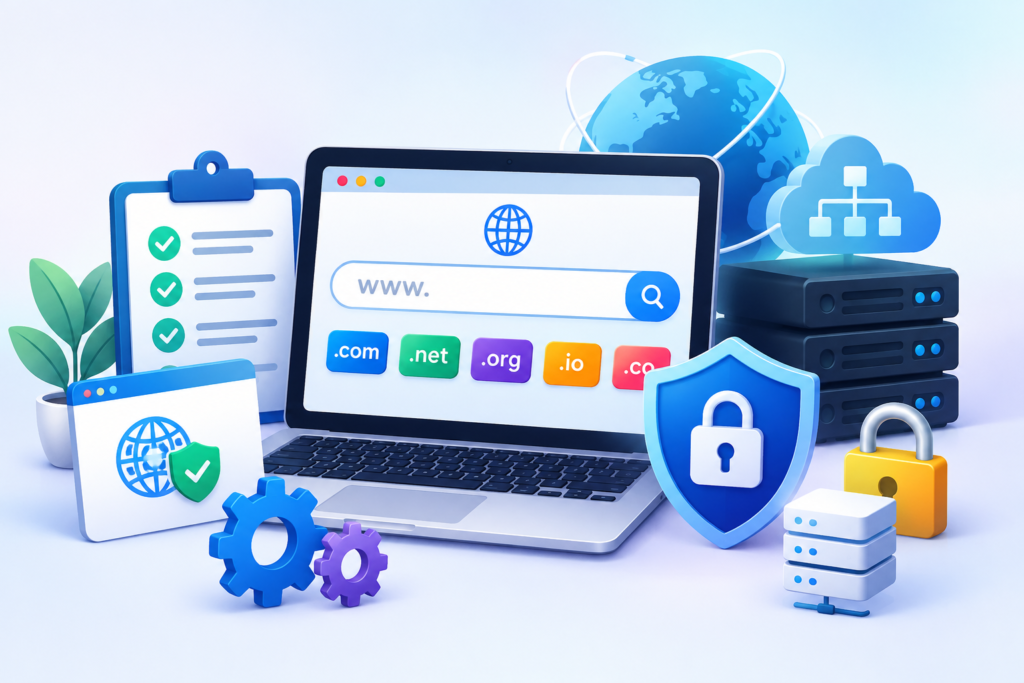
Website Domain Security & Management Guide: Learn how to protect, manage, and optimize your website domain for security, SEO performance, and long-term digital success.
Introduction: Understanding the Importance of Website Domains
In today’s digital-first world, your website domain is far more than just a web address—it is the foundation of your online identity. Whether you’re running a business, blog, or eCommerce platform, your domain plays a critical role in branding, credibility, and security. A poorly managed domain can lead to downtime, loss of trust, and even cyberattacks. That’s why understanding how domains work and how to manage them effectively is essential for long-term success.
A domain name is essentially the gateway through which users access your website. It connects your brand to your audience and serves as a trust signal. When users see a professional, well-structured domain, they are more likely to engage with your content. On the other hand, a compromised or expired domain can cause significant damage, including traffic loss and SEO penalties.
At FixHackedSite, the importance of secure and properly configured domains is emphasized as a core part of website protection. This guide will walk you through everything you need to know—from domain basics to advanced security strategies—ensuring your digital presence remains strong, secure, and optimized.
What is a Website Domain and How Does It Work?
A website domain is the human-readable address that users type into their browser to access your site. Behind the scenes, domains are linked to IP addresses through a system called the Domain Name System (DNS). This system acts like a directory, translating domain names into numerical IP addresses that computers use to identify each other.
Understanding how domains work is crucial for anyone managing a website. When a user enters a domain name, a DNS query is initiated, which connects the user to the correct server where your website is hosted. This process happens within milliseconds but involves multiple layers of infrastructure. Misconfigurations at any stage can lead to downtime or security vulnerabilities.
From an SEO perspective, your domain also carries weight. Search engines use domain signals—such as age, authority, and relevance—to rank websites. Choosing a domain that reflects your niche and includes relevant keywords can provide a competitive advantage. However, it’s important to maintain a balance and avoid over-optimization, which can appear spammy.
Choosing the Right Domain Name for Your Website
Selecting the right domain name is one of the most important decisions you’ll make when launching a website. A good domain should be memorable, easy to spell, and aligned with your brand identity. It should also be short enough to type easily while still conveying meaning and purpose.
Incorporating relevant keywords into your domain can improve search visibility, but it must be done naturally. For example, a domain like “bestcheapproducts-online.com” may seem keyword-rich but lacks professionalism and trustworthiness. Instead, focus on clarity and branding. A strong domain name builds recognition and encourages repeat visits.
Another critical factor is the domain extension, also known as the top-level domain (TLD). While “.com” remains the most popular and trusted, alternatives like “.net,” “.org,” or niche-specific extensions can also work effectively. Ultimately, the goal is to choose a domain that reflects your brand while maintaining credibility and SEO value.
The Role of DNS in Website Performance and Security
DNS (Domain Name System) is a fundamental component of how the internet operates. It not only connects domain names to servers but also plays a vital role in website performance and security. A fast and reliable DNS provider ensures that users can access your site quickly and without interruption.
Poor DNS configuration can lead to slow loading times, which negatively impact user experience and search rankings. Optimizing DNS settings—such as using a reputable provider and enabling caching—can significantly improve performance. Speed is a ranking factor, making DNS optimization an essential part of SEO strategy.
From a security standpoint, DNS is often targeted by cybercriminals. Attacks such as DNS spoofing or hijacking can redirect users to malicious websites. Implementing security measures like DNSSEC (Domain Name System Security Extensions) helps protect your domain from unauthorized changes and ensures data integrity.
Domain Registration: Best Practices and Key Considerations
Registering a domain is the first step in establishing your online presence. It involves choosing a registrar, checking domain availability, and completing the registration process. While this may seem straightforward, there are several best practices to follow to avoid future complications.
First, always register your domain with a reputable provider. Look for registrars that offer strong security features, transparent pricing, and reliable customer support. Avoid choosing providers based solely on low cost, as hidden fees and poor service can lead to long-term issues.
It’s also important to register your domain for multiple years if possible. This not only ensures continuity but also sends a positive signal to search engines. Additionally, enable auto-renewal to prevent accidental expiration. Losing control of your domain—even temporarily—can result in significant business disruption.
Domain Security: Protecting Your Digital Identity

Domain security is often overlooked, yet it is one of the most critical aspects of website management. Cybercriminals frequently target domains to gain access to websites, steal data, or redirect traffic. Without proper protection, your domain can become a gateway for malicious activities.
One of the most effective ways to secure your domain is by enabling two-factor authentication (2FA) on your registrar account. This adds an extra layer of protection, making it more difficult for unauthorized users to gain access. Additionally, using strong, unique passwords is essential.
Another key security measure is domain locking. This feature prevents unauthorized transfers or changes to your domain settings. Regularly monitoring your domain for suspicious activity and keeping your contact information up to date are also important steps in maintaining security.
The Impact of Domain Names on SEO Rankings
Your domain name can influence your website’s SEO performance in several ways. While it is no longer a dominant ranking factor, it still plays a role in establishing relevance and authority. A well-chosen domain can improve click-through rates and user trust, which indirectly affect rankings.
Exact-match domains (EMDs) used to be highly effective, but search engines have evolved to prioritize quality content over keyword stuffing. Today, it’s more important to focus on brandability and user experience. A domain that is easy to remember and aligns with your brand can lead to higher engagement.
Domain history also matters. If you are purchasing an existing domain, it’s crucial to check its background for spam or penalties. A domain with a clean history can provide a head start in SEO, while a compromised one can hinder your progress significantly.
Domain Expiration and Renewal: Risks and Prevention
Domain expiration is a common yet preventable issue that can have serious consequences. When a domain expires, your website becomes inaccessible, and you risk losing traffic, revenue, and credibility. In some cases, expired domains are quickly purchased by others, making recovery difficult.
To prevent expiration, always enable auto-renewal and keep your payment information up to date. Setting reminders for renewal dates can also help ensure you never miss a deadline. Many registrars offer grace periods, but relying on them is risky.
Expired domains can also be exploited by cybercriminals. They may use the domain for malicious purposes, damaging your brand reputation. Maintaining control over your domain is essential for both security and continuity.
Domain Transfers: When and How to Do It Safely
Transferring a domain from one registrar to another is sometimes necessary, whether for better pricing, improved services, or enhanced security features. However, the process must be handled carefully to avoid downtime or loss of control.
Before initiating a transfer, ensure that your domain is unlocked and that you have access to the authorization code (EPP code). It’s also important to verify that your contact information is accurate, as confirmation emails will be sent during the process.
Timing is crucial when transferring domains. Avoid transferring close to expiration dates, as this can complicate the process. Once the transfer is complete, double-check your DNS settings to ensure everything is functioning correctly. A smooth transfer requires careful planning and attention to detail.
Domain Privacy Protection: Why It Matters More Than Ever
Domain privacy protection is no longer optional—it is a necessity in today’s digital landscape. When you register a domain, your personal information (such as name, email, phone number, and address) is typically stored in the WHOIS database. Without privacy protection, this information is publicly accessible, making you vulnerable to spam, phishing attacks, and even identity theft.
By enabling domain privacy protection (also known as WHOIS protection), your personal details are replaced with proxy information provided by your registrar. This ensures that your sensitive data remains hidden from malicious actors. Beyond security, privacy protection also enhances professionalism, especially for businesses that want to maintain a clean and trustworthy image online.
From a compliance standpoint, privacy protection aligns with modern data protection standards. Organizations that handle user data must take extra precautions to safeguard their own information as well. Ignoring this aspect can lead to unnecessary risks and reputational damage. In short, protecting your domain information is a foundational step in building a secure and credible online presence.
Subdomains vs. Subdirectories: Which is Better for SEO?
The choice between subdomains and subdirectories can significantly impact your website’s SEO strategy. Subdomains (e.g., blog.yoursite.com) are treated as separate entities by search engines, while subdirectories (e.g., yoursite.com/blog) are considered part of the main domain. Each approach has its advantages and use cases.
Subdomains are ideal for organizing distinct sections of a website that require separate management or functionality. For example, large organizations often use subdomains for different departments or services. However, because they are treated separately, they may not benefit directly from the authority of the main domain.
On the other hand, subdirectories consolidate authority and are generally better for SEO. Content within subdirectories contributes to the overall domain strength, making it easier to rank in search results. For most websites, especially blogs and content-driven platforms, subdirectories are the preferred choice. Ultimately, the decision should align with your technical requirements and long-term SEO goals.
Domain Migration: How to Move Without Losing Rankings
Domain migration is a complex process that involves moving your website from one domain to another. While it may be necessary for rebranding or structural changes, it carries the risk of losing search rankings if not executed properly. Careful planning and execution are essential to ensure a smooth transition.
One of the most critical steps in domain migration is implementing proper redirects. Using 301 redirects ensures that users and search engines are directed to the new domain seamlessly. According to Google’s official guidance on site moves, maintaining consistent redirects is key to preserving SEO value.
It’s also important to update internal links, sitemaps, and external references. Informing search engines through tools like Google Search Console helps expedite the indexing process. Monitoring traffic and performance after migration allows you to identify and fix issues quickly, ensuring minimal disruption.
Domain Authority and Trust Signals Explained
Domain authority is a metric that reflects the overall strength and credibility of your website. While not an official ranking factor used by search engines, it is a useful indicator of how well your site may perform in search results. Factors such as backlinks, content quality, and user engagement all contribute to domain authority.
Trust signals play an equally important role in establishing credibility. These include secure connections (HTTPS), consistent branding, and positive user reviews. Implementing SSL certificates is essential, as highlighted by Google HTTPS best practices, which emphasize the importance of secure connections for both users and search engines.
Building authority takes time and effort. Publishing high-quality content, earning backlinks from reputable sources, and maintaining a strong technical foundation are all critical components. A trustworthy domain not only ranks better but also fosters user confidence and loyalty.
Common Domain-Related Mistakes to Avoid
Many website owners unknowingly make mistakes that can compromise their domain’s performance and security. One common error is choosing a domain that is too complex or difficult to remember. This can lead to lower traffic and reduced brand recognition.
Another frequent mistake is neglecting domain security. Failing to enable features like domain locking or two-factor authentication can leave your domain vulnerable to attacks. Additionally, not monitoring domain expiration dates can result in accidental loss of ownership.
Ignoring SEO considerations is also a critical error. Using irrelevant or spammy keywords in your domain can harm your credibility. Similarly, failing to research domain history before purchase can lead to inheriting penalties or negative associations. Avoiding these mistakes requires awareness, planning, and ongoing management.
Advanced Domain Strategies for Long-Term Growth
To stay competitive, businesses must adopt advanced domain strategies that support scalability and growth. One effective approach is registering multiple domain variations to protect your brand. This prevents competitors or malicious actors from exploiting similar domain names.
Another strategy involves leveraging country-code top-level domains (ccTLDs) for international expansion. This helps target specific regions and improve local search visibility. However, managing multiple domains requires careful coordination to maintain consistency and avoid duplication issues.
Investing in premium domains can also provide a competitive edge. These domains are often shorter, more memorable, and highly brandable. While they may require a higher upfront cost, the long-term benefits in terms of branding and SEO can be substantial. Strategic domain management is a key driver of sustainable digital success.
The Future of Website Domains in a Changing Digital Landscape

The digital landscape is constantly evolving, and website domains are no exception. Emerging technologies and changing user behaviors are shaping the future of domain management. New domain extensions and decentralized systems are gaining traction, offering more flexibility and innovation.
Security will continue to be a top priority as cyber threats become more sophisticated. Implementing advanced security measures and staying updated with industry standards will be essential for protecting your domain. Resources like Google Search Central provide valuable insights into best practices and updates.
As search engines evolve, the focus will shift further toward user experience and trust. Domains that prioritize security, performance, and relevance will have a competitive advantage. Staying ahead of these trends requires continuous learning and adaptation, ensuring your domain remains a strong foundation for your online presence.
FAQs
1. What is the best domain extension for SEO?
The “.com” extension is generally the most trusted and widely recognized, but other extensions can also perform well if they align with your brand and audience.
2. How often should I renew my domain?
It’s best to register your domain for multiple years and enable auto-renewal to avoid accidental expiration.
3. Can I change my domain name without losing SEO rankings?
Yes, but it requires proper planning, including 301 redirects and updating all relevant links and settings.
4. Is domain privacy protection necessary?
Yes, it protects your personal information and reduces the risk of spam and cyberattacks.
5. How do I check if a domain has a bad history?
You can use tools like archive services and backlink checkers to review the domain’s past activity.
6. What happens if my domain expires?
Your website will go offline, and you risk losing ownership if someone else registers it.
7. Are subdomains bad for SEO?
Not necessarily, but subdirectories are generally more effective for consolidating authority.
8. How can I secure my domain from hackers?
Enable two-factor authentication, use strong passwords, and activate domain locking.
Common Mistakes Section: Real-World Errors to Avoid
Many businesses underestimate the importance of proactive domain management. One real-world mistake is relying on a single email for domain registration and failing to update it. When access is lost, recovering the domain becomes difficult and time-consuming.
Another common issue is ignoring DNS configuration. Misconfigured DNS settings can lead to website downtime or redirect users to incorrect pages. This not only affects user experience but also harms search rankings.
Lastly, failing to monitor domain health and security regularly can result in unnoticed vulnerabilities. Businesses that do not conduct routine audits are more likely to fall victim to cyberattacks. Avoiding these mistakes requires a structured and consistent approach to domain management.
Best Practices Summary
To ensure your website domain remains secure, optimized, and effective, follow these best practices:
- Always register domains with reputable providers
- Enable domain privacy protection and security features
- Use clear, brandable, and SEO-friendly domain names
- Monitor expiration dates and enable auto-renewal
- Implement HTTPS and follow security guidelines
- Regularly audit DNS settings and domain health
- Plan migrations carefully with proper redirects
- Stay updated with industry trends and best practices
Conclusion
A website domain is the cornerstone of your online presence, influencing everything from branding to security and SEO performance. Proper domain management is not a one-time task but an ongoing process that requires attention, strategy, and expertise.
At FixHackedSite, the focus is on helping businesses secure and optimize their domains to prevent vulnerabilities and ensure long-term success. By following the strategies and best practices outlined in this guide, you can build secure, and future-ready digital foundation.
Want to Implement This Easily?
Prompt:
You are an expert consultant. Based on the blog post titled “(Website Domain)”, provide a step-by-step, practical implementation guide. Include tools, best practices, common mistakes to avoid, and advanced tips. Assume the reader wants to implement everything discussed in this article effectively.
Call to Action:
Want our help implementing this? Just reach out to us via our website contact form: https://fixhackedsite.com/contact-us/